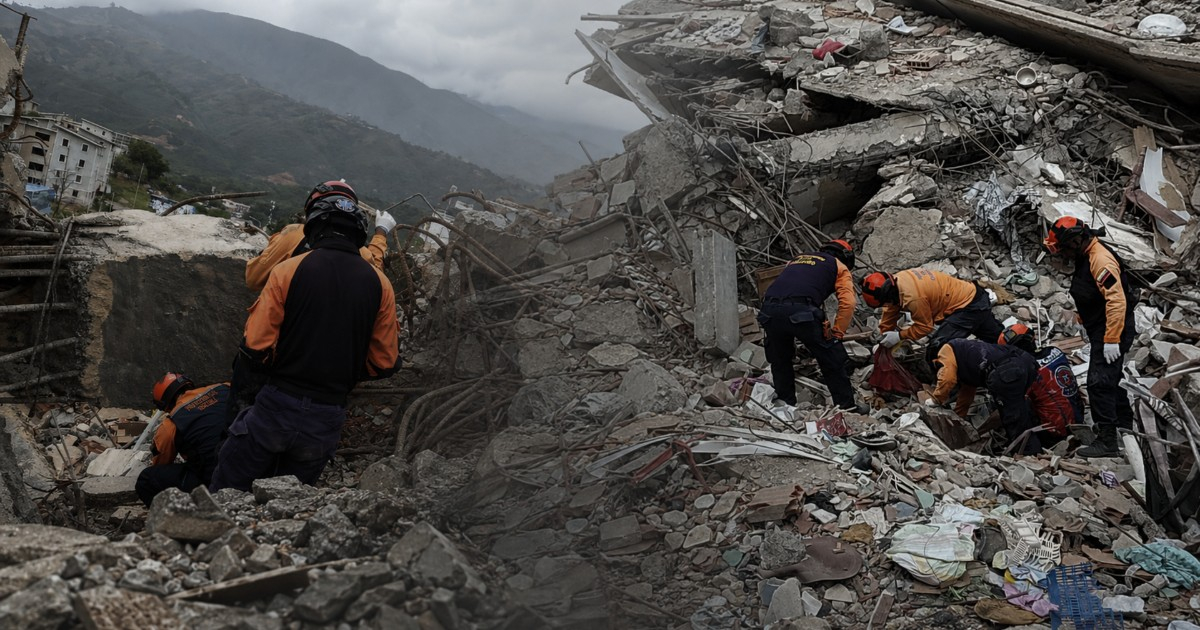
Over two months have passed since the catastrophic earthquakes struck northern Venezuela on June 24, yet tens of thousands of families are still left in the dark about the fate of their loved ones. This ongoing tragedy is exemplified by the case of Andrés David Molina Mendoza, an 18-year-old whose family has not heard from him since the earthquakes devastated La Guaira.
The twin earthquakes, measuring 7.2 and 7.5 in magnitude and occurring just 39 seconds apart, turned the coastal state of La Guaira—home to the Simón Bolívar International Airport in Maiquetía and densely populated areas like Caraballeda and Catia La Mar—into the hardest-hit region in the nation.
The building where Andrés David lived with his mother, Noribel Mendoza, and his brother, Ángel Eduardo, crumbled during the seismic events.
His aunt, Antonella Molina, and her nephew Pedro have been tirelessly combing La Guaira for weeks, searching for any sign of the young man, but their efforts have been fruitless.
"We have never received government support to help us find the missing," Antonella told AP. "Never."
The enormity of the human tragedy far exceeds the official figures released by the Chavista regime, led by the acting president Delcy Rodríguez.
While the Venezuelan government reported just 157 missing persons from the outset and failed to update the count consistently, the United Nations estimated up to 50,000 people unaccounted for nationwide. The citizen platform Encuéntralos recorded over 41,000 reports of missing individuals.
The governor of La Guaira himself acknowledged 1,579 people missing in his jurisdiction alone, with a total of 7,265 deaths in the state—numbers surpassing the official national count at that time.
The government-reported death toll has steadily increased from 164 on June 25 to 6,509 by August 25, according to reports from official Jorge Rodríguez.
The slow pace of debris removal partly explains why so many families remain in limbo. By August 26, only 28.61% of the estimated 600,790 tons of debris had been cleared, meaning the majority of the destruction remains untouched.
Among the victims with ties to Cuba, at least 32 Cubans were reported missing in the initial days following the earthquakes, primarily in La Guaira.
One of the most heart-wrenching cases involved Lázara Yumara Villaurrutia Rodríguez, a 35-year-old Cuban doctor who vanished alongside her Venezuelan husband and their seven-month-old baby, prompting searches by relatives in both countries.
The Cuban couple Olivia Hernández Pérez and Silvio René Garzón Molina also disappeared after the Coral Park building collapse, along with a six-member family linked to the Oasis Beach and Resjurel buildings.
Cuban authorities have set up the phone line 7 8321484 for relatives of missing Cubans in Venezuela to report cases.
"Everyone deserves closure to this tragedy," expressed the families of the missing, as reported by El País in July.
With more than 70% of the debris yet to be cleared and tens of thousands of people still unaccounted for, the search for the missing in Venezuela looms as a humanitarian crisis that will persist for months.
Understanding the Earthquake Aftermath in Venezuela
What caused the extensive damage in La Guaira during the earthquakes?
The extensive damage in La Guaira was caused by two powerful earthquakes of magnitudes 7.2 and 7.5, which struck the region only 39 seconds apart, leading to widespread destruction in the densely populated coastal area.
How many people are estimated to be missing following the earthquakes?
Estimates of missing persons vary, with the United Nations suggesting up to 50,000 individuals nationwide, while local platforms like Encuéntralos report over 41,000 missing. Government figures have been inconsistent, originally reporting only 157 missing.
What challenges are hindering the search for missing persons?
The search for missing persons is hindered by the slow progress in debris removal, with only 28.61% of the estimated debris cleared by late August, leaving many areas still buried under rubble.