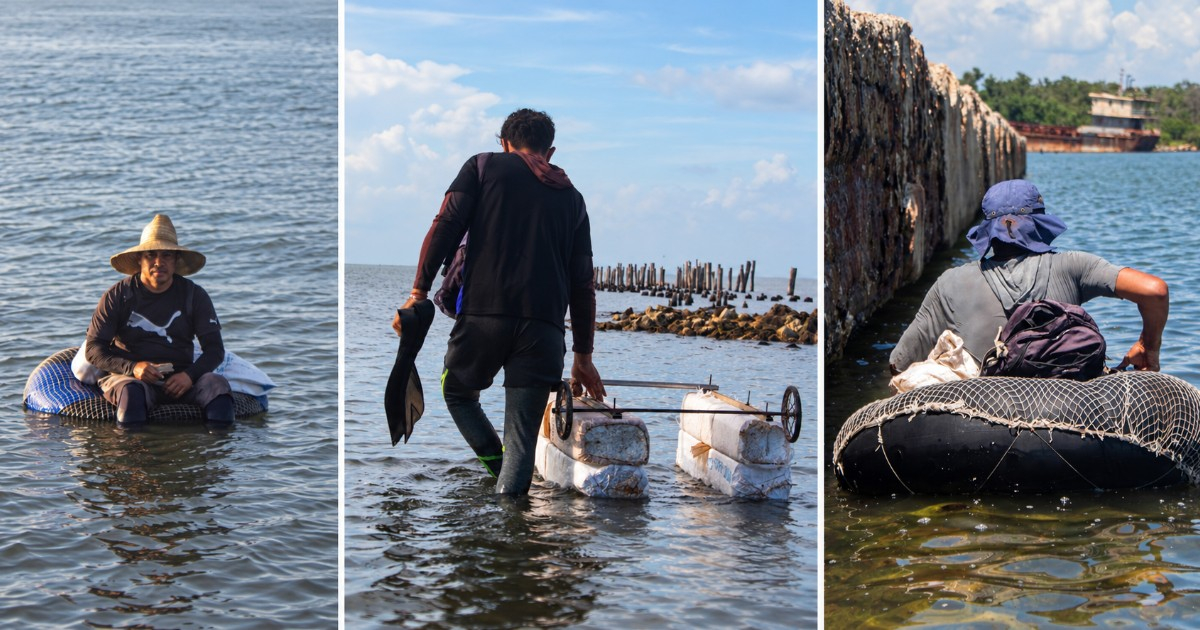
While most vessels remain docked due to a severe fuel shortage, fishermen in the coastal village of Surgidero de Batabanó, located in Mayabeque, Cuba, are finding ways to survive by taking to the sea on makeshift rafts. These rafts, crafted from tractor inner tubes and polystyrene structures, symbolize the decline of an industry that has historically been vital for this Cuban community.
This challenging situation was captured on Sunday by the magazine Juventud Técnica in their photo report titled "Living off the Sea." The report highlights how the fuel crisis and the decline of the fishing industry have reshaped livelihoods in the region.
The Impact of the Fuel Crisis on Fishing
"Throughout 2026, the majority of Surgidero's boats have been unable to set sail due to the national fuel crisis," the publication candidly acknowledges.
The report describes a fishing company that is "barely surviving," while many locals continue to venture into the sea independently, as fishing remains the primary economic activity and a deeply rooted tradition in the town.
Adapting to New Realities
Among those adapting to these new realities are Nico, Alexander, and Brayan. They embark on their rafts approximately every two days, timing their trips with the lunar phases.
Before dawn, they catch sardines to use as bait, shield themselves from the blazing sun, carry water, and ensure they have flippers, essential for propelling themselves in the water.
Unpredictable Catches and Changing Ecosystems
After venturing a couple of kilometers offshore, they cast their lines and spend hours on their fragile vessels before returning to shore, paddling with their legs.
Their catches can be unpredictable. Alexander shares that during good times, he can return with 20 to 30 pounds of fish in a morning, but there are days when he comes back empty-handed or with just a few small fish.
In addition to the fuel shortage, the photo report also highlights years of overfishing, marine resource depletion, and ecosystem changes linked to climate change as contributing factors.
The Longstanding Tradition of Makeshift Rafts
In Surgidero, where fishing has been part of the local identity long before the production of seafood preserves began in 1950, the situation has drastically deteriorated by 2026.
These makeshift rafts are not a new phenomenon. For years, Cubans from coastal communities have relied on vehicle inner tubes, spools, and polystyrene blocks to fish for family consumption, sale, or simply for recreation.
In March 2025, an Associated Press report documented the rise of so-called "cork" rafts, handmade from polystyrene sheets, which became increasingly common as the Cuban fishing fleet deteriorated.
The contrast with previous decades is striking. From the 1970s to the 1990s, Cuba's fish catches exceeded 100,000 tons annually with around 700 vessels, according to official figures cited at the time by AP. By 2021, production had fallen to around 20,000 tons.
Fish consumption also plummeted. According to official data cited in that report, Cuba's per capita fish consumption dropped from about 16 kilograms annually to just 3.8 kilograms.
Moreover, Surgidero's challenges are not unique. In July, a diesel shortage reduced the catches of the Sancti Spíritus fishing company by roughly half, lowering their monthly yield to about eight tons compared to the usual 15 or 18 tons for that period.
That same month, Trinidad's lobster fleet operated with only four of its six boats due to the fuel scarcity, while merely five of the province's 14 fishing brigades remained active.
Understanding the Challenges Faced by Cuban Fishermen
What are the main challenges faced by fishermen in Surgidero de Batabanó?
Fishermen in Surgidero de Batabanó face significant challenges including a severe fuel shortage, overfishing, depletion of marine resources, and ecosystem changes due to climate change.
How have the fishermen adapted to the current situation?
Fishermen have adapted by using makeshift rafts made from materials like tractor inner tubes and polystyrene to continue fishing despite the lack of fuel for traditional boats.
What is the significance of fishing to the community of Surgidero de Batabanó?
Fishing is a primary economic activity and a deeply ingrained tradition in Surgidero de Batabanó, playing a crucial role in the community's identity and livelihood.