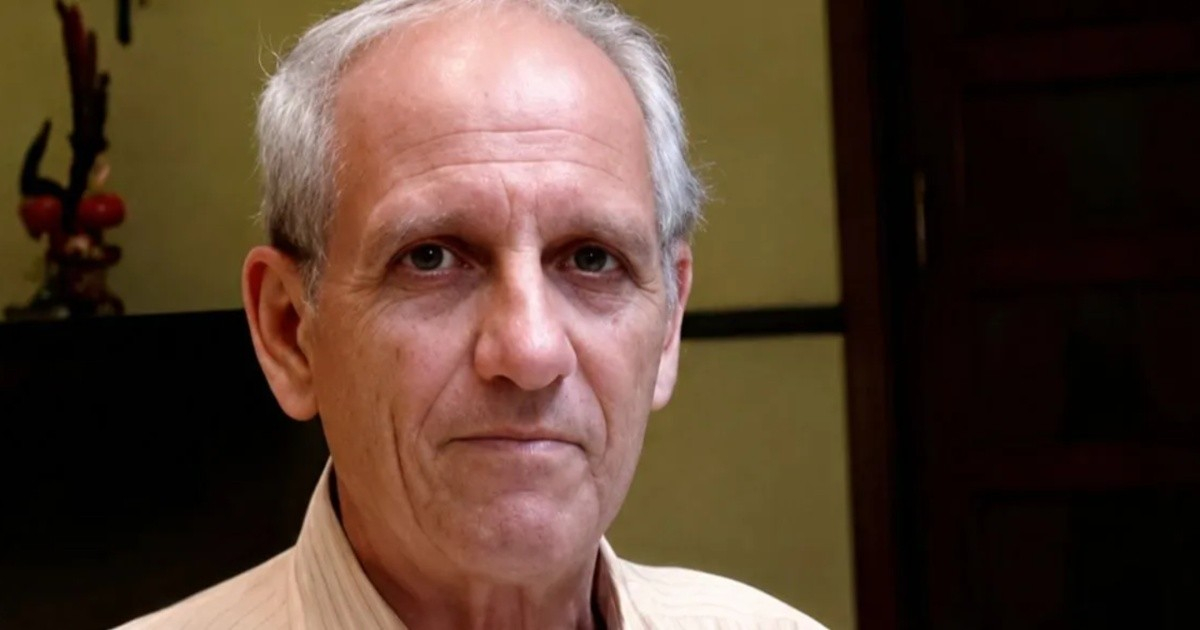
Renowned Cuban educator and independent journalist, Reinaldo Emilio Cosano Alén, passed away on September 1 at the age of 83. He succumbed to worsening respiratory complications that had intensified earlier that day.
He died around 8 p.m. in Guanabo, a district in Eastern Havana, where he had been bedridden and reliant on the goodwill of activists for his most basic needs, according to reports from CubaNet.
Early Life and Career
Born in Havana in May 1943, Cosano earned a degree in Philology from the University of Havana. He spent approximately two decades teaching Spanish and Literature at Amador López Mosquera Secondary School in Guanabo. His teaching career was abruptly cut short in 1991 when the Ministry of Education dismissed him for lacking "political suitability," following a letter he wrote detailing the flaws in Cuba's education system.
The Academic Freedom Observatory documented his case, noting that he had already been under surveillance by State Security due to his ties to the human rights movement. "The letter served as a pretext for his expulsion, although he had been monitored by State Security for his involvement in human rights activities," the organization reported.
Transition to Activism and Journalism
Despite appealing the sanction, Cosano stood his ground, losing his right to retirement benefits despite his 20 years of uninterrupted teaching service. Rather than stepping back, this expulsion propelled him into the Cuban dissident movement and independent journalism.
He joined the Cuban Committee for Human Rights, participated in the Cuban Democratic Coalition, and served as deputy organizer of the Cuban Council, a coalition of about 135 unofficial organizations harshly repressed by the regime in February 1996. Cosano was detained during this crackdown but was released without charges two days later.
He led the independent press agency Sindical Press and contributed for over a decade to CubaNet and Martí Noticias. The regime's harassment was relentless; in 2014, he was detained for several hours to prevent him from attending an independent journalism awards ceremony where he was a jury member.
Legacy and Final Days
Amid constant pressure, Cosano never chose exile and remained in Cuba until his last days. In October 2025, at 82, activist Yenier Toledano Torres launched an urgent aid campaign, requesting donations of sheets and disposable diapers for Cosano, who had devoted his life to freedom. Former political prisoner José Batista Falcón also joined the appeal.
In his final weeks, during a visit from Toledano, Cosano raised his hand from the bed, forming the "L" for liberty with his fingers. The activist could not hold back tears at the poignant gesture.
Cosano's death joins the losses of other notable figures in Cuban independent journalism who passed away in 2026. Héctor Maseda Gutiérrez, a hero of the Black Spring of 2003, died in exile in the United States on May 30, and Víctor Manuel Domínguez passed away in Havana on July 10 at 68.
"It deeply saddens me to see how our brother ends up in total oblivion," Toledano expressed to ClickCuba after his final visit to the journalist.
Key Questions About Reinaldo Emilio Cosano Alén's Life and Legacy
What were the main reasons for Reinaldo Emilio Cosano Alén's expulsion from the education system?
Cosano was expelled for lacking "political suitability" after he wrote a letter criticizing the Cuban education system. His involvement with the human rights movement also led to State Security monitoring him.
How did Reinaldo Emilio Cosano Alén contribute to independent journalism in Cuba?
Cosano was a leader in independent journalism, directing Sindical Press and contributing to CubaNet and Martí Noticias for over a decade. He faced regime harassment but remained committed to his work in Cuba.
What was the significance of Cosano's gesture with the "L" for liberty?
In his final weeks, Cosano's gesture of forming an "L" for liberty symbolized his lifelong commitment to freedom and resistance against the oppressive regime in Cuba.