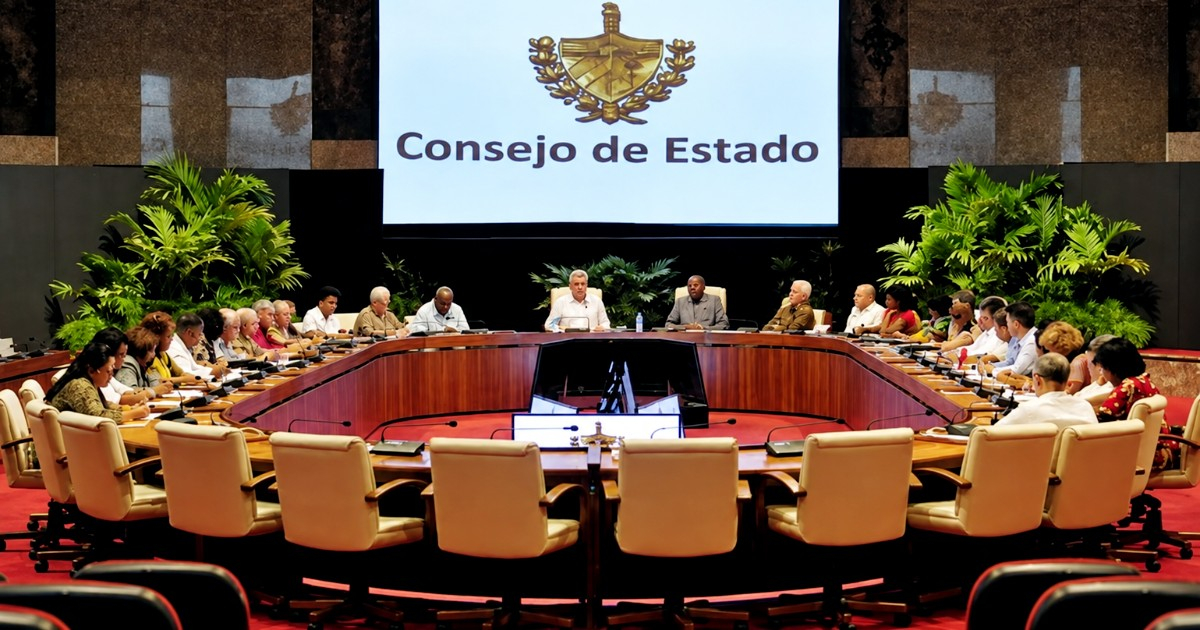
On Wednesday, Cuba's Council of State, led by Esteban Lazo Hernández, passed three new decree-laws during an extraordinary session. These laws include "On Strengthening Social Work," "On Employment of Workers for Administrative, Technical, or Service Roles in Foreign Entities," and "On Oil and Gas," as reported by the state-run outlet Cubadebate.
The decrees are part of a broader legislative overhaul stemming from 176 economic and social transformations approved by the National Assembly of People's Power on June 18 and 19, 2026. This comprehensive reform package, the largest in decades, is organized into 23 thematic areas.
Implementing these reforms demands a significant overhaul of existing laws. The regime acknowledged that over 148 legal provisions must be amended or repealed, with the introduction of 32 new overarching regulations, including 10 laws, 14 decree-laws, and eight decrees.
These newly approved decree-laws are not the first in this process. Previously, on July 16, the Council of State approved two similar regulations—covering the State Business System and Agricultural Cooperatives. By the end of July, the National Assembly enacted five structural laws, including a new Labor Code published as Law 189 on August 14, replacing the 2013 Law 116.
Redefining Social Work Regulations
The decree-law on social work, introduced by Minister Jesús Otamendiz Campos, aims to establish a distinct legal framework for the profession. Until now, social work was governed by administrative directives and political programs without a comprehensive legal standard.
The new regulation outlines principles, organizational structures, functions, and procedures to prioritize the role of social workers in shaping and evaluating public policies, particularly at the municipal, popular council, and constituency levels.
Direct Hiring by Foreign Entities
A significant update regarding the employment of Cuban workers by foreign entities is the potential elimination of the mandatory state employer intermediaries.
Decree-Law No. 384, which currently governs this area, requires Cuban workers to be hired through authorized state employment entities for services in foreign representations. The newly approved legislation permits direct hiring, although it still allows for the use of intermediary organizations.
This regulatory support facilitates a policy shift announced by the regime in late 2025, which lacked a legal framework for implementation at that time. In December of that year, Vice Prime Minister and Minister of Foreign Trade and Foreign Investment, Óscar Pérez-Oliva Fraga, stated that foreign investors could choose between direct hiring of Cuban workers or engaging a state employment entity.
CiberCuba noted that this announcement was not supported by any decree, resolution, or operational mechanism to enable direct hiring, while state intermediary norms remained in effect.
The approval of the new decree-law marks a transition from a political announcement to legal formalization. Nonetheless, the precise implications, conditions, and timeline for implementation will depend on the text published in the Official Gazette and its enactment date.
Updated Regulations for Oil and Gas Sector
The third decree-law, "On Oil and Gas," establishes a comprehensive legal framework for all sector activities, including exploration, extraction, refining, transportation, storage, and commercialization, both domestically and in the continental shelf and Exclusive Economic Zone.
This regulation updates legislation previously based on the 1995 Mining Law and complements Decree 160/2026, approved in July, which opened crude oil and natural gas extraction to private and foreign actors under a concession regime.
During the session, the regime also reported on the overall progress of the legislative process linked to the 176 measures, including the repeal of Decree-Law 155 on confiscation, approved in late August.
The three approved regulations will be published in the Republic's Official Gazette, a necessary step to disclose their full content, scope, and the dates they will come into effect.
Key Aspects of Cuba's New Employment Legislation
What changes does the new decree-law bring to foreign employment in Cuba?
The new decree-law allows for the direct hiring of Cuban workers by foreign entities, eliminating the mandatory need for state employment intermediaries, although this option remains available.
How will the new social work regulation impact the profession in Cuba?
The regulation provides a distinct legal framework for social work, detailing principles and procedures to elevate the role of social workers in public policy design and evaluation.
What does the new oil and gas decree-law entail?
It sets a comprehensive legal framework for the oil and gas sector, covering all activities from exploration to commercialization, updating previous laws and enabling private and foreign participation under a concession regime.