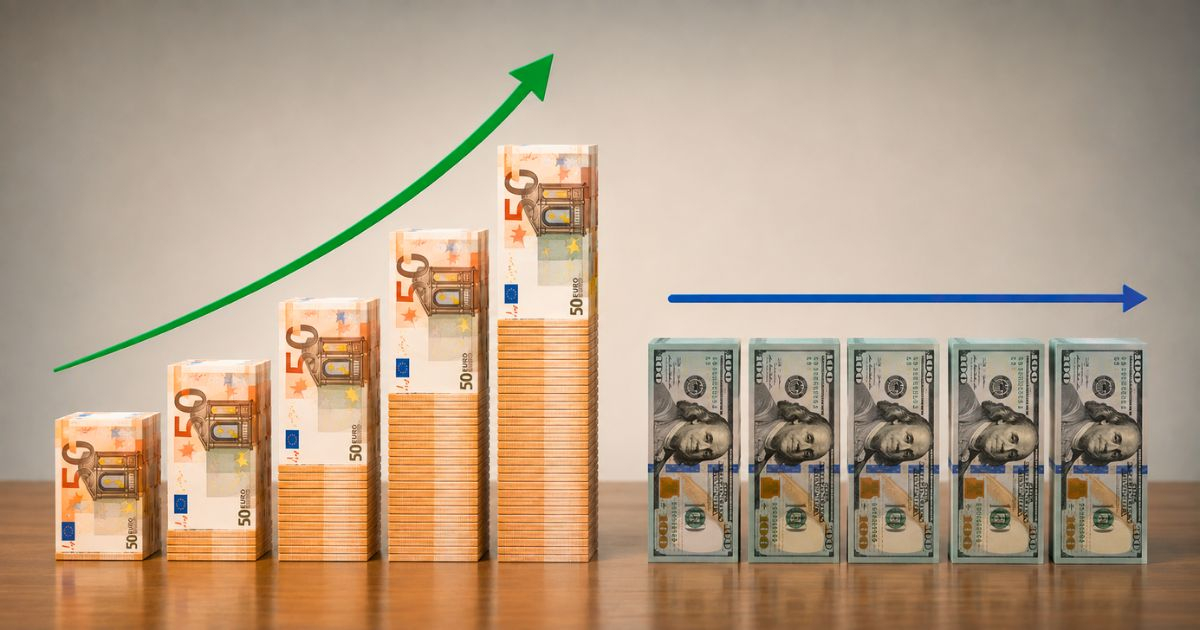
As of 8:00 PM local time in Cuba, the country's informal currency market closed on Saturday, September 5, 2026, with mixed fluctuations. The U.S. dollar remained unchanged compared to the previous session, while the euro experienced an uptick and the MLC saw a significant decline, although this is informed by limited data during this timeframe.
The U.S. dollar ended the day at 683 Cuban pesos (CUP), maintaining the same value as the prior close. However, over the past week, the American currency has appreciated by 7.5 pesos from 675 CUP, marking a 1.1% increase in seven days.
Looking at the monthly trajectory, the dollar has added 10 pesos compared to 673 CUP from 30 days ago. It's worth noting this comparison might partially reflect methodological adjustments in the index. Over the past month, the dollar has fluctuated between a low of 663 and a high of 683 CUP, setting the tone in an informal market marked by a chronic shortage of foreign currency.
Euro's Performance and Market Dynamics
This Saturday, the euro rose to 777 CUP, two pesos higher than the previous close at 775 CUP, translating to a 0.3% daily increase. Weekly, the European currency has gained 14.5 pesos from 763 CUP, reflecting a 1.9% rise.
In a 30-day comparison, the euro stood at 785 CUP, slightly above the current level, a difference that might also involve index adjustments. Over the past month, the euro has ranged from a minimum of 746 to a maximum of 785 CUP. It surpasses the dollar by 94 pesos, reinforcing its leading status in Cuba's parallel market.
MLC's Decline and Economic Implications
The MLC concluded this Saturday at an indicative rate of 441 CUP, with a cautionary note on data scarcity. If confirmed, this would represent a drop of 21 pesos from the previous day's 462 CUP, a decrease of 4.5%.
Weekly, the MLC has fallen by 25.5 pesos from 467 CUP. Over the past month, it has moved between a minimum of 408 and a maximum of 529 CUP. Without a physical presence, its use is limited to state-run stores that accept it, restricting its circulation compared to hard currency.
Exchange rates on this day are as follows: USD to CUP at 683, EUR to CUP at 777, and MLC to CUP at 441 (indicative value). Meanwhile, the official exchange rate by the Central Bank of Cuba (Segment III) remains at 640 CUP per dollar and 744 CUP per euro, significantly lower than real-world informal market rates.
Challenges of Cuba's Exchange Rate System
Although Segment III was introduced as a more flexible exchange mechanism, its official rates remain far from the informal market, failing to meet the population's real currency demands. The gap between the official and informal rates for dollars is 43 pesos, and for euros, it's 33 pesos.
In a context of persistent inflation, low state salaries, and increasing partial dollarization of the economy, any fluctuation in the informal market directly affects domestic prices and Cubans' purchasing power.
The CiberCuba Exchange Rate is an index of the informal Cuban market created through automated analysis of thousands of currency exchange posts in Telegram and Facebook groups. The calculation filters out atypical offers and spam, weighting each transaction by its recency to consolidate a representative value that updates multiple times daily.
Currency Conversion Examples
U.S. Dollar (USD) to Cuban Peso (CUP) conversion rates for Saturday, September 5, 2026:
- 1 USD = 683 CUP
- 5 USD = 3,415 CUP
- 10 USD = 6,830 CUP
- 20 USD = 13,660 CUP
- 50 USD = 34,150 CUP
- 100 USD = 68,300 CUP
Euro (EUR) to Cuban Peso (CUP) conversion rates for the same date:
- 1 EUR = 777 CUP
- 5 EUR = 3,885 CUP
- 10 EUR = 7,770 CUP
- 20 EUR = 15,540 CUP
- 50 EUR = 38,850 CUP
- 100 EUR = 77,700 CUP
- 200 EUR = 155,400 CUP
Understanding Cuba's Informal Currency Market
Why is the informal market rate higher than the official rate?
The informal market rates are higher due to the scarcity of foreign currencies and the high demand among the Cuban population. The official rates do not reflect the real purchasing power or economic conditions, leading people to rely on the informal market for more realistic exchange values.
How does the MLC differ from other currencies in Cuba?
The MLC is a digital currency used primarily in state-operated stores, lacking physical form. It is not as widely circulated as the U.S. dollar or euro, as it can only be used within specific government-approved channels, limiting its utility and flexibility compared to hard currencies.