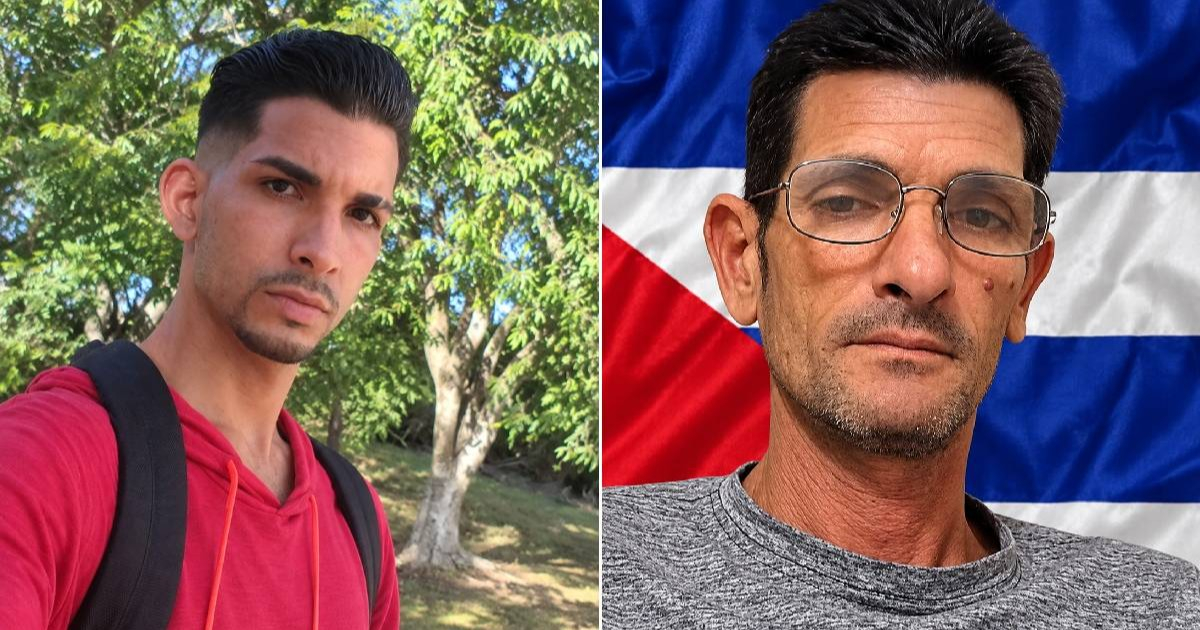
A father and son are currently serving time in a Cuban forced labor camp after receiving sentences of six and five years, respectively, for "propaganda against the constitutional order." Their imprisonment highlights the oppressive tactics of the Cuban regime against dissent.
A report by CubaNet on Friday shed light on the situation of Serguey Pozo Tagle, aged 47, and his son Yamislán Pozo Águila, aged 27. They communicated their plight via telephone on August 22, 2026, from El Yabú camp located on the outskirts of Santa Clara.
Serguey Pozo Tagle confessed to posting anti-regime content on Facebook for about a year and distributing flyers urging Cubans to "fight for your freedom. Viva Cuba Primero."
In contrast, Yamislán asserts that he had no involvement in these activities and maintains that the prosecution failed to prove any complicity on his part. Nevertheless, he was convicted as an accomplice, a move he claims was punitive for not reporting his father to authorities.
The Legal Debate Surrounding Familial Loyalty
The case raises significant legal questions. Alain Espinosa, a lawyer from the Cuban Legal Information Center, Cubalex, clarified that the legal concepts of complicity and the duty to report are distinct. "No individual is obligated to report a close family member and protecting them should not result in punishment," Espinosa stated.
Cuba's Penal Code, specifically article 203.1, exempts individuals from penalty for concealing a crime to protect direct relatives. Cubalex has criticized the son's sentencing as a legal distortion that criminalizes silence within families.
Arrests and Legal Proceedings
The duo was apprehended on February 13, 2025, during a coordinated operation. Serguey was taken from his home at dawn in the presence of State Security officer First Lieutenant "Luis Enrique," alongside several police patrols and security vehicles.
Yamislán was arrested at his workplace, Elderly Home No. 3 in Santa Clara, where his father was a construction worker and he worked in the laundry.
After their arrest, they spent 28 days without communication in the State Security headquarters on the Camajuaní road. Pozo Tagle described being interrogated at any hour of the day or night.
Their home was searched, and a mobile phone, laptop, and printer were seized. Although forensic analysis showed these devices were not used to produce the flyers, they have not been returned.
The trial took place on December 15, 2025, in the Tribunal Municipal Popular of Santa Clara's State Security Crimes Chamber. The prosecution linked the flyers to the Miami-based organization Cuba Primero and sought seven years for the father and six for the son.
The sentences, slightly reduced from the prosecution's request, were handed down on April 29, 2026, four and a half months after the trial.
The Cuban Observatory for Human Rights argued that the flyers did not incite violence or hatred.
Implications of a Broader Repressive Pattern
Serguey and Yamislán are serving their sentences in El Yabú, a facility documented by Prisoners Defenders as part of a report on forced labor in Cuban prisons. The report estimates around 60,000 inmates are subjected to these conditions across the island.
This case is part of an increasingly repressive trend in Cuba, which reached a historic peak of 1,327 political prisoners by July 2026, the highest number recorded by Prisoners Defenders since they began tracking.
Understanding the Legal and Human Rights Context in Cuba
What were the charges against Serguey Pozo Tagle and his son?
They were charged with "propaganda against the constitutional order," with Serguey accused of distributing anti-regime flyers and Yamislán allegedly complicit for not reporting his father.
Why is the son's conviction considered controversial?
The conviction is controversial because it criminalizes familial silence, a legal distortion as per Cubalex, suggesting an abuse of the legal system to suppress dissent.
How does the Cuban Penal Code address the duty to report family members?
Cuba's Penal Code article 203.1 exempts individuals from being penalized for not reporting crimes committed by direct relatives, such as parents, children, spouses, or siblings.
What broader trend does this case illustrate in Cuba?
This case is indicative of a broader trend of increasing political repression in Cuba, marked by a record number of political prisoners and the use of forced labor camps.