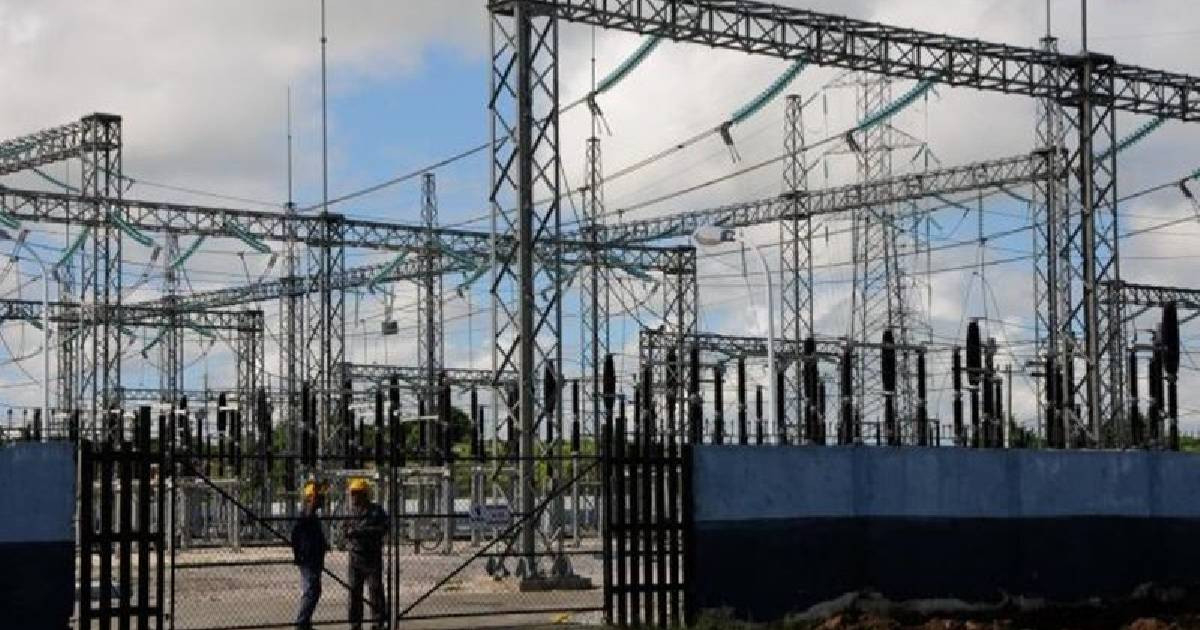
Cuban authorities have disclosed that from 2025 through the first half of this year, they initiated over 460 criminal investigations concerning offenses against the National Electrical System (SEN). These offenses include sabotage, damage, theft with force, larceny, and receiving stolen goods.
This information was revealed during a recent episode of the official television program "Hacemos Cuba," featuring representatives from the Ministry of the Interior (Minint), the Office of the Attorney General, and the People's Supreme Court. The state-run newspaper, Granma, reported on the program this past Saturday.
Rising Incidents of Oil Theft
Among the various illegal activities identified, the theft of dielectric oil from transformers is particularly prominent. Authorities have detected this crime across all provinces and in 97 municipalities, noting an increase in reports compared to the previous year.
Lieutenant Colonel Carlos Martínez González, the deputy head of the State Security Instruction Department at Minint, explained that the stolen oil often ends up on the black market, where it is mixed with fuel.
Efforts to Combat Transformer Oil Theft
To combat this issue, Minint conducted an inquiry in an undisclosed province. Out of 105 vehicles inspected, 21 tested positive for containing dielectric oil mixed with fuel, leading to the seizure of 18 vehicles.
"Private sector transport workers are the main receivers in these cases," Martínez stated, though he clarified that this does not imply all workers in this sector are involved.
Community Impact and Legal Ramifications
The repercussions of these actions can affect entire communities. In San José de Marcos, part of the Marcos Popular Council in Jagüey Grande, Matanzas, approximately 1,000 liters of dielectric oil stolen from a transformer resulted in a power outage lasting over 30 days. Three individuals have been identified and are currently in provisional detention as legal proceedings continue.
Tragically, this phenomenon has also resulted in loss of life. In June, a man was electrocuted, and another was arrested and charged with sabotage after attempting to steal dielectric oil from a transformer bank in El Cobre, Santiago de Cuba.
Legal Framework and Penalties
The legal framework governing these cases is the Decree 475 from the People's Supreme Court's Governing Council, issued in May 2025. It standardized the legal classification of these acts as sabotage under articles 125 and 126 of the Cuban Penal Code.
The basic form of the crime carries sentences ranging from seven to 15 years in prison. However, in aggravated circumstances—such as when causing serious injuries, fatalities, or using explosives—penalties can increase to 30 years, life imprisonment, or even the death penalty.
Iliana Gómez Guerra, president of the State Security Crime Chamber at the People's Supreme Court, noted that so far in 2026, most sentences range from nine to 20 years in prison.
According to the Attorney General's Office, 87% of those charged are held in provisional detention as a precautionary measure.
Broader Impact on Electrical Infrastructure
The government has also reported thefts involving solar panels and angular components of high-tension towers, further expanding the scope of damage to the nation's electrical infrastructure.
In July, Energy and Mines Minister Vicente de la O Levy acknowledged that the volume of stolen oil is "almost equivalent" to what is produced during the same period, with some settlements experiencing power outages lasting up to 105 days due to damage to transformers that are challenging to replace.
Understanding the Electrical System Crimes in Cuba
What types of crimes are being investigated against the National Electrical System in Cuba?
Crimes include sabotage, damage, theft with force, larceny, and receiving stolen goods, specifically targeting the electrical infrastructure.
What is the legal response to these electrical system crimes?
The legal framework, as per Decree 475, categorizes these acts as sabotage under articles 125 and 126 of the Penal Code, with penalties ranging from seven to 30 years in prison, life imprisonment, or death in aggravated cases.
How are the thefts affecting Cuban communities?
The thefts have led to prolonged power outages, impacting entire communities, such as in San José de Marcos, which experienced over 30 days without electricity.