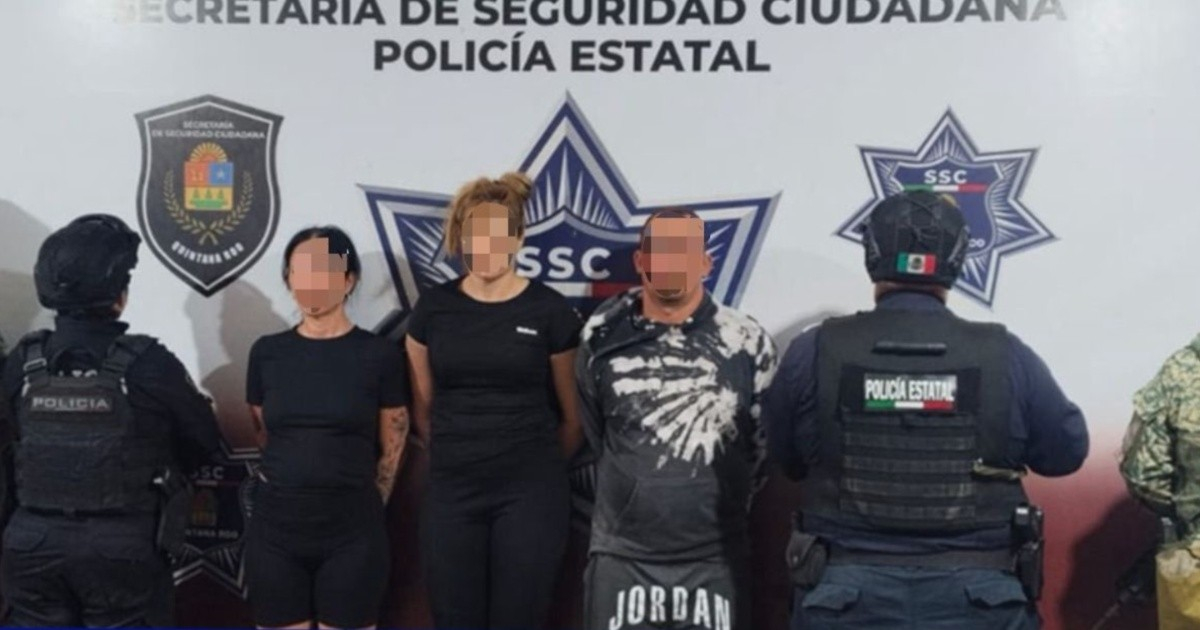
Four Cuban citizens, comprising two women and two men, were rescued by the Quintana Roo State Police on Friday after being held captive in a house located in the Valle Verde neighborhood of Cancun. Their captors had been assaulting them, recording the violent acts, and sending the videos via WhatsApp to their families in Cuba, demanding $5,000 for each person's release, according to Expediente Quintana Roo.
The operation was set in motion when a neighbor heard cries for help coming from a property on De Los Jaguares street and alerted emergency services by calling 911.
Upon entering the residence, officers discovered a total of nine individuals; four of them directly identified the remaining five as their captors.
Those apprehended, known as Alejandro "N", Llanet "N", Zaida "N", Francheska "N", and José Luis "N", have been handed over to the Special Prosecutor's Office for Combating Kidnapping and Extortion. During the raid, five cell phones and a keychain were confiscated.
Diario Cambio 22 reported that the captors were of Cuban nationality, although this information has yet to be confirmed.
The operation was a joint effort involving the Secretariat of Citizen Security, the Navy, and the National Defense Secretariat.
One of the victims, identified as R.G.G., described how he fell into the trap: he saw an alleged job offer on social media while in Cuba and embarked on a boat from Playa Boca de San Diego in Pinar del Río.
Upon arriving in Quintana Roo, he was placed in a gray van and taken to a safe house, where he was beaten, and his belongings were taken away.
"No interview, no references, they just asked him to come to Quintana Roo," Expediente Quintana Roo detailed from the victim's account.
Subsequently, the transnational extortion began: the captors recorded the beatings and sent the footage to his family with a straightforward message: pay up or the torture continues.
Authorities caution that this tactic—luring through fake ads on Facebook and TikTok, detaining individuals in safe houses, and filming extortion—is "being replicated in Cancun against Cuban, Venezuelan, and Central American migrants seeking work in the Riviera Maya."
This case is part of a growing pattern of similar incidents that have escalated in 2026. Just a few days earlier, Quintana Roo's justice system sentenced two Cubans—Yosbel Lázaro Planas Pita and Roinel Morejón Rodríguez—to four years and six months in prison for detaining a man and demanding $8,000 from his family.
In March 2026, federal authorities identified six Cubans as members of another network involved in kidnapping and torturing migrants in Mexico, and in May, they rescued a Cuban woman among 18 female trafficking victims lured with fake tourism job offers.
The issue has deep-seated roots: the so-called "Cuban Mafia of Quintana Roo," investigated by the FBI and the U.S. Department of Homeland Security in Operation Sisyphus, operated for over a decade, charging up to $10,000 per migrant, with at least 25 documented deaths and 21 convictions.
In April 2026, "El Milo," identified as the financial mastermind of this network, was arrested in Quintana Roo.
Understanding the Rescue of Cuban Nationals in Cancun
How were the Cuban nationals in Cancun rescued?
They were rescued by the Quintana Roo State Police after a neighbor reported cries for help, leading to a police operation.
What was the captors' method of extortion?
The captors used violence, recorded it, and sent the footage to the victims' families demanding a $5,000 ransom for their release.
Are the captors confirmed to be Cuban?
While a report suggested the captors were Cuban, this has not been officially confirmed as of yet.