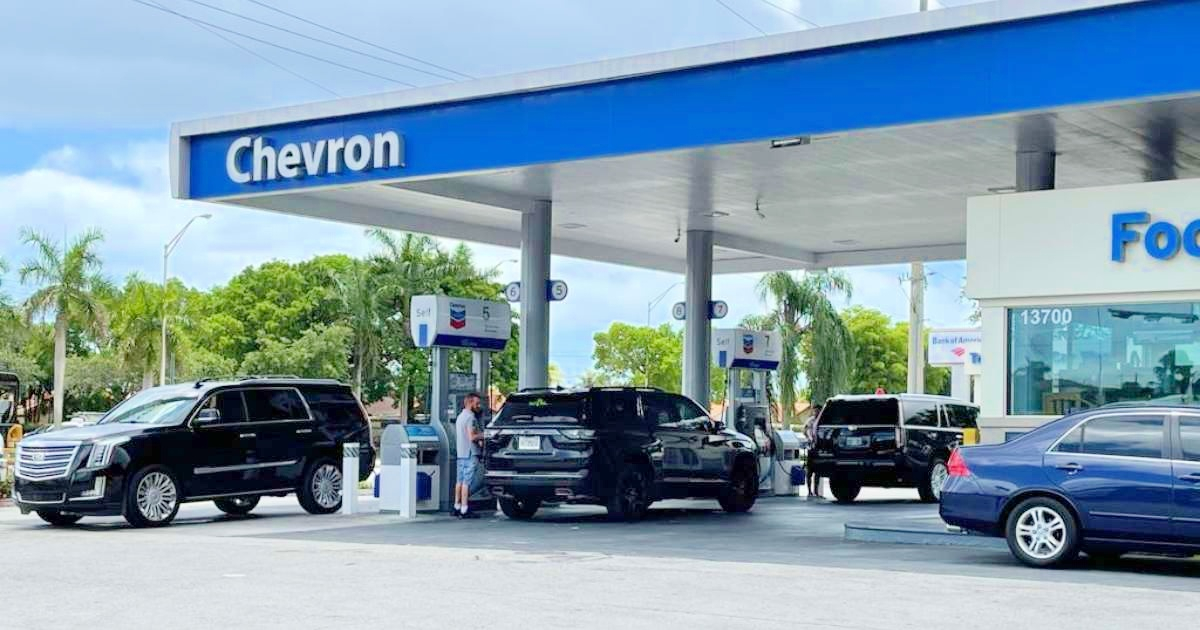
This Labor Day weekend, the average cost of gasoline in the United States soared above $4.14 per gallon, setting a new record. It's the first time in history that fuel prices have exceeded four dollars per gallon during this holiday weekend, which traditionally marks the end of the American summer.
The American Automobile Association (AAA) verified this milestone, noting that prices had "never surpassed four dollars per gallon" during this period. The previous high for this holiday was registered at $3.82 on September 3, 2012.
Currently, prices have jumped nearly a dollar from the $3.19 per gallon recorded during Labor Day 2025 and are four cents higher than the average from the previous week.
The primary driver of this price surge is the turmoil in the Strait of Hormuz, a critical passageway for 20% to 25% of the world's oil. The conflict between the United States and Iran, which erupted in late February 2026, has significantly disrupted this vital route.
AAA spokesperson Morgan Dean clarified how this impacts consumers: "When drivers go to fill up, about 50% of what they pay is directly tied to the crude oil price. So as crude oil prices rise, gasoline prices follow suit almost immediately."
State-by-State Price Variations
Gasoline prices vary significantly across states. California leads with prices at $5.83 per gallon, while Washington D.C. sees prices around $4.20. In contrast, Maryland is below four dollars, and Virginia and Florida are near $3.93.
Among the larger states, Texas offers the most affordable prices at $3.69. Meanwhile, in some areas of Connecticut Avenue in the capital, premium gasoline prices have surpassed six dollars per gallon.
Recent Trends and Future Outlook
This surge is not just a one-time occurrence this weekend. According to earlier data, the national average returned to the four-dollar mark in July following renewed military tensions between Washington and Tehran. By the end of that month, prices had already climbed to $4.11, a twenty-cent increase compared to June.
At the start of 2026, gasoline averaged $2.90 per gallon at the end of January. Prices peaked at $4.56 in May, coinciding with Brent crude oil prices exceeding $126 per barrel during the peak of the naval blockade in the strait.
A temporary ceasefire between Washington and Tehran briefly brought prices down below four dollars in June. However, the breakdown of this agreement in July sent prices soaring again.
Patrick De Haan, chief analyst at GasBuddy, had predicted a $4.03 average for this weekend, which would have already broken previous records. The actual figure surpassed even his estimates.
The AAA warns that while gas prices traditionally drop after Labor Day as summer travel wanes, the current market conditions make it impossible to predict when prices might ease.
Analysts suggest that price stabilization may not occur until 2027.
Understanding Gasoline Price Fluctuations
Why did gasoline prices reach a record high this Labor Day weekend?
The record high prices were driven by instability in the Strait of Hormuz due to the conflict between the United States and Iran, affecting a crucial global oil route.
How do gasoline prices vary across different states?
Gasoline prices differ significantly, with California seeing the highest prices at $5.83 per gallon, while Texas offers more affordable rates at $3.69 per gallon.
When might gasoline prices stabilize?
Analysts predict that prices might not stabilize until 2027, given the current geopolitical and market conditions.