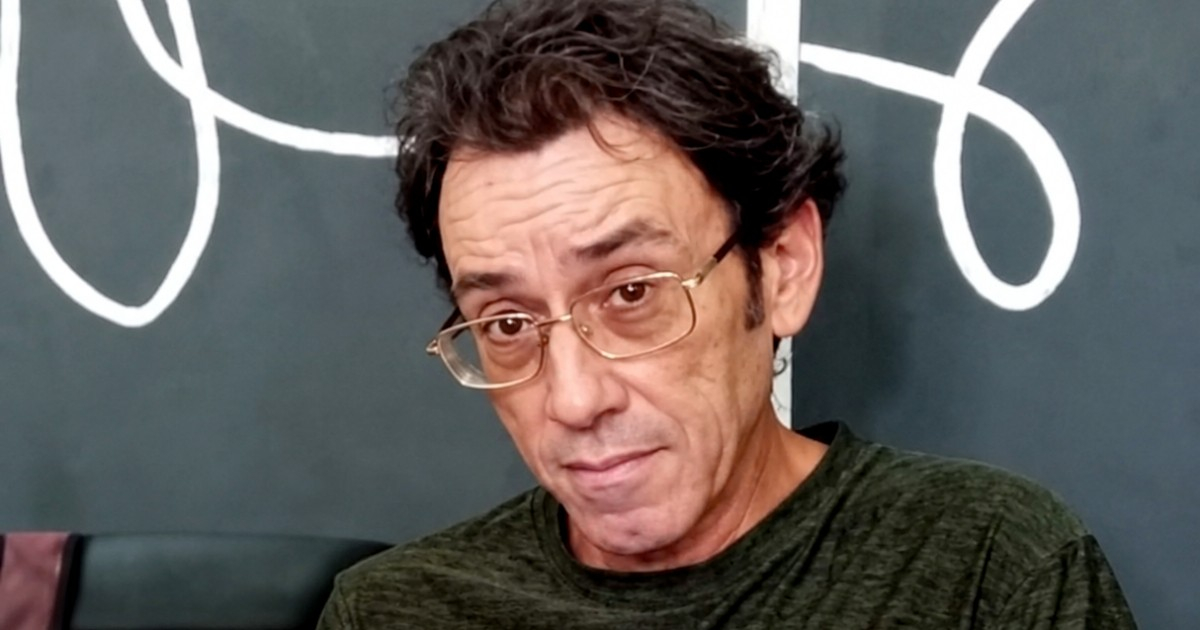
José Gabriel Barrenechea Chávez, a Cuban writer and independent journalist, has been imprisoned for nearly two years after participating in a peaceful protest by banging on pots and pans. Recently, the highest court on the island has effectively shut down his last legal recourse.
The legal organization Cubalex reported on Friday that the People's Supreme Court has upheld Barrenechea's six-year sentence for "public disorder."
The ruling, delivered on July 28, 2026, rejected an appeal for annulment filed by Barrenechea's defense. It also confirmed sentences for three other political prisoners involved in the same incident: Rafael Javier Camacho Herrera, Yandri Torres Quintana, and Rodel Bárbaro Espinosa Rodríguez.
It all began in November 2024, in Encrucijada, Villa Clara, when residents took to the streets with pots and pans after enduring over 48 hours without electricity, demanding, "We want power!" in front of the municipal headquarters.
Barrenechea, a contributor to the independent media outlet 14ymedio, was arrested along with other demonstrators. Cubalex documented at least nine arbitrary detentions related to that protest.
In January 2026, the Provincial Court of Villa Clara sentenced six individuals to a combined total of 34 years in prison. Barrenechea received a six-year sentence. His defense argued that there was no violence or vandalism, stating that his actions were protected under the right to protest and freedom of expression as recognized by the Cuban Constitution.
The Supreme Court dismissed these arguments with reasoning deemed absurd by human rights organizations: the judges claimed the protest "exceeded constitutional protection by creating loud noises with metallic objects and obstructing pedestrian and vehicular traffic."
The court further attributed collective responsibility to Barrenechea for "joining the group's dynamic," without providing evidence of direct violent acts committed by him.
Cubalex highlighted that this reasoning contradicts the United Nations Human Rights Committee's General Comment No. 37, which clearly states that "temporary disruption of traffic, noise, or chants does not negate the peaceful nature of a protest."
The Personal Tragedy Behind Bars
The most heartbreaking aspect of Barrenechea's case lies elsewhere. While he was held at La Pendiente Prison in Santa Clara, his mother, Zoila Esther Chávez Pérez, aged 84, was suffering from terminal cancer.
Family members and activists requested humanitarian permits for Barrenechea to visit her, but the authorities denied these requests. A phrase reportedly uttered by a prison official circulated among those following the case: "The son will see his mother when she dies."
Zoila Esther passed away on May 4, 2025, without seeing her son. The following day, Barrenechea was allowed a brief, heavily supervised visit to her wake before being returned to prison. From his cell, he penned a heart-wrenching letter, stating: "The blame is mine."
The Committee to Protect Journalists (CPJ), Human Rights Foundation, CIVICUS, and Prisoners Defenders have called for his immediate release, labeling his detention as arbitrary and his sentence as a retaliatory measure against peaceful protest.
Cubalex was unequivocal in its assessment: "Peaceful protest is not a crime. Therefore, we reiterate our demand for the unconditional and immediate release of José Gabriel Barrenechea Chávez and all individuals imprisoned in Cuba for exercising their rights."
Key Questions About Barrenechea's Case
What triggered José Gabriel Barrenechea's arrest?
Barrenechea was arrested for participating in a peaceful protest in November 2024, where residents of Encrucijada banged pots and pans demanding electricity after a prolonged outage.
Why has Barrenechea's sentence been criticized internationally?
His six-year sentence has been criticized because it is viewed as an excessive and retaliatory measure against his exercise of peaceful protest, violating constitutional rights to freedom of expression.
What role did Cubalex play in Barrenechea's case?
Cubalex has been a key advocator for Barrenechea, documenting his case, highlighting the legal inconsistencies, and demanding his release on the grounds that peaceful protest is not a crime.