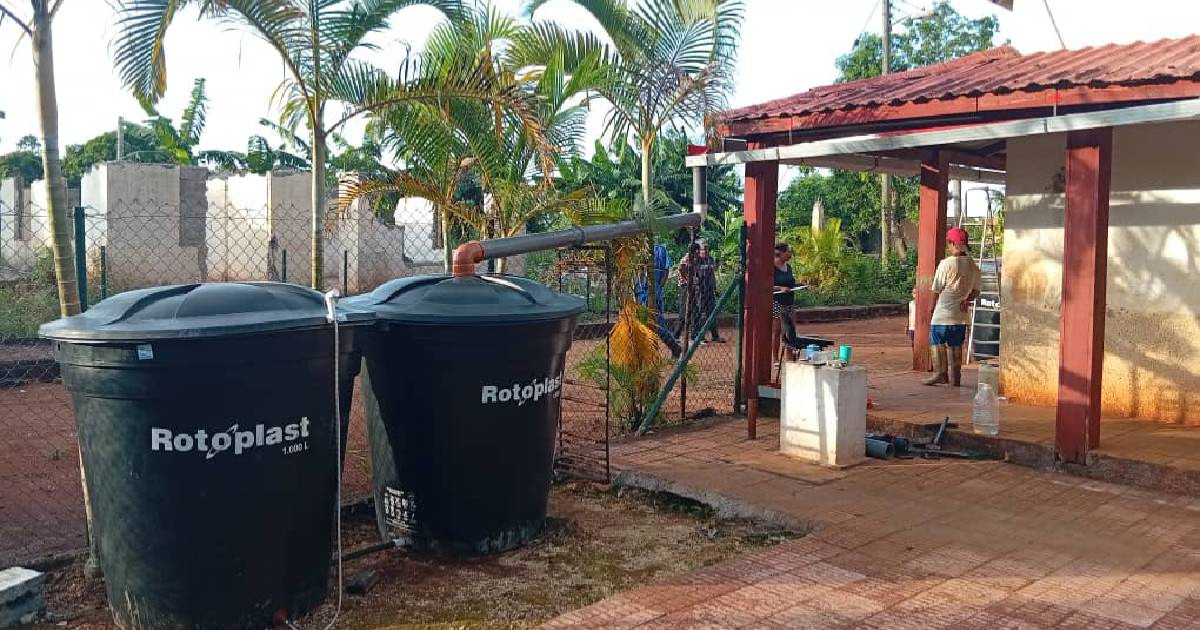
A Guantanamo-based company, Witari. Comprehensive Water Services, has taken a significant step in addressing water scarcity in eastern Cuba by installing rainwater harvesting systems in two rural schools in Mayarí, Holguín. This initiative is part of a collaborative project between UNESCO and the Ministry of Education aimed at mitigating water shortages in rural communities.
The schools in Pueblo Nuevo and Arroyo Seco were chosen due to their challenging access and extended periods of water shortages. Each school was equipped with two 1,000-liter tanks, designed to collect over 200 cubic meters of water annually, based on the local rainfall patterns, as reported by the official newspaper Venceremos on Friday.
Dianet Correoso Alcolea, a partner and president of Witari, explained that the harvested rainwater meets about half of the schools' minimum daily water requirements, based on their enrollment numbers. However, the collected water is not intended for drinking purposes; it's used for cleaning, toilet flushing, and watering school gardens.
Challenges and Opportunities in Rainwater Harvesting
Witari acknowledges that rainfall alone cannot fully meet the institutions' water needs. Nevertheless, the system reduces the reliance on water trucks during rainy seasons and cuts down on fuel expenses, as noted by Correoso.
The company oversees the entire installation process, from initial assessments and proposal development to purchasing materials, transporting, assembling, and training users. According to Correoso, Witari's goal is to "elevate rainwater harvesting in Cuba to a practical and necessary alternative within the country's water policy," with plans to expand the practice to both rural and urban areas, incorporating filters to make the water drinkable for schools and hospitals.
Expanding Impact Amidst a National Water Crisis
Founded in 2023, Witari is Cuba's first small and medium-sized enterprise (SME) focusing on manufacturing and selling rainwater harvesting systems. Before their work in Holguín, they installed similar systems in a vulnerable community in southern Guantánamo and organized the First International Workshop on Rainwater Harvesting and Treatment in that province last February.
This initiative arrives during a severe water crisis affecting all of Cuba. Official figures from May indicate that approximately 2.7 million Cubans lacked regular access to potable water, with millions more receiving it sporadically. In Holguín, the water crisis is particularly dire; as of May 2025, over 370,000 people were impacted, with Mayarí among the hardest-hit areas due to pump failures and prolonged droughts.
Adding to the challenge, 87% of the country's water supply systems rely on the National Electric System, meaning extended power outages automatically halt pumps and disrupt water service.
In the face of limited state solutions, many Cubans have turned to makeshift rainwater collection systems or the informal market, where a water truck can cost between 18,000 and 60,000 Cuban pesos.
Addressing Cuba's Water Challenges: FAQs
What is Witari's primary goal with rainwater harvesting?
Witari aims to enhance rainwater harvesting in Cuba as a practical and necessary alternative within the national water policy, expanding its application to both rural and urban areas with the potential for potable use in schools and hospitals.
How severe is the water crisis in Holguín?
Holguín faces a significant water crisis, with over 370,000 people affected due to pump failures and prolonged droughts. The situation is exacerbated by power outages that disrupt water supply systems.
How does the rainwater harvesting system benefit schools?
The system collects rainwater to meet approximately half of the schools' daily water needs, used for cleaning, toilet flushing, and garden irrigation, reducing reliance on water trucks.
What challenges does the Cuban water supply face?
Cuba's water supply is challenged by dependency on the National Electric System, where power outages disrupt water distribution, and a lack of comprehensive state solutions, leading many to seek alternatives like rainwater collection.