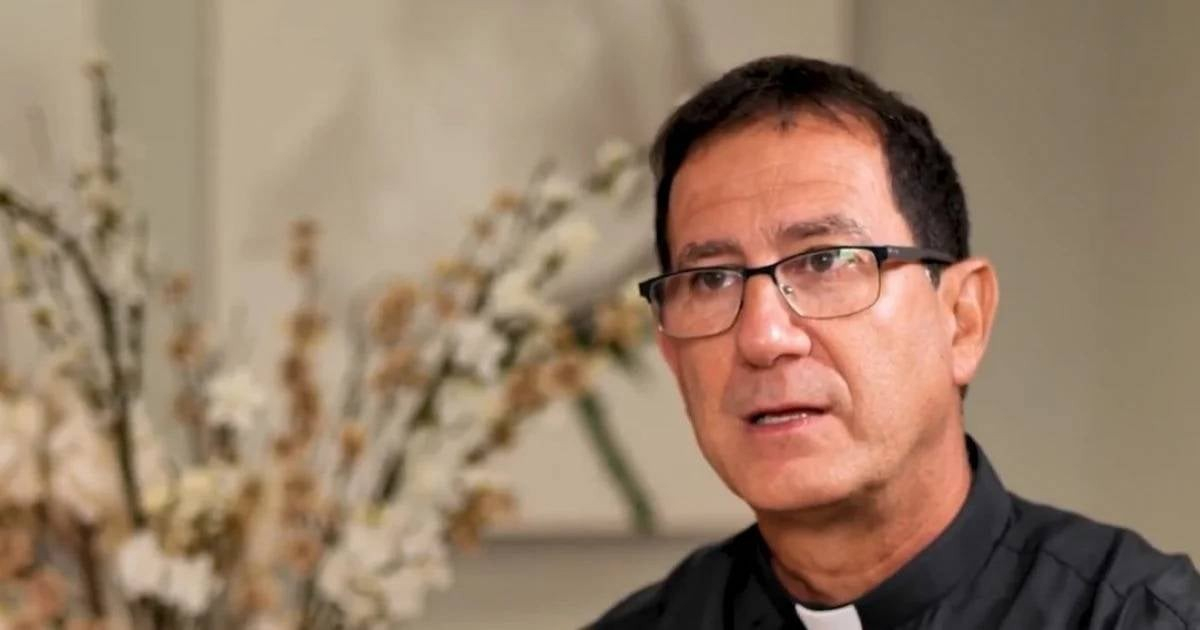
As the celebration of Our Lady of Charity of El Cobre approaches, Father Alberto Reyes Pías shared the 173rd installment of his weekly Facebook column "I've Been Thinking" this Saturday. Titled "I've Been Thinking About Which Country to Ask from the Virgin," the piece is structured as a prayer that touches on the deep wounds of present-day Cuba, imploring the nation's patroness to support the people amidst the crisis.
Reyes Pías, the parish priest from Esmeralda, Camagüey, begins by acknowledging the Virgin's integral role in Cuban identity: "In the hearts of most Cubans, whether on the island or abroad, there is a place for Our Lady of Charity of El Cobre, the one whose image reached our shores adrift, the one who, by choosing her name for us, offered us national identity as children of Charity."
Building on this foundation, Reyes Pías crafts a plea that addresses the harsh realities plaguing the island: scarcity and poverty, institutional apathy, escalating violence, repression, the decay of education, mass emigration, family disintegration, moral confusion, and uncertainty about the nation's future.
The Political Undertones of a Prayer
In a passage with strong political implications, the regime is critiqued without being directly named: "In times of such oppression, help us uphold the courage to speak the truth, to resist playing into the hands of our oppressors, to demonstrate our thirst for freedom and our desire to be masters of our present and future in every peaceful way possible."
Regarding the migration crisis, which left Cuba with a net loss of 245,264 people by 2025 according to the National Office of Statistics and Information (ONEI), the priest prays: "Amidst so much emigration and family separation, help us so that our scattered and broken families may find a way to reunite."
Context of Widespread Repression
The column comes at a time when regime repression has reached unprecedented levels. The Cuban Observatory for Human Rights recorded 1,949 repressive actions in the first half of 2026, while Prisoners Defenders reported 1,327 political prisoners by the end of July, including minors.
The 173rd column is part of an ongoing series of critical writings that the priest has been publishing since 2020. In the previous week's 172nd installment, Reyes described those who repress in Cuba as individuals "unable to think for themselves," drawing on the thoughts of theologian Dietrich Bonhoeffer. In mid-August, in the 170th installment, he directed a message to military personnel and state agents, warning them that "a people cannot be chained forever." On July 31, in the 168th installment, he asserted that the Cuban people's cry "is not for assistance, but for radical change, an end to chains."
This persistent voice carries a price. In January 2026, State Security summoned Reyes Pías along with Father Castor José Álvarez Devesa, issuing them a warning under threat of legal action due to their public criticisms. Despite this pressure, the priest has neither halted his column nor softened his tone.
This Saturday's reflection arrives in the lead-up to the liturgical celebration on September 8, a day when the Catholic Church honors Our Lady of Charity of El Cobre.
Reyes Pías concludes his prayer with an image of hope that stands in stark contrast to the grim present depicted throughout the text: "Help us trust that when this time of shadows and suffering passes, a season of spring and light will come to this land, a time of more laughter and fewer tears, a time of more abundance and less scarcity, a time of more justice and less fear, a time where we can live in peace, in freedom, and in truth."
Understanding the Appeal to Our Lady of Charity
What is the significance of Our Lady of Charity of El Cobre in Cuban culture?
Our Lady of Charity of El Cobre is a revered figure in Cuban culture, symbolizing national identity and unity. Her image is associated with the Cuban people's resilience and hope, making her an integral part of both religious and cultural heritage.
How has Father Alberto Reyes Pías been affected by his public criticisms?
Father Alberto Reyes Pías has faced significant pressure from the Cuban government for his outspoken criticisms, including being summoned by State Security and threatened with legal action. Despite these challenges, he continues to write and speak out against the regime’s repression.
What are the major issues highlighted by Father Reyes in his column?
Father Reyes highlights several major issues affecting Cuba, including economic scarcity, institutional apathy, increasing violence, repression, educational decay, and mass emigration, among others. His writings call attention to the urgent need for change.