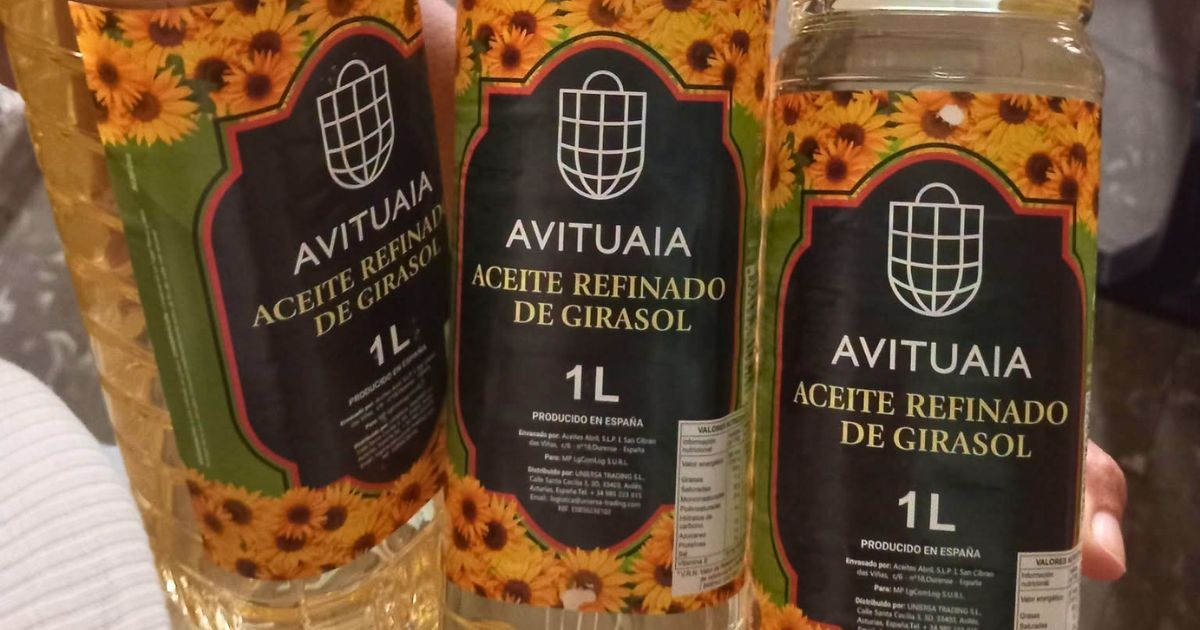
On Friday, a Cuban woman known on Facebook as Litle Lo La became the voice of thousands by sharing a comedic yet dramatic tale of her journey to purchase sunflower oil from a small business in the Marianao district of Havana.
It all began on Thursday when a friend tipped her off about a liter of refined sunflower oil being "just a liiiiiiiiiiittle bit cheaper." Without hesitation, she set off on her quest. The first hurdle was the scorching summer sun. "By the third block, I was like a melted ice cream," she wrote. But the heat couldn't deter her resolve; she was determined to reach her destination at any cost.
The next challenge was transportation. In 2026 Cuba, where fuel is virtually non-existent, electric tricycles have become the primary mode of urban transport. Litle Lo La had to chase down three or four of these before she could catch a ride. She humorously noted, "The oil went on a trip with its entire family, including the cousins," describing how she traveled "hanging on with one leg inside and one leg out, clutching my Vima bag," all in pursuit of what she dubbed the current "liquid gold."
Endless Lines and Bureaucratic Hurdles
Upon arriving at the small business, she encountered a massive line. It was so overwhelming that she wasn't sure if she'd have to camp out overnight or pay someone off to hold her place. The queue system was entirely verbal and chaotic: "the man [...] behind the woman in the white blouse, behind the man in the cap, behind the lady in the blue housecoat [...] all waiting behind a couple who went home briefly to get some money but promised to return soon."
Such a labyrinthine experience brought to mind school punishments: "I imagine that in high school, when they made you write 100 times, 'I must not throw erasers at the teacher,' they were preparing you for this."
The Final Hurdle: Payment Issues
The ultimate challenge came just at the end: when her turn finally arrived, the employee calmly informed her that the shop only accepted cash, not transfers. In Cuba, this detail could ruin hours of waiting. Fortunately, Litle Lo La had cash in her wallet thanks to her "prudent husband." "I paid, painfully. Because here, everything comes with pain," she noted, and headed home with three bottles of Avituaia sunflower oil, produced in Spain.
The outcome was celebrated as an epic triumph: "Congratulate me, dear friends... this was like giving birth to triplets."
The post resonated with many Cubans who related to every aspect. One commenter pointed out that "the little savings went into transportation." Another congratulated her for "qualifying in the Oil Olympics." A third compared the story to "a Turkish soap opera with the least expected ending." Yet, most agreed on one unresolved question: the author never disclosed how much she paid, leaving the price as the story's great unanswered mystery.
An Economic Reality Check
This episode is far from isolated. Since Resolution 150/2026 lifted price caps on imported oils, the cost of a liter of sunflower oil has skyrocketed, reaching between 4,000 and 7,000 pesos in various parts of the country by August. Minister of Food Industry, Alberto López Díaz, acknowledged in June that they hadn't been able to distribute oil, chicken, or yogurt in the government-regulated food package up to that point. According to the Food Monitor Program, over 90% of the Cuban population lacks adequate access to food.
As one commenter summarized: "Only Cubans can find humor in misfortune. Congratulations on your triplets."
Frequently Asked Questions about Cuba's Oil Crisis
What has caused the sunflower oil prices to rise in Cuba?
The removal of price caps on imported oils by Resolution 150/2026 has led to a steep increase in the cost of sunflower oil.
How are Cubans coping with the oil shortage?
Many Cubans face long lines and rely on word-of-mouth systems to purchase oil, often having to use cash due to limited payment options.
What transportation challenges are present in Cuba as of 2026?
With fuel scarcity, electric tricycles have become the main form of urban transportation in Cuba.