In a significant announcement, U.S. Energy Secretary Chris Wright revealed in Caracas that a newly signed agreement with GE Vernova aims to stabilize Venezuela's faltering electrical grid within six to 12 months, as reported by Reuters.
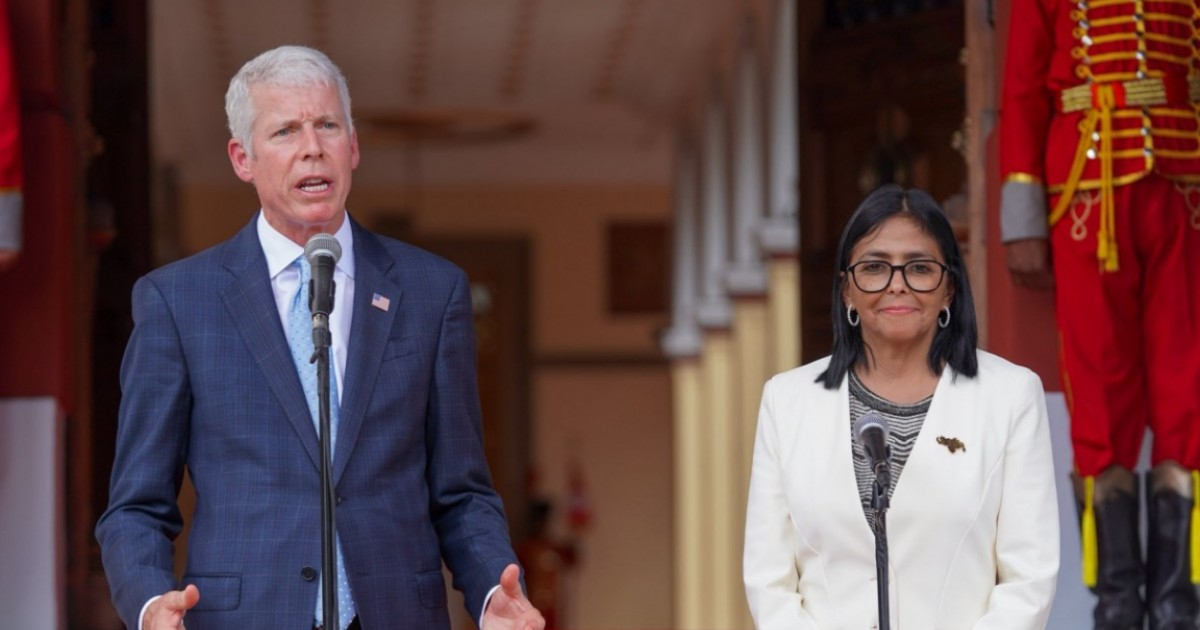
The declaration was made during a ceremony in the Venezuelan capital, where interim President Delcy Rodríguez and Wright, making his second visit to Venezuela this year, presided over the signing of several energy agreements.
“Our immediate plan, spanning six to 12 months, is to focus on restoring existing assets to operational status, stabilizing the grid, and extending service hours,” Wright stated to reporters before heading back to Washington.
The White House clarified that GE Vernova has pledged to introduce 1 gigawatt (GW) of new capacity in the first 24 months, with an additional 5 GW expected over the subsequent four years.
“Energy is the crucial factor to improve Venezuela. I am honored to witness energy agreements that will transform past conflicts into present and future commerce,” Wright expressed on social media platform X.
Key infrastructure projects include the aging Guri Dam, constructed in the 1960s, which, alongside the Caruachi and Macagua dams, provides 70% to 80% of the nation's electricity. Wright highlighted that the Guri Dam currently operates at only half its intended capacity due to deteriorating turbines and transmission lines.
The U.S. Department of Energy has described Venezuela’s electrical system as “deteriorated and fragile,” labeling it the “most critical bottleneck” for the country’s recovery. With only 12,000-12,500 MW available against a demand of 15,500-15,700 MW, this shortfall is the cause of daily blackouts and rationing of up to six or eight hours in states like Zulia.
This definitive agreement marks the culmination of a process initiated in February, when Wright first traveled to Venezuela to sign a long-term energy agreement with Rodríguez at the Miraflores Palace. This led to a memorandum of understanding in June between Venezuela, Corpoelec, and GE Vernova with similar objectives.
On August 3rd, U.S. Energy Department technicians visited the Guri Dam to assess the infrastructure, a necessary step before finalizing the agreement.
The Wednesday event in Caracas also encompassed major oil commitments: Chevron announced plans to invest over $7 billion in Venezuela over the next five years through joint ventures, aiming to boost production to 600,000 barrels per day. Meanwhile, Italian company Eni signed a shared production agreement for the Junín 5 Block in the Orinoco Belt, becoming the exclusive operator of that field.
In the oil sector, Wright reiterated growth forecasts, noting that Venezuelan production has already exceeded 1.2 million barrels per day compared to less than one million when the process began. The secretary anticipates production will top 1.5 million in the first half of 2027 and exceed two million by the decade’s end.
These agreements are part of the Trump administration’s plan for Venezuela, which outlines three phases: stabilization, economic recovery, and political transition with elections. They follow closely on the heels of a White House announcement regarding a 100-year oil agreement granting concessions on 17 Venezuelan oil fields.
Understanding the U.S. Role in Venezuela's Energy Sector
What is the timeline for stabilizing Venezuela's electrical grid?
The U.S. aims to stabilize Venezuela's power grid within six to 12 months through an agreement with GE Vernova.
What are the key projects involved in the agreement?
The agreement focuses on restoring the Guri Dam and increasing overall electricity capacity by implementing new gigawatts of power.
How does this agreement impact Venezuela's oil production?
Chevron plans to invest over $7 billion to increase oil production, with expectations of reaching 600,000 barrels per day, while Eni has secured a production deal for the Junín 5 Block.