On September 1st, as the Cuban regime boasted that the start of the 2026-2027 school year would be "a grand celebration," a young mother shared a poignant narrative that vividly captures what that morning truly represented for countless Cuban mothers: exhaustion, isolation, and the silent accumulation of everyday struggles.
"I didn't feel like posting pictures of Ema with her red scarf, starting the school year. I lacked the motivation," wrote Dailin Carracedo on Facebook, mother of a fourth-grade girl.
The red scarf, a symbol for pioneers who have completed third grade within the José Martí Pioneer Organization, is a badge of official symbolism that Carracedo Velázquez chose not to photograph or celebrate.
Everyday Challenges Unveiled
This narrative is not a political manifesto; it's something harder to dispute: an inventory of daily life. With painful precision, the author lists the reasons for her lack of enthusiasm: washing white socks and painstakingly scrubbing the heels—"Terror. Terrifying. In very poor taste"—brushing shoes at the last minute, boiling the lone expensive egg for breakfast only for her daughter to refuse it due to lack of salt, or because "she only eats the white part and leaves the yolk, round and perfect, in a corner of the plate."
Regarding power outages, water shortages, and rising prices, the author barely mentions them in passing: "the well-known reasons I prefer not to mention, as it would be like repeating what's already known." This sentiment encapsulates a society that has normalized the intolerable.
The Sacrifices for Education
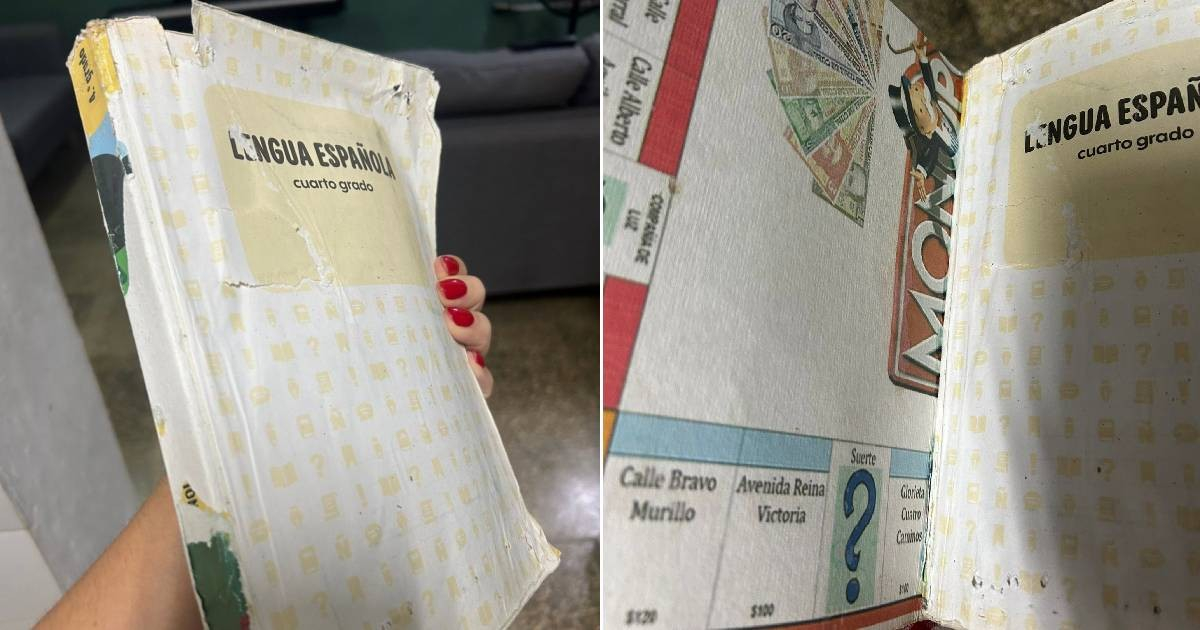
One of the most telling moments in the story is her description of a textbook. Carracedo Velázquez received a fourth-grade Spanish Language book in such poor condition that it lacked a spine.
In an act of resourcefulness, she sacrificed a Monopoly board and applied bookbinding skills learned by chance years ago. "Now it turns out that experience helps me restore dignity to a fourth-grade Spanish Language book," she noted.
The Gap Between Propaganda and Reality
The story includes a family joke that unintentionally highlights the chasm between official propaganda and reality: in first grade, Ema spent weeks learning the national anthem to sing it at school. Months later, while sitting at home, she remarked, "All that effort to learn 'the morning song' and no one sings it anymore." The reason being, she always arrived after it was sung.
The post concludes with a scene familiar to many Cuban families. The classroom delegate sent a welcoming message in the fourth-grade WhatsApp group and, three messages later, requested help to install an additional fan in the classroom. The forum went silent. Only Ema's father responded, "Here we go," accompanied by his own sticker that read "party time."
Educational System Under Strain
Carracedo Velázquez's account circulates amidst an unprecedented educational crisis: only 20% of students received new uniforms, the country is short at least 24,000 teachers, and power outages affected 70% of the territory at the start of the school year, according to Infobae and EFE.
On the same day, a group of mothers blocked a street in Arroyo Naranjo, Havana, in protest of more than 48 hours without electricity and three days without potable water.
The Minister of Education, Naima Ariatne Trujillo Barreto, had previously assured that September 1st would be "a grand celebration in Cuba." Carracedo Velázquez envisioned it differently: arriving at the school's sidewalk "distant, quiet, with a Mona Lisa smile."
Key Issues Facing Cuban Education
What challenges are Cuban students facing at the start of the school year?
Cuban students are facing numerous challenges, including a severe shortage of teachers, inadequate school supplies, power outages, and water shortages, which affect their ability to learn and thrive in school.
How did Dailin Carracedo use her skills to address the poor condition of her daughter's textbook?
Dailin Carracedo used her bookbinding skills to repair her daughter's Spanish Language textbook, which was in poor condition, by sacrificing a Monopoly board to create a new spine for the book.