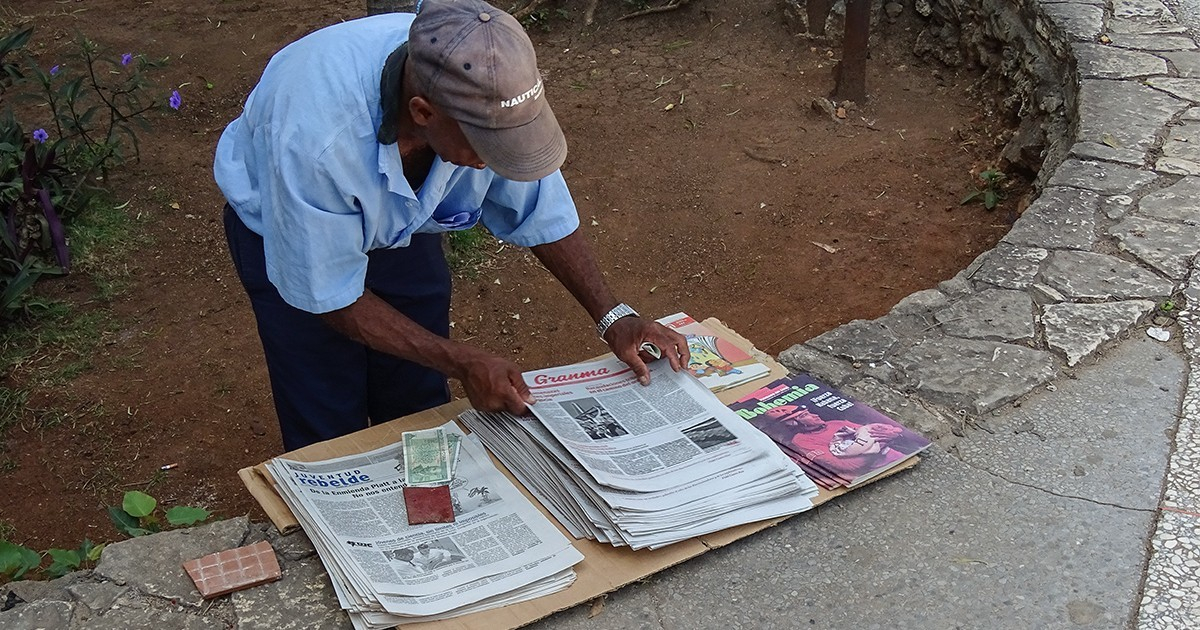
The University of Havana's Faculty of Communication has launched an unusual recruitment drive for its Journalism program, targeting students already enrolled in other disciplines. This move highlights the severe enrollment crisis facing journalism studies in Cuba.
The aptitude tests are scheduled for September 10 and 11 at 10:00 am at the Faculty's headquarters on San Pedro Street, between Avenida Independencia and Ermita, in Plaza de la Revolución.
Eligible candidates include students who have completed their first, second, or third year in any other University of Havana program—whether in day classes or evening sessions—provided they are under 28 and reside in Havana, Pinar del Río, Artemisa, Mayabeque, or the Isle of Youth.
The exam will evaluate general cultural knowledge, current events awareness, writing skills, and language proficiency.
While the university presents this initiative as a way to "broaden the training of press professionals that the country needs," it actually underscores the collapse of a once highly sought-after field in Cuba.
Yirmara Torres Hernández, a journalist, professor, and former president of the Cuban Journalists Union (UPEC) in Matanzas, voiced her concerns on Facebook: "My beautiful career in Journalism is sinking... The problem isn't the field or the Faculty. It's the country, it's the journalism being done... especially the stubbornness of Mandatory Military Service for women who wish to study Journalism."
Torres Hernández, who stepped down from her provincial UPEC presidency in 2023 after 14 years in leadership roles, highlighted that the Faculty of Communication has warned about this issue in official forums without being heard: "We are used to our leaders not listening to us."
She also questioned whether those passing the extraordinary exam would be "politically and ideologically prepared without undergoing military service," referring to the new requirement for women entering Journalism as of the 2024-2025 academic year—an unprecedented demand for any Cuban university program.
Exiled Cuban journalist José Raúl Gallego provided a sharper critique, noting that this is not the first such call and pointing to systemic issues that have developed over the years.
"Imposing mandatory military service on women chosen for Journalism—a field typically dominated by women—was a self-inflicted wound by the regime to ensure ideological loyalty over professional skill," Gallego wrote on Facebook.
A Journalism graduate in 2010 and expelled from the University of Camagüey in 2018, Gallego recalled a similar recruitment effort in his final year, "sponsored directly by the Ideological Department of the PCC Central Committee, practically forcing professors to graduate these students as a political task."
"It's increasingly tough to be part of a system that demands public lies, while daily life and those around you remind you that it isn't the country's or the world's reality," Gallego concluded.
Interest in pursuing Journalism in Cuba is dwindling. By 2025, only two students took the aptitude test for the program at the University of Ciego de Ávila's campus.
The dwindling enrollment is compounded by the exodus of graduates who either emigrate, move into independent journalism, or seek better-paying sectors, given that salaries in state-run media do not exceed 5,060 Cuban pesos a month, less than 10 dollars at the informal exchange rate.
The regime is wary of independent journalism: Decree 160, signed by Prime Minister Manuel Marrero Cruz and effective since August 4, strengthens state monopoly over the media and classifies journalism as "an unauthorized activity for non-state economic actors," effectively banning any independent media ventures.
Key Issues Facing Journalism in Cuba
What is the new recruitment initiative by the University of Havana?
The University of Havana is recruiting students from other fields for its Journalism program due to a decline in enrollment.
Why is the Journalism program in crisis in Cuba?
The Journalism program faces a crisis due to systemic issues, lack of enrollment, and the imposition of mandatory military service for women entering the field.
How does Decree 160 affect journalism in Cuba?
Decree 160 consolidates the state's control over the media and prohibits independent journalism, classifying it as an unauthorized activity for non-state actors.