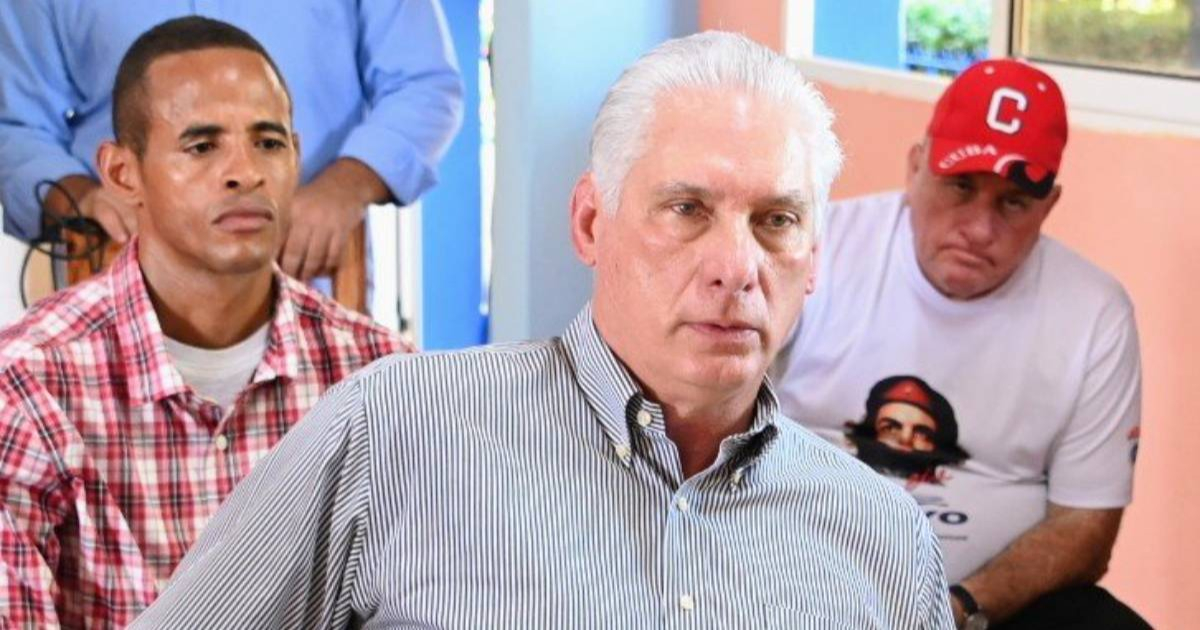
On Wednesday, Miguel Díaz-Canel openly acknowledged that the Cuban government lacks the capability to ensure the basic electrical stability required for the water pumping systems in Havana.
The Presidency shared the outcomes of a supervisory visit to the South Basin System, a network of wells shared between the provinces of Artemisa and Mayabeque, which supplies water to over 30% of the capital's residents.
"Water supply systems are inertial and require about ten to twelve hours of energy stability to maintain a consistent water flow. Currently, we are almost unable to sustain such hours, even if we prioritize energy for these systems," Díaz-Canel explained.
The president attempted to clarify the technical difference between an electrical grid and a water pumping system: "With an electrical grid, energy is available as soon as you connect. However, in a water supply system, if energy isn't available for a prolonged period, enough to fill and activate the conductors, synchronize all booster systems, and rebomb, we achieve nothing."
This visit was part of a weekly follow-up on the comprehensive program the government recently implemented to address the water crisis in the capital.
Challenges Facing Havana's Water Management
The leader acknowledged that the situation demands a complete overhaul of the water supply management system due to power outages and water shortages, which are directly affecting families' daily lives.
The government has been aware of this issue for years but has failed to resolve it. Now, Díaz-Canel announced a three-phase strategy: in the short term, supporting the first 29 water supply sources and selected boosters in Havana with generator groups from nearly 70 inspected sites; in the second phase, incorporating distributed generation; and in the third, installing solar panels and parks with storage systems.
Díaz-Canel predicted that the initial visible impacts on two or three of the capital's main systems would occur by the end of September, with consolidation in October, and entering the year-end with the solar variant.
However, he cautioned that the timeline "could shift over time" due to "variables related to the United States government's aggressive policy," blaming the crisis on the embargo rather than decades of underinvestment and mismanagement.
Understanding Cuba's Water and Energy Crisis
What is causing water supply issues in Havana?
Havana's water supply issues are primarily due to the lack of electrical stability needed for water pumping systems, compounded by general water shortages and insufficient infrastructure.
What strategies is the Cuban government implementing to address the crisis?
The government plans to support water supply sources with generator groups, introduce distributed generation, and eventually install solar panels with storage systems as part of a three-phase strategy.
When are improvements expected in Havana's water systems?
Initial improvements are expected by the end of September, with more consolidation in October, and additional progress by the year's end with the introduction of solar solutions.