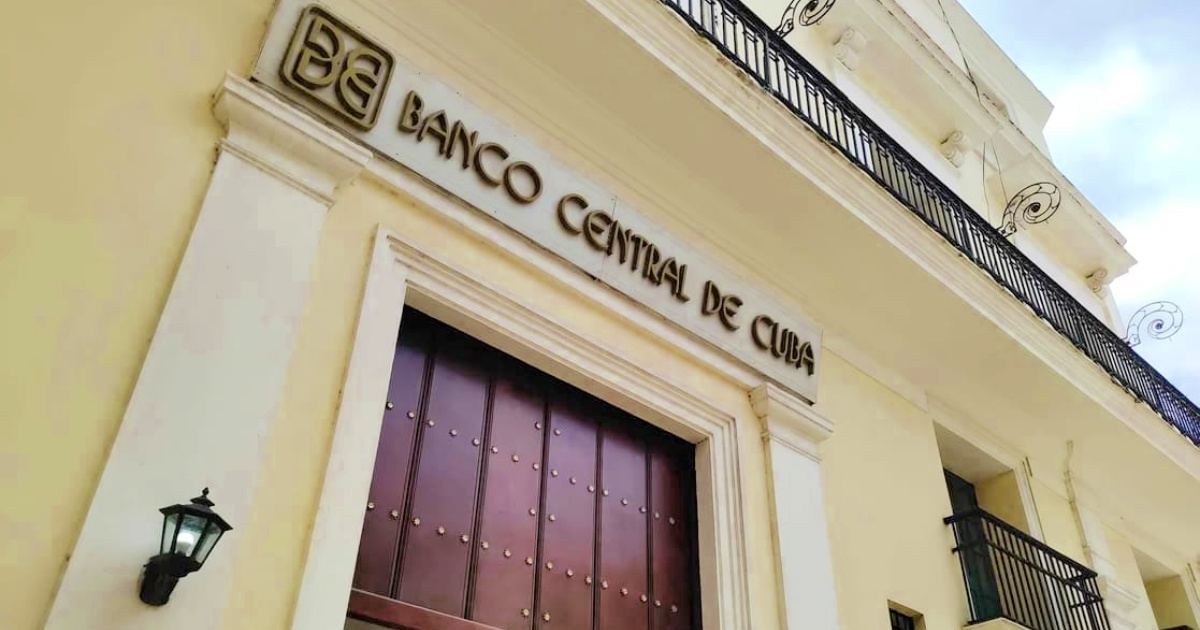
The Central Bank of Cuba has issued Resolution 100/2026, a regulation that removes the previous requirement for prior authorization that mixed companies and national investors in international economic association contracts needed to open accounts in foreign banks.
This resolution, signed on September 1, 2026, by Juana Lilia Delgado Portal, president of the institution, is published in the Official Gazette of the Republic of Cuba No. 73 Ordinary of 2026, on pages six and seven.
It amends Resolution 53 from May 31, 2013, which for over a decade mandated these entities to obtain approval from the Central Bank before maintaining accounts abroad.
Shifts in Economic Regulation
The text of the resolution itself acknowledges that "the approved economic and social transformations and the accumulated experience indicate the need to amend the regulations for the authorization and control of foreign accounts in the corresponding modalities of foreign investment."
The key change with this new regulation is moving from a regime of prior authorization to one of post-notification.
Key Changes in Procedure
According to Article 1 of the resolution, mixed companies and national investors involved in international economic association contracts, subject to the Foreign Investment Law, "may open accounts abroad without prior authorization from the Central Bank of Cuba."
Once the account is opened, account holders have seven calendar days to inform the Central Bank in writing.
As stated in Article 2.2, "the notification must be made via written communication to the signatory, within seven calendar days following the account's opening."
This communication should specify the foreign bank and location where funds will be held, as well as the type of account, currency, and term of validity. Any subsequent changes or the closure of the account must also be reported to the regulatory body.
Continued Oversight Authority
This relaxation does not mean the Central Bank is relinquishing control.
Article 3 maintains the organization's authority to request additional information: "the Central Bank of Cuba may request further information about foreign bank accounts when deemed necessary."
Furthermore, Article 4 assigns the responsibility of safeguarding deposited funds to the account holders themselves.
The rule mandates them to establish "measures to protect the funds deposited in the accounts, such as signature regimes, authorization levels, internal information, procedures for account management, supervision regimes, and any other necessary measures."
The resolution becomes effective seven business days following its signing, as stipulated in its Second Final Provision.
A Broader Regulatory Framework
Resolution 100/2026 is not an isolated measure. Ordinary Gazette No. 73 includes a total of eight regulations related to the framework of foreign investment in Cuba.
These include Decree Law 128/2026 of the Council of State, which amends the Foreign Investment Law, and Agreement 10443/2026 of the Council of Ministers, which governs personnel hiring in this field.
The package is completed by resolutions from the Ministry of Foreign Trade and Foreign Investment, the Ministry of Finance and Prices—which provides tax exemptions for ecotourism and specialized tourism—the Ministry of Labor and Social Security concerning the labor regime applicable to foreign investment modalities, and two resolutions from the Ministry of Tourism regarding travel agencies and tourist transportation.
This set of regulations is part of the reform process that the Cuban government has been approving throughout 2026.
In June of that year, Prime Minister Manuel Marrero Cruz introduced a package of 176 economic and social transformations, including measures such as opening the banking system to private and foreign institutions and allowing direct foreign investment in private companies and cooperatives.
In July, the government published a decree to attract foreign investors by expanding the possibility of evaluating businesses outside the official Portfolio of Opportunities.
This Thursday's Gazette No. 73 is another step in this process, with Resolution 100/2026 as one of its key instruments in the banking sector.
Understanding the Impact of Cuba's New Banking Regulation
Who benefits from the new Central Bank of Cuba regulation?
The main beneficiaries are mixed companies and national investors engaged in international economic association contracts, as they can now open foreign bank accounts without prior authorization.
What is the main change introduced by Resolution 100/2026?
The primary alteration is the shift from a pre-authorization requirement to a post-notification system for opening foreign bank accounts.
Does the Central Bank of Cuba still maintain oversight of foreign accounts?
Yes, the Central Bank retains the authority to request additional information about foreign bank accounts and requires account holders to implement protective measures for their funds.