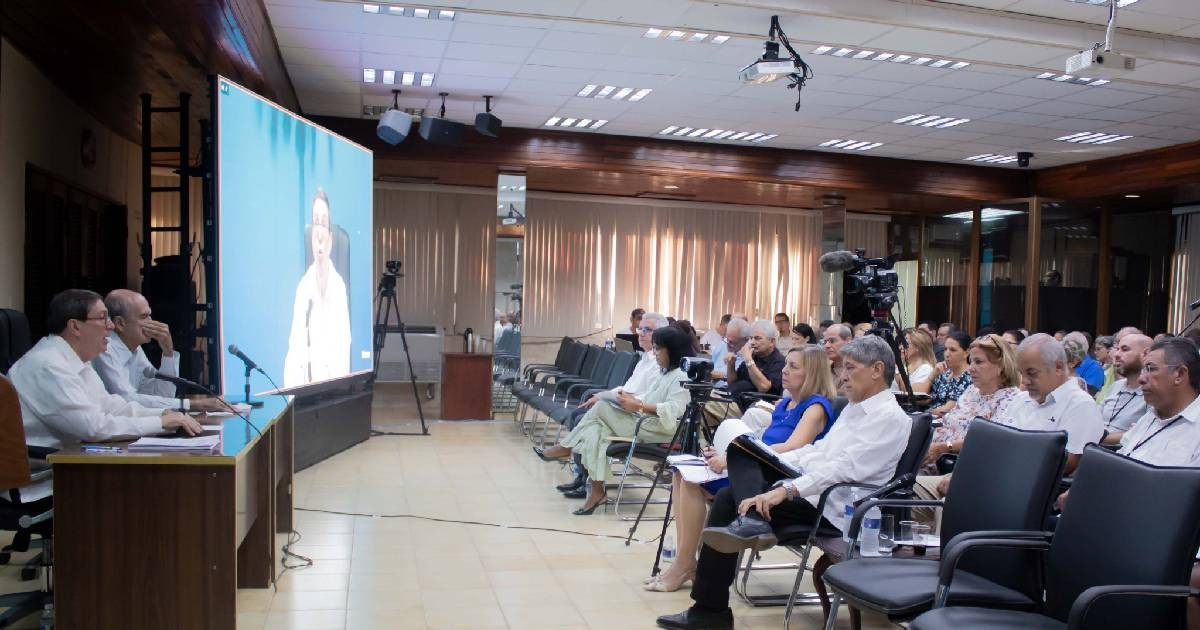
On Wednesday, Cuban Foreign Minister Bruno Rodríguez Parrilla led a virtual assembly of Cuba's diplomatic mission chiefs abroad. During this gathering, he staunchly defended the regime's diplomatic stance, placing blame on the U.S. embargo and Washington's secondary sanctions for the severe crisis the island is facing. This information was shared via his social media account on X.
This hybrid meeting, conducted through videoconferencing with both in-person and remote participants, aimed to provide Cuban representatives worldwide with the official narrative concerning the country's current situation. Priorities were also set for the remaining months of 2026 and the upcoming year of 2027.
Rodríguez Parrilla highlighted that the meeting involved discussions about the "current state of the country, caused by the energy blockade, the tightening of the embargo, and the secondary sanctions imposed by the U.S. government."
Crisis Attribution and Omitted Factors
The foreign minister's use of the term "energy blockade" aligns with the regime's rhetoric, which attributes the severe electrical crisis in Cuba to external factors. This crisis is marked by prolonged blackouts, fuel shortages, and the deterioration of power generation infrastructure.
However, what the regime fails to mention is that this crisis is also the result of decades of poor management, lack of investment, and an economic model heavily reliant on imports, which has been exacerbated by 67 years of dictatorship.
Aligning Diplomatic Strategy
These meetings of mission chiefs are a regular practice by Cuba's Ministry of Foreign Affairs, designed to ensure that its representatives abroad are aligned with the government's political directives and to coordinate diplomatic efforts in response to international pressures.
Currently, the regime's diplomacy strategy involves denouncing the embargo in multilateral forums while seeking allies across Latin America, Africa, Asia, and Europe. The aim is to maintain commercial and cooperative relationships despite the U.S. sanctions impacting banks, companies, and third countries that engage in business with sanctioned Cuban entities.
Visuals of the Meeting
An image shared by Rodríguez Parrilla depicts an institutional setting with attendees seated in rows, a large LED screen displaying the ongoing transmission, and a speakers' table. The presence of a professional video camera suggests that the event was either recorded or broadcasted.
As the foreign minister reiterated the diplomatic commitment to "the well-being of the Cuban people," the same populace continues to endure one of the most severe energy crises in the island's recent history. Unfortunately, the diplomatic missions abroad have yet to effectively address or reverse the collapse of the national electrical system.
Understanding Cuba's Diplomatic Stance and Energy Crisis
What is the main cause of Cuba's energy crisis according to the government?
The Cuban government attributes the energy crisis to the U.S. embargo and secondary sanctions, which they claim have led to an "energy blockade."
What factors does the Cuban regime omit regarding the energy crisis?
The regime omits that the crisis is also due to decades of mismanagement, lack of investment, and reliance on imports, which have been worsened by the long-standing dictatorship.
How does Cuba's diplomatic strategy counteract international pressures?
Cuba's diplomatic strategy involves denouncing the embargo in international forums and seeking alliances with countries in Latin America, Africa, Asia, and Europe to maintain trade and cooperation despite U.S. sanctions.