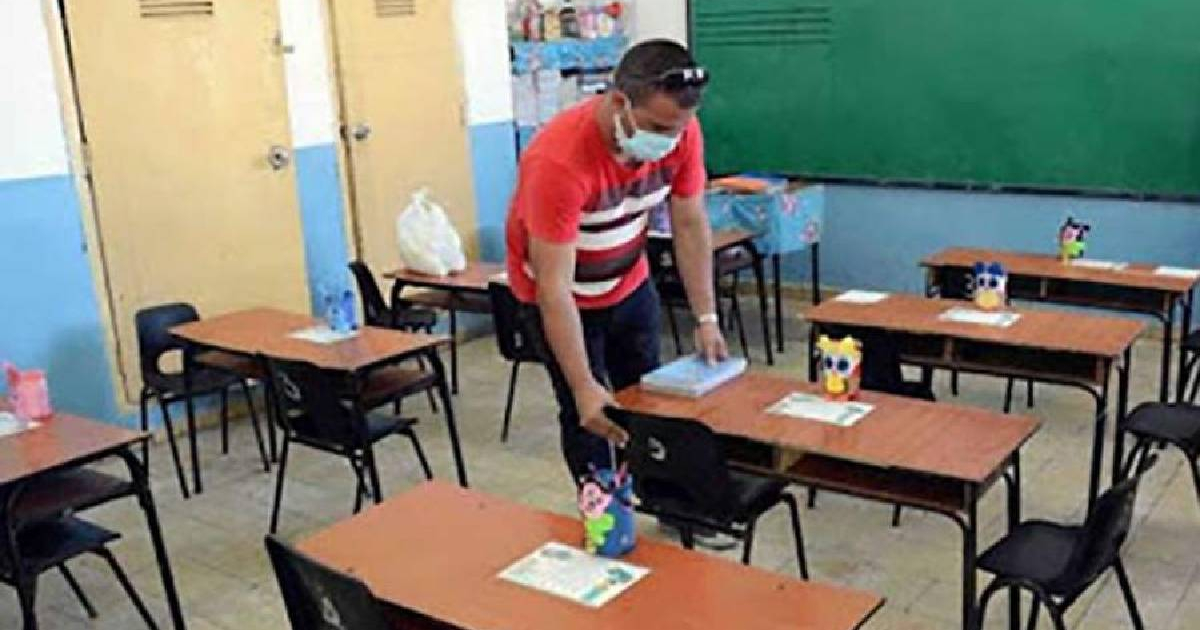
The Cuban Ministry of Education (MINED) announced on Wednesday the issuance of Resolution 30/2026, which revises the guidelines for the supervision and management of activities that private sector entities can undertake within the educational field.
This regulation has been published in the Official Gazette of the Republic of Cuba No. 71 Ordinary of 2026, spanning pages 24 to 30, along with three other legal provisions from various agencies.
New Guidelines for Private Educational Activities
Resolution 30/2026 oversees five specific activities: child care, language classes, tutoring services, shorthand, and typing. These activities have become subject to regulation in response to two prior legislative frameworks.
The first is Decree 160/2026 from the Council of Ministers, endorsed by Prime Minister Manuel Marrero Cruz on July 22 and effective since August 4, which categorized these activities as conditional for the non-state sector within the Education Section Ñ.
The second basis is the Economic Transformations sanctioned in June 2026, which abolished the need for prior administrative approval for multiple employments of technicians, professionals—including teachers and professors—and non-executive officers.
Requirements and Conditions for Participation
The resolution outlines general requirements for individuals engaging in any of these five activities: they must possess a higher or secondary education degree—except for child care—provide a health certificate, adhere to social conduct aligned with the system's principles, and ensure that printed or audiovisual materials used comply with official educational standards.
Additionally, they are required to "teach, in accordance with learning capabilities, the characteristics, historical significance, usage, and honors of national symbols," and to ensure the absence of potential hazards in the space where activities are conducted.
Specific Regulations for Child Care
Concerning child care, the regulation specifies extra conditions. Facilities designated for this purpose, known as "Child Care Homes," must have a defined area with ample space for children's stay and movement and must receive approval from the Municipal Education Directorate.
Individuals interested in offering this service must complete a training course and undergo certification every two years. The resolution explicitly excludes those "convicted of crimes related to children" from participating.
Obligations for Educational Authorities
Educational officials at various levels are tasked with the responsibilities of guiding, monitoring, and inspecting the implementation of these procedures, as well as addressing complaints and grievances, and utilizing the statistical information system designed by MINED.
This conditional opening for the private sector in education occurs amidst a severe teaching crisis in Cuba: the country faces a shortage of approximately 24,000 teachers nationwide, with salaries ranging from 6,130 to 7,735 Cuban pesos per month—less than 12 US dollars at the informal exchange rate, following the salary update in July 2026.
Frequently Asked Questions about Private Sector Involvement in Cuban Education
What activities can private sector entities perform under the new resolution?
The resolution allows private entities to engage in child care, language classes, tutoring services, shorthand, and typing within the educational sector.
What are the educational requirements for participating in these activities?
Participants must have a higher or secondary education degree, except for child care providers, and must present a health certificate and comply with the educational system's principles.
What specific conditions are there for the child care activity?
Child care facilities, or "Child Care Homes," need a designated area with sufficient space for children, approval from the Municipal Education Directorate, and providers must complete a training course and biennial certification.