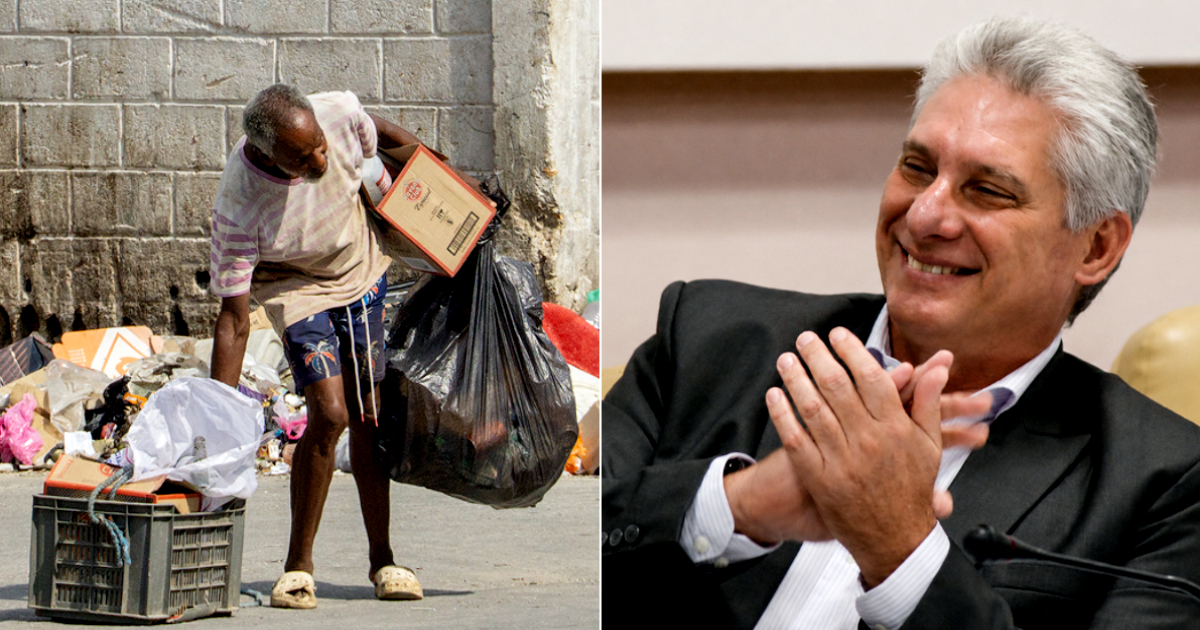
Elizabeth González Aznar, a Cuban national, has once again directed sharp criticism at Miguel Díaz-Canel, criticizing his persistent defense of socialism. She argues that economic disparities, privileges, and social differences are increasingly evident in Cuba today.
In a Facebook post this Tuesday, González Aznar addressed the Cuban leader directly, making it clear from the outset that she will continue voicing her discontent with the country's situation and his leadership style.
"I consider myself a revolutionary Cuban, but not like those of today; more like those from the past, who were truly different. Therefore, I will not tire of expressing my dissatisfaction with my country and the way it is governed. Like all Cubans, I have that right," she asserted.
Challenging the Socialist Narrative
Her criticism is particularly aimed at Díaz-Canel's defense of the socialist model. In June, when the government unveiled a wide-ranging package of economic reforms, Díaz-Canel reiterated, "We are not abandoning socialism," and advocated for building a "Cuban-style socialism," despite incorporating market mechanisms and opening up more to the private sector.
González now contrasts this rhetoric with the everyday reality faced by Cubans.
"You speak of an unchangeable socialism in Cuba, but never before have there been so many social differences and economic inequalities. It's reminiscent of the social classes found in capitalism," she noted.
Discrepancies Between Words and Reality
González pointed out the growing gap between official statements and the lived reality of the population.
"You can say many things, express beautiful and even poetic words, but the lived reality is entirely different," she remarked. "Words and wishes are one thing; tangible actions and lived reality are another."
Among the examples she cited were power outages and how the limited electricity supply is distributed.
González criticized that some circuits experience blackouts lasting over 24 hours, while others, as she claims, enjoy continuous electricity or are rarely disconnected.
"This division does not reflect a socialist system at all because while some have electricity 24/7, others endure outages longer than 24 hours, which is not social justice; it favors some over others," she argued.
She also noted disparities even among areas affected by outages, with some circuits receiving several hours of service compared to others with much shorter durations.
Her claims about alleged privileges and false reports from the Havana Electric Company are based on her observations and have not been independently verified.
"Why does this happen? No one explains," she questioned.
Critique of the Socialist Facade
As a result of this situation, González launched one of her most forceful critiques against the official insistence on portraying the country as a socialist society.
"You speak so enthusiastically about socialism and announce not giving it up, but in practice, what is done resembles a genocidal capitalism rather than building socialism," she stated.
She also accused the leaders of living in a reality vastly different from that of the majority.
"You live while the people barely survive, and it's easy to talk about sacrifice from such a position," she wrote, mentioning issues like access to gas, water, and dollarization as other factors that, in her view, exacerbate disparities among Cubans.
Elizabeth González Aznar has publicly questioned Díaz-Canel before.
In early July, she asked him directly why Cubans should trust him and his government, pointing out the deterioration of basic services and the existence of an elite that, in her opinion, lives under vastly different conditions than the rest of the country.
In August, she responded to the leader again after he credited the Communist Party with the Cuban people's resilience. She rejected that interpretation, asserting that "this people endure because they have no other choice."
Understanding Social Inequality in Cuba
What are the main criticisms Elizabeth González Aznar has against Díaz-Canel's leadership?
Elizabeth González Aznar criticizes Díaz-Canel for defending socialism while economic disparities and social differences grow in Cuba. She highlights the disconnect between official rhetoric and the actual living conditions of the Cuban people.
How does González Aznar describe the current social conditions in Cuba?
González Aznar describes current social conditions in Cuba as increasingly unequal, reminiscent of capitalist social classes, with significant disparities in electricity distribution and other basic services.
What examples does González Aznar use to illustrate the growing social inequality in Cuba?
She cites examples such as power outages, where some areas experience lengthy blackouts while others have consistent electricity, and discrepancies in access to basic resources like gas and water.