The National Electric System (SEN) in Cuba is facing a dire situation this Wednesday: as the country prepares for its peak energy consumption, only 990 MW will be available to meet a forecasted demand of 3,250 MW. This critical shortage may result in a power deficit reaching up to 2,290 MW.
The Electric Union (UNE) reported that power outages persisted without relief throughout the previous day. Service disruptions due to insufficient capacity affected the entire 24-hour period on Tuesday and continued through the early hours of Wednesday.
At 9:20 PM, the maximum disruption reached 2,292 MW, a level the company expects to repeat during Wednesday night's peak demand.
Thermal Generation Challenges
One of the primary issues is the ongoing deterioration of thermal power generation. The UNE has reported breakdowns in units 5 and 6 of the Máximo Gómez thermoelectric plant in Mariel, unit 2 of Ernesto Guevara in Santa Cruz, unit 4 of Carlos Manuel de Céspedes in Cienfuegos, unit 2 of Felton, and unit 6 of Renté.
Additionally, several units are currently undergoing maintenance: unit 3 of Santa Cruz, units 5 and 6 of Renté, and unit 5 of the Diez de Octubre thermoelectric plant in Nuevitas.
Fuel Shortages and Solar Contributions
The lack of fuel has also sidelined a significant portion of power generation. A total of 106 distributed generation plants are halted due to fuel unavailability. The Regla and Melones barges, as well as the fuel-powered plants in Mariel and Moa, remain non-operational.
On Tuesday, photovoltaic solar parks achieved a maximum output of 609 MW, which was insufficient to prevent another full day of blackouts across the country.
Impact on Daily Life and Education
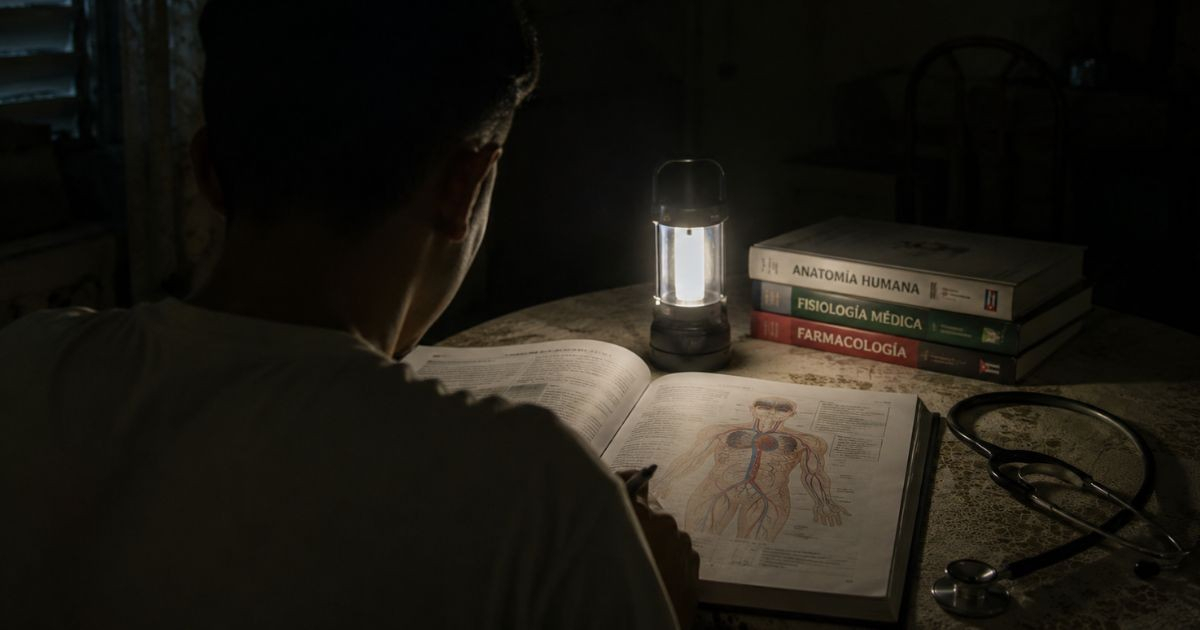
This crisis coincides with the beginning of the 2026-2027 school year. Students returned to classrooms on Tuesday amidst widespread blackouts, as UNE forecasted an impact of up to 2,310 MW with only 1,020 MW available for an anticipated demand of 3,300 MW.
The ongoing situation highlights the challenging conditions Cuba faces as it enters September. In August, UNE warned that September to December could see multiple thermoelectric units simultaneously undergoing maintenance or experiencing breakdowns due to pending work and accumulated technical issues.
Public frustration over the prolonged outages continues to grow. On Tuesday, comedian Ulises Toirac expressed his anger after enduring extensive power cuts, labeling the situation as a "crime": "It's not just incompetence and bad faith. It's a crime."
Frequently Asked Questions about Cuba's Electricity Crisis
What is causing the electricity shortages in Cuba?
The shortages are primarily due to the deterioration of thermal power generation facilities, fuel shortages, and the maintenance or breakdown of several power units.
How is the electricity crisis affecting daily life in Cuba?
The crisis is causing widespread blackouts, disrupting daily activities and affecting essential services, including education as students return to school amid power outages.
Are renewable energy sources helping alleviate the power shortages?
While solar parks have contributed to the grid, their output has not been sufficient to prevent blackouts, as evidenced by the maximum output of 609 MW falling short of demand.