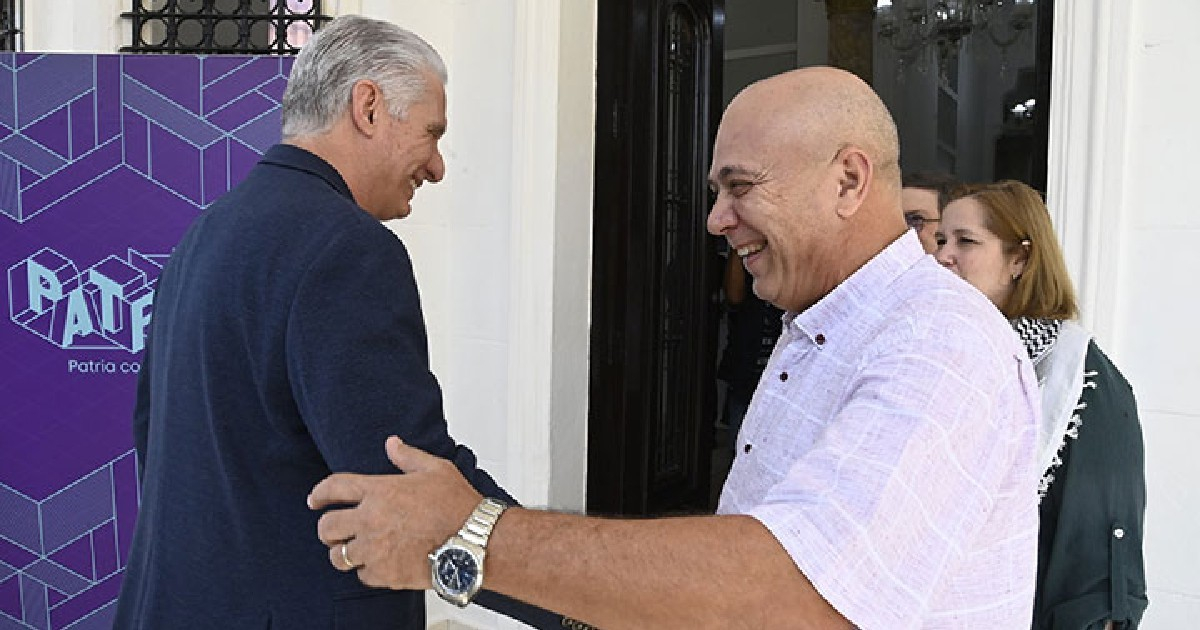
Roberto Morales Ojeda, head of Organization for the Central Committee of the Communist Party of Cuba, recently took to Facebook to laud the Cuban people's "resistance" in the face of shortages as the school year approached. He pointed fingers at the U.S. embargo as the root of all these problems.
The online community, however, responded with a torrent of comments painting a vastly different picture from that presented by the official.
Public Reaction Unveils Stark Realities
In his post, Morales Ojeda admitted that the school year would be challenging, citing a lack of essential resources for education. Nevertheless, he placed full blame on what he called "the claws of the blockade."
His message praised Cubans for their unwavering commitment to education, promising that "men and women with unblemished dignity and infinite love will continue to spread knowledge daily, and they cannot be blocked."
Critics quickly dismantled this narrative with their responses.
One user commented, "It's shameless to start a school year when children aren't sleeping well, there's no water, and breakfast is a distant dream."
Another pointed out, "You can't learn properly if you're hungry and sleep-deprived."
A third echoed concerns about the lack of material conditions: "There are no teachers, schools lack water, restrooms are broken, and children can't even get a decent lunch."
The Struggles of Teachers and Students
The plight of educators was also highlighted: "Teachers are exhausted, hungry, and haven't even been paid for their vacations, while children go without breakfast, lacking even a small glass of milk and suffering from poor sleep due to power outages."
Another comment underscored reliance on foreign aid: "My son returns to school thanks to my family, everything brought from the so-called bad country," referencing supplies sent from abroad.
The ironic tone of one remark critiqued the official stance: "Even if they haven't slept or eaten, we make them stand under the beautiful morning sun to talk about the blockade... What a pity, such lovely kids with a desire to enjoy school, yet they don’t even have a decent bathroom to use."
Education System Under Strain
The chasm between Morales Ojeda’s rhetoric and the lived experiences of Cuban families was summed up in another comment: "How many children lack adequate rest, nutrition, and resources to start school like any child in the world?"
The beginning of the school year in Cuba unfolds against a backdrop of severe economic and social crisis. Even Naima Ariatne Trujillo Barreto, the Minister of Education, who in August had promised a "grand celebration" for the return to classes, had to later concede that the conditions were "extremely difficult."
The education sector is grappling with a shortage of at least 24,000 teachers, accounting for 12.5% of the needed positions. Additionally, only 20% of students will receive new uniforms, as only 2.2 to 2.3 million garments were produced out of the 3.6 million required.
All this occurs amidst the worst energy crisis in Cuba's history, with blackouts lasting over 20 hours daily impacting 70% of the country during peak times.
In the face of these grim realities, official discourse continues to uphold a hollow propaganda narrative, extolling non-existent achievements.
The Communist Party declared on Facebook that the start of the school year signifies "another act of heroism and firm determination not to surrender."
Just days prior, a political figure in Camagüey described the return to school as a "blow to imperialism."
Cuban Education Crisis: Key Questions Answered
What challenges does the Cuban education system currently face?
The Cuban education system is struggling with a severe shortage of teachers, inadequate school facilities, and a lack of essential resources like uniforms and school supplies, all amidst an ongoing energy crisis with extensive blackouts.
How has the public reacted to Morales Ojeda's statements on the Cuban school year?
The public's response has been overwhelmingly critical, highlighting the disconnect between official statements and the harsh realities faced by students and teachers, including inadequate sleep, nutrition, and school resources.