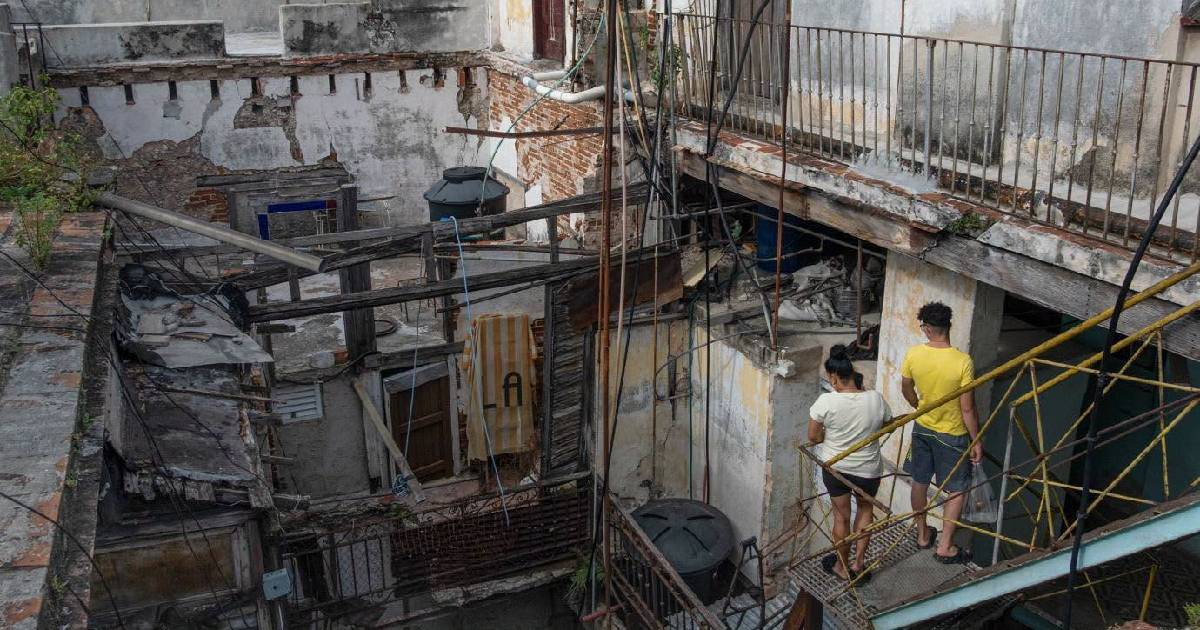
The Cuban Council of Ministers has decided to extend the timeframe for the legalization and regulation of homes, rooms, and other structures that lack proper legal status or were built without necessary permits. This extension lasts for an additional year.
This policy, endorsed on June 17, 2026, by Prime Minister Manuel Marrero Cruz, is implemented through Agreement 10378, which was released in the Official Gazette No. 70 Ordinary of 2026 this Tuesday.
This marks the second extension of an initiative that began in 2019 with Agreement 8574.
The official reason for this extension, as detailed in the agreement, points to the ongoing energy crisis in Cuba: "Various measures enforced for energy conservation have hindered the public's ability to complete the necessary procedures," leaving "a significant number of cases pending for organization and legalization."
Since 2025, Cuba has been grappling with one of its most severe power crises ever, experiencing widespread blackouts and at least six national grid failures recorded so far in 2026.
Efforts to conserve energy—such as reduced work hours in administration, telecommuting for public officials, and remote schooling—have restricted people's capacity to engage in face-to-face transactions, resulting in numerous unresolved legalization requests.
The initiative originated from the Council of Ministers' Agreement 8574 on March 12, 2019, which initially set a six-year deadline for the regularization of properties that complied with territorial and urban planning regulations, allowing them to be transferred as private property to their occupants.
In 2025, Agreement 10108 extended this deadline to December 31, 2025, and streamlined the process by removing the requirement for Municipal Housing Directorates to conduct on-site property assessments, cutting the process duration by approximately 15 days.
Agreement 10378 specifies that the terms, conditions, and obligations outlined in the previous agreements "are applicable to cases received from the enforcement date of this Agreement," starting from this Tuesday.
This extension is part of a period of significant legislative activity concerning housing: in 2026, Cuba also enacted a new Housing Law that strengthens state control, limits ownership to two homes per individual, and allows the state to reclaim abandoned properties.
The full text of Agreement 10378 is detailed on pages two and three of the Official Gazette No. 70 Ordinary of 2026, with the identifier GOC-2026-474-O70.
Understanding Cuba's Housing Legalization Process
Why did Cuba extend the legalization process for housing?
Cuba extended the process due to an ongoing energy crisis which has impeded the public's ability to complete necessary procedures for legalization.
What changes were made in the 2025 housing agreement?
The 2025 agreement extended the deadline and simplified the process by removing the need for municipal authorities to conduct on-site assessments, reducing procedure time by about 15 days.
What are the new regulations under Cuba's 2026 Housing Law?
The 2026 Housing Law reinforces state control, restricts ownership to two homes per person, and enables the state to reclaim properties that have been abandoned.