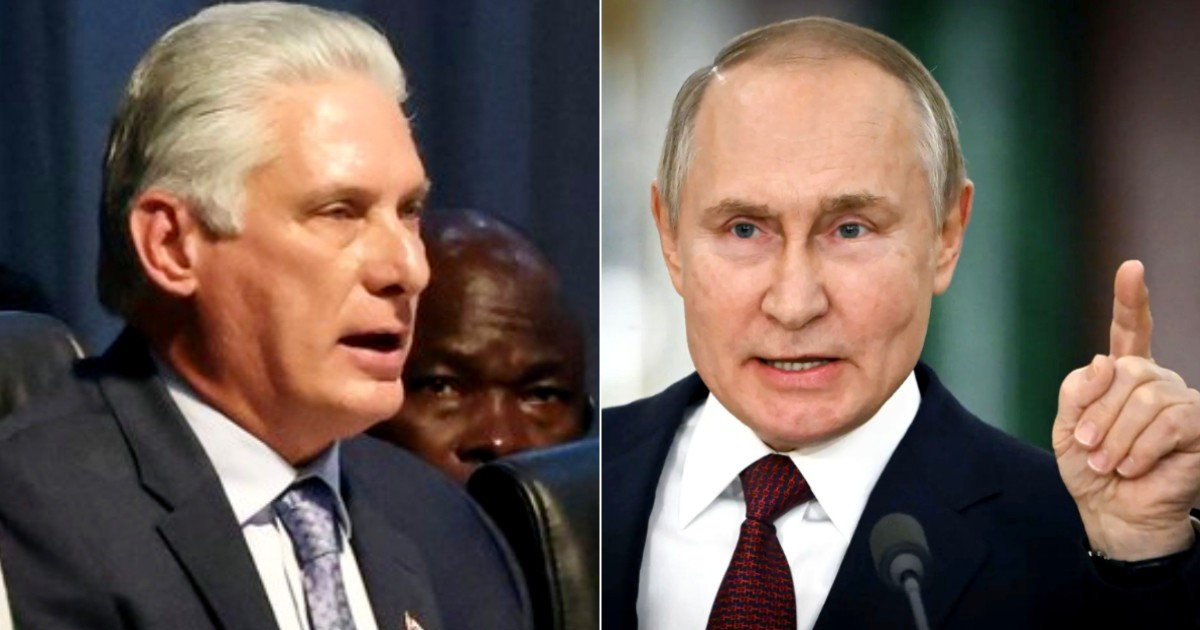
The Russian Embassy in Cuba confirmed on Monday to the Russian newspaper Izvestia that expanding BRICS to include new full members is not currently on the bloc's agenda, effectively quashing the Cuban regime's aspirations to elevate its status within the organization.
"Cuba continues to engage with BRICS member countries as a partner nation. As far as we know, the issue of increasing the number of full members in the organization is not currently being considered," stated the Russian diplomatic mission.
This rejection comes just days after the Cuban Embassy in Moscow publicly announced between August 20 and 21 that Havana intended to transition from a "partner nation" to a "full member," seeking support "particularly from Russia."
The refusal is particularly notable given Cuba's significant subservience to Moscow's interests: Cuba has allowed the use of its territory by Russian forces and has allegedly tolerated the mass recruitment of Cuban citizens as mercenaries for the war in Ukraine.
Ukrainian intelligence informed the U.S. Congress that Russia has recruited at least 20,000 Cubans for the conflict, with nominal lists verifying more than 1,000 signed contracts and at least 54 confirmed deaths.
In terms of energy, Cuba's reliance on Moscow is equally critical, though Russian supplies have been inconsistent and insufficient.
The last Russian ship carrying fuel arrived on the island in late March: the tanker Anatoli Kolodkin delivered 100,000 tons of crude oil to Matanzas, enough for only seven to ten days of energy consumption.
Since then, shipments have been halted. In May, the Russian tanker Universal changed course and departed from Cuba without delivering its cargo, worsening the island's already severe electricity crisis.
China, another major ally of the regime, has also not advocated for Cuba's full membership in BRICS, despite maintaining strong energy cooperation: it has installed 49 solar parks on the island and approved an emergency aid of $80 million in electrical equipment in January 2026.
Cuba's history with the bloc began in October 2024, when the regime officially requested membership through a letter to Vladimir Putin. The response at the Kazan summit was to admit Cuba only as a "partner nation," a category without voting rights or decision-making power.
Since then, Havana has ramped up its diplomatic efforts without success: Díaz-Canel traveled to Brazil in July 2025 to participate in the BRICS summit in Rio de Janeiro, and Foreign Minister Bruno Rodríguez Parrilla attended the meeting of Foreign Ministers in New Delhi in May 2026, where he sought the bloc's support against potential U.S. military aggression towards Cuba.
None of these efforts have shifted the needle. The bloc requires consensus from all its full members to admit new participants, making Russia's rejection a decisive barrier.
The next BRICS summit will take place in New Delhi on September 12 and 13, under Indian presidency, with Cuba not listed on the agenda as a candidate for full membership.
Understanding Cuba's Status with BRICS
Why did Russia reject Cuba's bid for full BRICS membership?
Russia indicated that expanding BRICS to include new full members is not currently on the agenda, thus rejecting Cuba's request.
What is Cuba's current relationship with BRICS?
Cuba is currently engaged with BRICS countries as a partner nation, lacking voting rights or decision-making power within the organization.
How has Cuba's relationship with Russia impacted its energy situation?
Cuba's energy situation is heavily reliant on Moscow, although Russian fuel supplies have been erratic and insufficient, exacerbating the island's energy crisis.