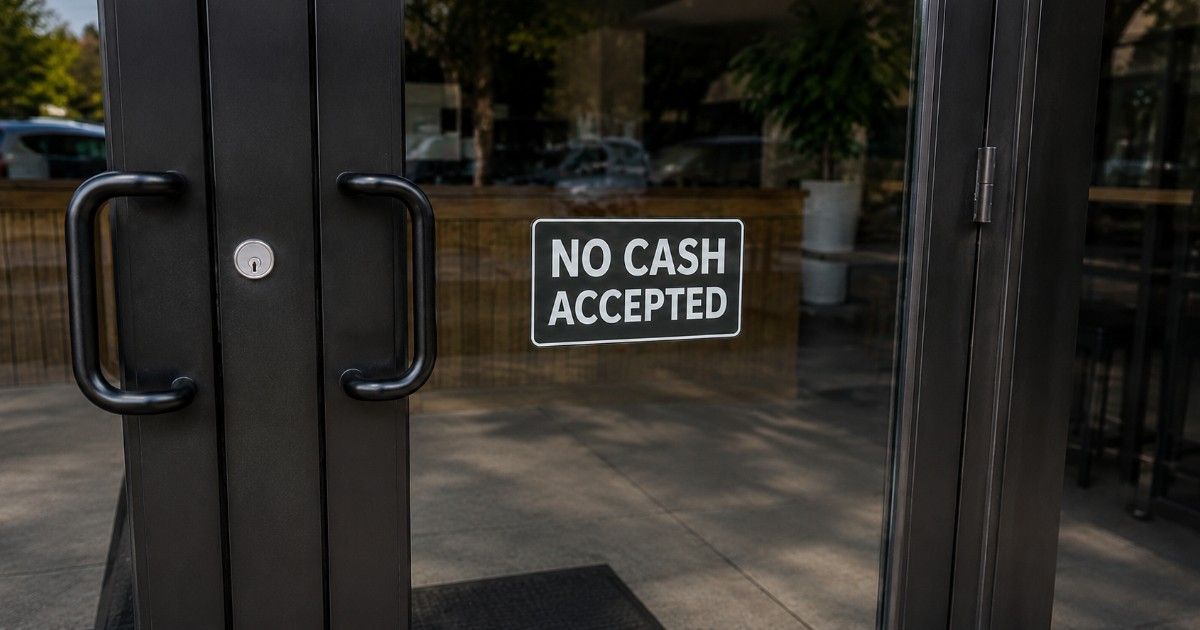
Retail businesses in Miami-Dade can no longer simply post a "No Cash Accepted" sign and refuse to accept cash from their customers.
A county ordinance mandates the acceptance of cash in numerous face-to-face transactions, with penalties reaching up to $1,000 for those who repeatedly fail to comply with the rule.
This regulation gained renewed attention after the Miami Herald highlighted what businesses wishing to operate cashless can do, and reminded that while Florida lacks a similar state-level obligation, Miami-Dade enforces its own rules.
The official county website is clear: Miami-Dade prohibits businesses or entities offering retail goods and services from denying cash payments. This rule applies to both incorporated and unincorporated areas of the county.
Enforcement and Exceptions
It's not just about refusing cash at the register. Businesses are also barred from displaying signs that cash is not accepted or charging higher prices to those opting to pay in cash for transactions covered by the ordinance.
Customers who feel their rights have been violated can file a complaint with the Miami-Dade Consumer Protection Division.
Background and Rationale
Unanimously approved by the Miami-Dade Commission in May 2022, the ordinance aims to curb the growth of fully digital establishments, especially considering the impact on seniors, low-income individuals, those with disabilities, and residents lacking easy access to cards or electronic payment systems.
"I want to ensure our residents have the option to use the legal tender of our country," said Commissioner René García, the measure's proponent, emphasizing the goal of maintaining access to businesses, events, and parks for diverse population sectors.
Progressive Sanctions
The penalties are progressive. According to the approved text, the first violation results in a warning; the second, a $100 fine; the third, $200; and each subsequent violation can incur a $1,000 penalty.
However, there is an important limitation: businesses are not required under this ordinance to accept any denomination. Payments using bills over $20 are excluded, and there are other exceptions as well.
Exceptions include non-face-to-face purchases, such as those made by phone, mail, or online; certain membership-based wholesale clubs; rentals typically requiring a deposit; transactions where counterfeit money is suspected; and certain professional services, including those provided by attorneys, accountants, architects, engineers, financial advisors, and insurance agents.
Broader Implications
The current county page also clarifies that operations Miami-Dade cannot regulate due to Florida law, such as specific restaurant and private parking transactions, are exempt.
Therefore, the requirement should not be seen as an absolute rule applicable to every business or service without exceptions.
Large sports venues have an alternative. They can operate electronically as long as they provide at least one point where a person can exchange cash for a card to make purchases within the venue.
This exception was included when the Commission approved the ordinance in 2022.
National Context
There is also a significant distinction between dollars being legal tender and the obligation of all U.S. establishments to accept them.
The Federal Reserve explains that no federal law requires a private business to accept cash. In the absence of a state or local regulation, businesses are generally free to set their own payment policies.
Miami-Dade is not alone in its effort to uphold cash in the face of digital payment proliferation.
New York also prohibits numerous retail businesses and food establishments from rejecting cash, with certain exceptions, such as those with authorized mechanisms to convert cash into a prepaid card.
Since 2019, Philadelphia has maintained a similar ban preventing retail establishments from refusing cash for consumer goods or services.
Massachusetts even has a state law mandating that retail establishments cannot discriminate against cash buyers and must accept legal tender for goods and services.
Washington D.C. joined more recently. From January 2025, its legislation prohibits numerous retailers from rejecting cash, displaying "no cash" signs, or charging more to those using it, though it also includes several exceptions.
Understanding Miami-Dade's Cash Acceptance Ordinance
What is the penalty for businesses not accepting cash in Miami-Dade?
Businesses that fail to accept cash face a progressive penalty system: a warning for the first violation, a $100 fine for the second, $200 for the third, and up to $1,000 for subsequent violations.
Are there exceptions to the cash acceptance rule in Miami-Dade?
Yes, exceptions include transactions not conducted in person, certain wholesale clubs, rentals requiring a deposit, suspected counterfeit money transactions, and specific professional services.
How does Miami-Dade's cash policy compare to other U.S. cities?
Similar cash acceptance policies are in place in New York, Philadelphia, Massachusetts, and Washington D.C., each with varying exceptions and enforcement strategies.