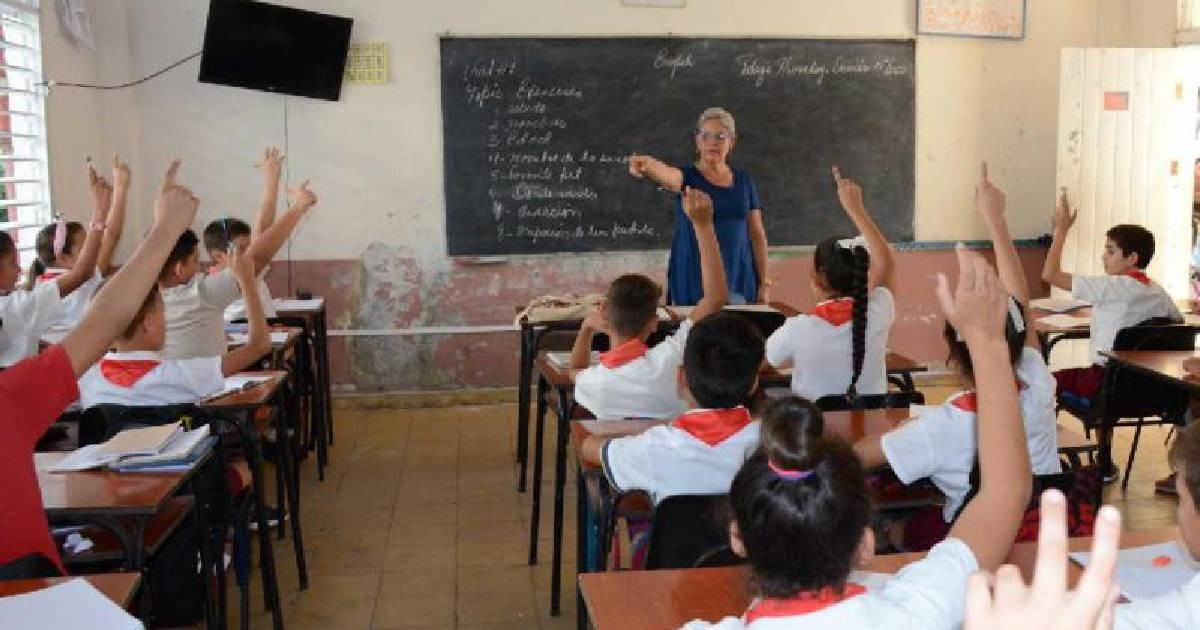
On Tuesday, Cuba kicked off the 2026-2027 school year under dire electrical conditions. Following a day marred by extensive blackouts, with a peak shortage reaching 2,323 MW, the state-run Unión Eléctrica (UNE) has predicted that during peak hours on September 1st, the grid could face disruptions of up to 2,310 MW.
The official report on the National Electric System (SEN) from the state-owned company revealed that on Monday, the electricity service was compromised for a full 24 hours due to a generation capacity shortfall, with outages persisting into the early hours of Tuesday. The most significant disruption occurred at 8:50 PM, peaking at 2,323 MW.
Unfortunately, relief is not in sight for Tuesday. UNE anticipates a mere 1,020 MW of available power against a forecasted peak demand of 3,300 MW, predicting a deficit of 2,310 MW.
Efforts were being made to add 60 MW from unit 6 of the Antonio Maceo thermoelectric plant in Renté, which was in the process of coming online.
Thermoelectric Units Out of Commission
As September begins, numerous thermoelectric units remain non-operational. UNE reported breakdowns in units 5, 6, and 8 of the Máximo Gómez plant in Mariel, unit 2 of Ernesto Guevara in Santa Cruz, unit 4 of Carlos Manuel de Céspedes in Cienfuegos, unit 2 of Felton, and unit 6 of Renté.
In addition, several units are undergoing maintenance, while 106 distributed generation stations are offline due to fuel shortages. The Regla and Melones barges and the Fuel plants in Mariel and Moa are also unavailable.
Official reports indicated that solar photovoltaic parks produced 4,624 MWh on Monday, reaching a peak power of 719 MW, yet these contributions have not been enough to prevent widespread deficits and prolonged outages.
Schools Reopen Under Strain
The school's reopening makes the electrical crisis even more pressing. Students returned to classrooms after a previous academic year cut short, partly due to fuel shortages, blackouts, and transportation issues.
Education Minister Naima Ariatne Trujillo Barreto acknowledged the challenging conditions schools face, including shortages of uniforms, educational materials, and teachers, as well as difficulties in providing student meals.
Trujillo Barreto noted that notebooks would be subject to a "basic adjusted ration," uniforms are not universally available, and teacher shortages remain a significant issue within the educational system.
The minister previously emphasized the impact of power outages on schooling, stating, "After a night without power, attending school becomes a challenge for students," also highlighting the exhaustion experienced by teachers.
The government was forced to conclude the 2025-2026 school year early, ending between June 15 and 30, despite the original schedule extending into July. Chronic blackouts, fuel shortages, and transportation difficulties were officially cited as causes.
Earlier, during another critical phase of the SEN, the Ministry of Education chose to maintain classes despite the energy collapse, adjusting schedules based on each center's electrical conditions.
This harsh reality contrasts sharply with the political narrative. The Communist Party recently described the school year's start as "another act of heroism," amid families struggling to secure food, supplies, uniforms, and other essentials for their children's education.
Understanding Cuba's Power Crisis and Its Impact on Education
What is causing the power outages in Cuba?
The power outages are primarily due to a significant deficit in generation capacity, with many thermoelectric units out of service and issues such as fuel shortages exacerbating the situation.
How are the power outages affecting Cuban schools?
The outages have forced schools to operate under difficult conditions, with shortages of materials and resources, and have led to an early end to the previous school year due to logistical challenges.
What measures is the Cuban government taking to address the energy crisis?
The government is attempting to bring additional power units online and adjust educational schedules to adapt to the limited electricity availability, though these efforts have yet to resolve the crisis fully.