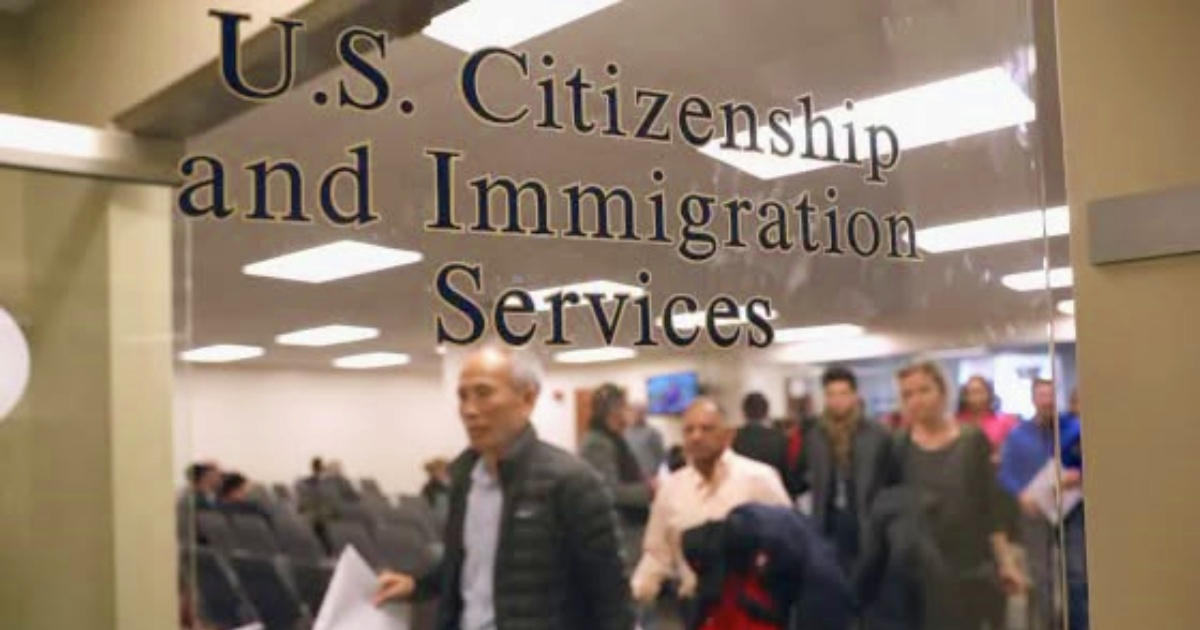
The United States Citizenship and Immigration Services (USCIS) has publicly acknowledged a court directive mandating the reactivation of thousands of stalled immigration cases, which includes applications from Cuban citizens. Despite disagreeing with the ruling, USCIS stated its intention to comply with the court's decision.
In an official announcement, the agency confirmed that on August 24, the U.S. District Court for the Northern District of California issued an order in the case of Red Eagle Law, L.C., et al. v. Joseph B. Edlow. This order prohibits USCIS from continuing to enforce two internal memoranda that had previously frozen cases from nationals of 39 countries, including Cuba.
USCIS's Position on the Court's Directive
The agency expressed its disagreement with the court's decision but affirmed its compliance with the ruling while considering potential further judicial review. Central to the court's decision, as noted by Judge Charles R. Breyer, was the instruction for USCIS to process applications through its standard procedure.
USCIS also announced plans to release updated guidance as the legal proceedings progress, indicating that the legal battle is ongoing and subject to change depending on the outcome of any appeals.
The Memoranda at the Heart of the Conflict
The disputed documents, labeled as PM-602-0192 and PM-602-0194, were pivotal in the controversy. The first, issued on December 2, 2025, indefinitely paused the adjudication of asylum applications (I-589), permanent residence applications (I-485), work permits (I-765), citizenship applications (N-400), and other benefits for nationals from "high-risk" countries. The second memorandum, dated January 1, 2026, extended this pause to include countries added by Presidential Proclamation 10998.
The legal document summarizes: "The plaintiffs consist of approximately 400 citizens or natives from 38 countries. Due to the memoranda and subsequent inaction by USCIS, their applications remain frozen solely based on their nationalities."
Cuba's Inclusion in the Protected Nations
The court certified a nationwide class-action lawsuit. To be covered under the ruling, applicants must be citizens or natives of one or more of the 39 countries listed in Presidential Proclamations 10949 or 10998, or possess documentation from the Palestinian Authority. They must also have a pending case with USCIS that was frozen by the contested memoranda without a final decision.
Cuba is among the countries on this list, alongside Venezuela, Haiti, Iran, Syria, and Nicaragua. As a class-action suit, the protection could extend beyond the initial 400 plaintiffs to all nationals from these countries who meet the criteria.
Understanding the Limits of the Court's Order
It's crucial to recognize the limitations of the court's directive. Judge Breyer did not set deadlines for resolving the cases. The plaintiffs had requested resolutions within ten days for work permits and 60 days for other applications; however, this request was denied. The directive is to return cases to the standard review process.
USCIS retains full authority to conduct security checks, request additional documentation, and approve or deny each application based on current laws. The ruling does not eliminate travel bans nor guarantees automatic approval of any benefits.
A String of Legal Setbacks for USCIS Policies
The August ruling is the latest in a series of legal defeats against the restrictive immigration policies implemented under the Trump administration. The most direct precedent was the June 5, 2026, ruling by Judge John J. McConnell Jr. of the District of Rhode Island, who declared the same memoranda unlawful. He stated: "Over six months ago, USCIS enacted policies that threw the lives of countless immigrants living in the United States into indefinite legal limbo."
Following that ruling, a federal judge blocked an attempt by the administration in July to refreeze the processes, and on July 22, USCIS confirmed the resumption of processing benefits for Cubans and Venezuelans. The new California ruling reinforces this protection through the certified class action, although the agency has indicated it will seek further judicial review.
This judicial decision is part of a continuously evolving immigration landscape. Stay updated on immigration procedures, USCIS decisions, and policies affecting Cubans in our U.S. Immigration section.
Key Questions About the Court Ruling and Its Impact
What is the impact of the court ruling on USCIS's processing of immigration cases?
The court ruling mandates USCIS to resume processing immigration cases that were previously frozen. However, it does not set specific timelines for resolution or guarantee approvals, allowing USCIS to follow its standard procedures.
Which countries' citizens are affected by this ruling?
Citizens of 39 countries, including Cuba, Venezuela, Haiti, Iran, Syria, and Nicaragua, are affected by this ruling. Applicants from these nations with pending cases frozen by USCIS are covered under the class-action lawsuit.
Does the court order ensure the automatic approval of immigration benefits?
No, the ruling does not guarantee automatic approval of immigration benefits. USCIS retains the authority to conduct necessary checks and make decisions based on existing laws.
How does this court decision relate to previous rulings against USCIS policies?
This decision is part of a series of legal defeats for the restrictive immigration policies of the Trump administration. Previous rulings have also challenged USCIS's memoranda that froze immigration processes for nationals from specific countries.