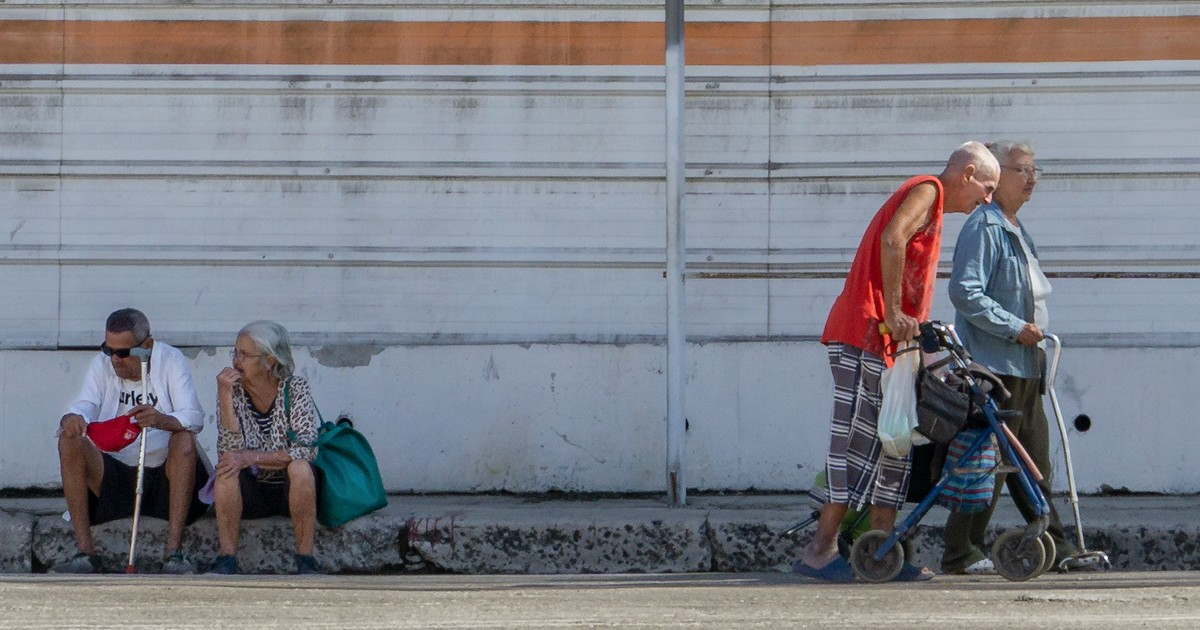
After dedicating decades to their professions and even returning to work post-retirement, many elderly individuals in Cuba find themselves waiting six months or more—sometimes over a year—to learn how much their pensions will ultimately increase.
The official newspaper Trabajadores highlighted these delays in pension recalculations and consulted with representatives from the Ministry of Labor and Social Security (MTSS) to understand the reasons behind the wait times and the regulations involved.
One such case involves Julio Sánchez Rivas, who retired 12 years ago but later worked an additional eight years at Banco Metropolitano. He submitted his pension recalculation paperwork in February to the Social Security Department of the Labor Office in the Diez de Octubre municipality in Havana. Officials assured him that the process would be completed by April.
By August, Sánchez Rivas was still in the dark about his new pension amount. "I've been waiting six months and still don't know the final amount of my retirement pay," he expressed to the publication. His main concern was whether he would live long enough to "enjoy the increase" he should receive.
He was informed that once the process was finalized, the new amount would be applied retroactively. A similar scenario faces Mario Ponce Álvarez, a seasoned cobbler who also continued working after retirement. He submitted his paperwork for recalculation on January 26, but seven months later, the process remained unfinished. "The office staff told me the solution isn't in their hands and that I just have to wait," he said.
These examples are not isolated. Even the official newspaper acknowledges that they are part of a larger group of retirees awaiting resolution, some for over a year. The authorities attribute much of the delay to a factor affecting almost every sector in the country: power outages.
Adelaida Puente Aspillaga, the General Director of Social Security at the MTSS, explained that in some areas, workers responsible for these procedures must work overnight to utilize the few hours of electricity available. "Energy issues are causing delays and public complaints. Lately, we've had to perform miracles to make progress," she stated.
This explanation raises eyebrows because, according to the MTSS, the Social Security system is "fully computerized." The process begins at the municipal level and is approved provincially, with the database remaining centralized.
Authorities have admitted to receiving complaints, especially in Havana, and acknowledged organizational problems and difficulties in collecting documents in some municipalities.
Despite these challenges, the system processes significant numbers. In 2025, 88,550 workers retired, while by June 2026, an additional 51,265 pensions had been recorded. The recalculations awaited by Sánchez Rivas, Ponce Álvarez, and others are for those who return to work after initially retiring.
The MTSS clarified that these individuals retain the same rights and benefits as any active worker, and each additional year of work might lead to a pension increase when they fully retire and request the necessary recalculations.
Those with 45 or more years of service who work at least five additional years—consecutively or otherwise—can exceed the 90% cap of their average salary. If their initial pension was below this percentage, subsequent years might allow them to reach it.
The mechanism for calculating this increase differs from that of the initial retirement pension. For age pensions, the best five salaries over the last 15 years are chosen, while for post-retirement work, the best average salary during this new work period is considered.
Officials also noted that re-hired retirees could earn 100% of their salary and 100% of their pension simultaneously, and they can request a recalculation starting from the first additional year worked.
The delays compound the already complex reality for Cuban retirees. Even accessing their pensions has become an ordeal due to cash shortages, power outages, and banking system issues.
In various regions, there have been reports of queues forming at dawn and people spending hours waiting to withdraw their funds. This issue persisted into August, with institutions in Santiago de Cuba providing food, drinks, and chairs for retirees compelled to endure long waits for their pension payments.
Some individuals have even been reported to queue from the previous afternoon to secure a spot at the bank.
The issue is particularly pressing due to the declining purchasing power of the elderly. In September 2025, the government raised pensions below 4,000 pesos to this figure, yet this amount still falls short of covering basic living costs.
This adjustment included a 1,528-peso increase for those receiving up to 2,472 CUP and raised pensions between 2,473 and 3,999 pesos to 4,000 CUP.
Cuban Vice President Salvador Valdés Mesa admitted the inadequacy of retirees' income by acknowledging publicly that "one cannot live" on the amounts given the country's current prices.
Meanwhile, the MTSS is working on updating Social Security Law 105, which is expected to be presented to the National Assembly of People's Power in 2027.
Understanding Cuban Pension Delays
Why are Cuban retirees facing delays in their pension recalculations?
The delays are primarily attributed to issues such as power outages, which affect the ability to process recalculations efficiently. Additionally, there are organizational problems and difficulties with document collection in some regions.
What rights do Cuban retirees have when returning to work post-retirement?
Retirees who return to work retain the same rights and benefits as active workers. Each additional year of work can potentially increase their pension when they fully retire again.
How are pension increases calculated for Cuban retirees?
The increase is calculated based on the best average salary earned during the new work period after initial retirement, differing from the method used for the initial pension calculation.