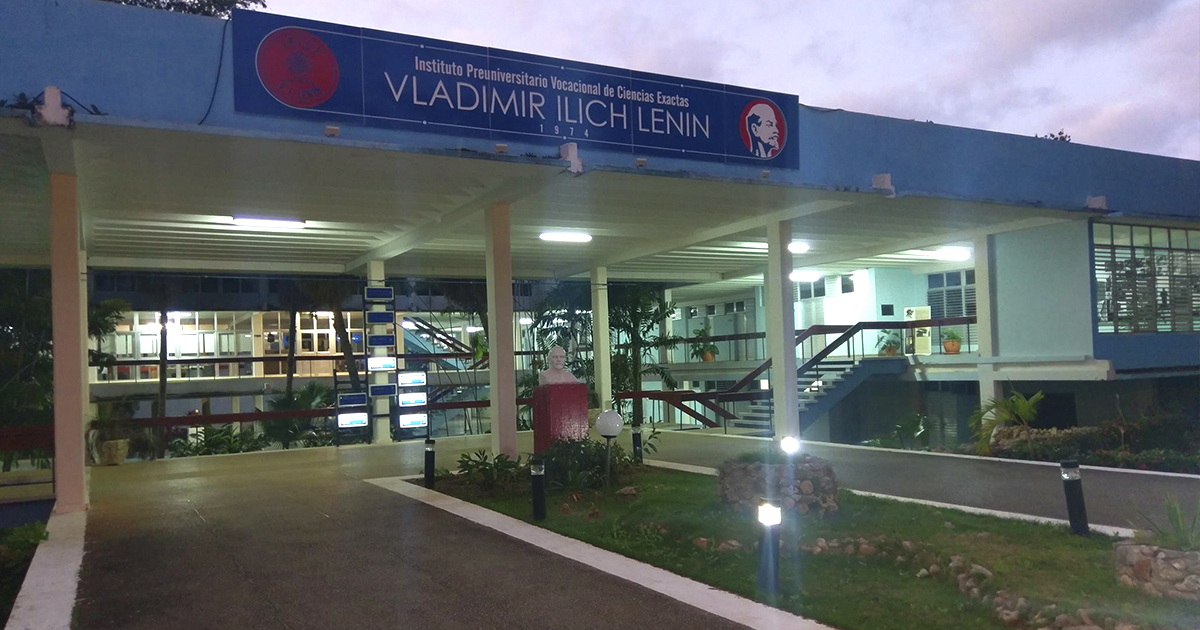
Parents of students attending the Lenin Vocational School in Havana have voiced serious concerns as the new academic year approaches. They report significant issues, including unreliable water supply, a shortage of around 400 mattresses, and the looming threat of power outages for boarding students.
Cuban activist Idelisa Diasniurka Salcedo Verdecia shared these grievances on Monday, stating that parents and relatives are anxious about the conditions their children will face.
During a recent meeting with school administrators, it was confirmed that the water problem remains unresolved. The existing pump does not deliver adequate water flow, and newly purchased pumps are incompatible with current infrastructure, prompting ongoing efforts to find a solution.
Furthermore, families were informed that a Public Health inspection would determine if the available water could be considered safe to drink.
Mattress Shortage and Parental Burden
The school is reportedly lacking approximately 400 mattresses. Some were removed after a bedbug outbreak last year. As a makeshift solution, families who can are being asked to provide their own mattresses for their children.
Salcedo criticized this approach, questioning, "Since when is it the responsibility of parents to supply essential furniture to a state-run boarding school?"
Power Outages and Energy Concerns
Power outages are another pressing issue. The activist noted that families were advised to prepare by bringing water storage containers, rechargeable fans, and, if possible, backup power systems like EcoFlow units.
The school reportedly stated it would not be liable for the safety of these personal devices.
Transport and Fuel Challenges
Due to ongoing fuel and transportation crises, a new system is proposed where students would stay at the school for two weeks, entering on a Monday and returning home the following Friday. This arrangement raises concerns about the ability to maintain adequate conditions regarding water, power, and bedding.
Salcedo also highlighted the potential impact of power cuts on food preservation, stressing the importance of sustaining dignified conditions throughout the school year.
She questioned what would happen if temporary fixes allow the school to open, but problems resurface weeks later.
Accompanying the activist's post was an image depicting a school bathroom in poor hygienic condition.
Public Reaction and Broader Implications
The revelation sparked widespread concern on social media, with many users deeming the situation "unacceptable" and worrying about the sanitation and safety of boarding students. One commenter remarked, "It's unacceptable what is happening to the children and teenagers in schools," while another lamented, "It's painful to see the school where I studied."
Some questioned whether it is advisable to keep students in boarding facilities under such conditions, suggesting that students should continue their education externally and stay with their families until adequate conditions are met.
The complaints about Lenin Vocational School come as Cuba's educational system struggles to commence the 2026-2027 school year amidst severe economic, energy, and transportation challenges.
Over the weekend, state media portrayed the start of the school year as a testament to perseverance and resilience against scarcity, though schools and families face material difficulties nationwide.
The Communist Party of Cuba described the academic year's commencement as "another act of heroism" in light of the financial hurdles affecting the education system.
However, these difficulties are not new. In May, the Cuban government ended the school year early due to fuel shortages and transport issues, disrupting attendance and operations at many institutions.
As the new term approaches, activists have questioned how teachers and students can navigate a year marked by power outages, food shortages, transport problems, and deteriorating facilities.
Understanding the Challenges at Lenin Vocational School
What are the main issues at Lenin Vocational School?
The main issues include unreliable water supply, a shortage of around 400 mattresses, and frequent power outages.
How are families expected to cope with these challenges?
Families are being advised to bring their own mattresses if possible, and to prepare for power outages with water storage, rechargeable fans, and backup power systems.
What is the proposed schedule for students due to the transportation crisis?
Students are expected to stay at the school for two weeks, entering on a Monday and returning home the following Friday to accommodate transportation challenges.