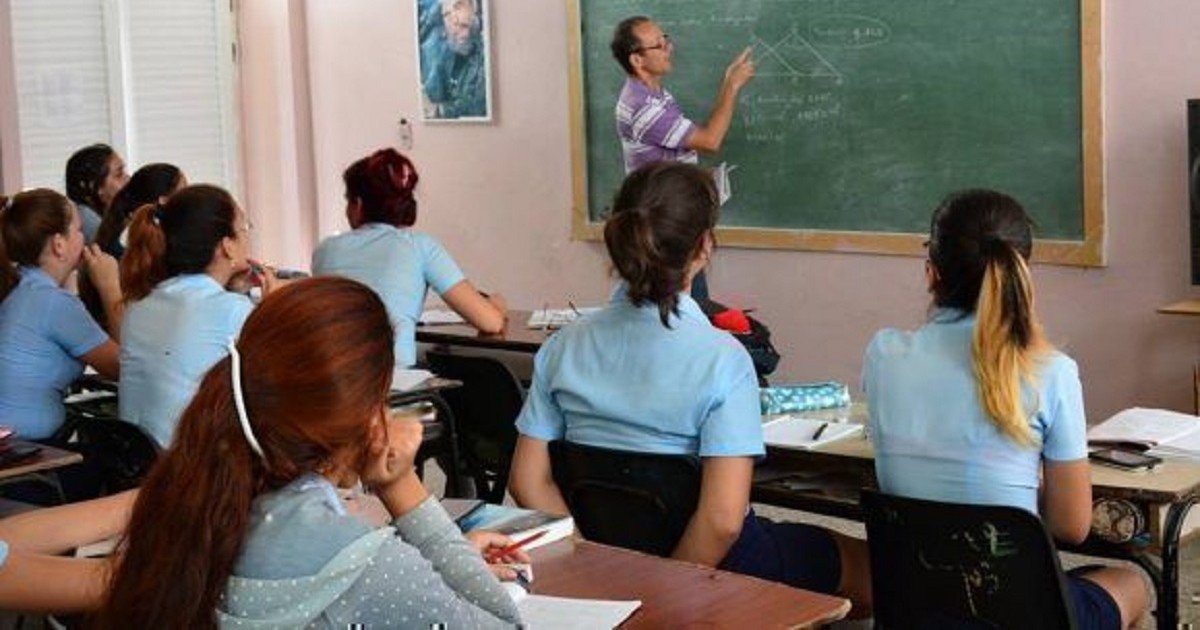
As Cuba embarks on the 2026-2027 academic year, an enduring issue remains unresolved: a shortfall of 24,000 teachers, representing 12.5% of the national educational workforce. This alarming figure has persisted since the 2024-2025 school year, with no effective intervention from the Cuban regime to mitigate it.
In a bid to address the shortage in Havana, the government has relocated approximately 3,000 teachers from eastern Cuba to the capital. However, this move merely shifts the problem, leaving the vacancies in their home provinces unfilled.
On Facebook, user Yau ASalcedo succinctly captured the cyclical nature of this crisis: "They work without receiving their due, lose motivation as their conditions worsen, and eventually become disillusioned with an educational system that's also losing teachers. Some leave the classroom; others leave the country. And every day, there are fewer reasons to stay."
The post spurred a wave of comments, providing a glimpse into the depth of the collapse.
Roger Fredom, a former teacher who emigrated, shared his experience: "I am one of them. I left the education system because, as a recent graduate, I was required to write exam answers on the board for my students so the 'communist bubble' could keep growing. I always had a passion for teaching, but lying was never my forte."
Juan Jose Sanchez criticized the relocation strategy, questioning, "Who fills the positions of the teachers and professors moving to Havana? How will those children in the East have a teacher if theirs are in another province? It's like robbing Peter to pay Paul."
Rosinqui Selin Selin expressed skepticism about the future of the relocated teachers, stating, "Out of those 3,000, 2,999 will end up living in Havana; that's the primary goal when they accepted the assignment."
René Ricardo warned about the long-term implications: "It's genuinely concerning that we're running out of teachers. But the State does nothing to encourage them to stay in the classrooms. Soon, we'll be teaching our children at home."
The factors driving teachers away are well-documented. Many have voluntarily resigned, with others reporting delayed payments, and some unable to access their salaries due to banking crises. In August, a teacher from Urbano Noris, Holguín, publicly stated she hadn't been paid since May.
In July, the regime implemented a new pay scale — Resolution 18/2026 — setting monthly salaries between 6,130 and 7,735 Cuban pesos depending on educational level, effective from July 1st but only disbursed in August. Analysts and teachers alike argue that these wages are inadequate against inflation and the true cost of living.
Provinces such as Camagüey, Matanzas, and Sancti Spíritus report shortages exceeding 2,000 vacancies each. In Sancti Spíritus, teacher coverage was a mere 68% at the start of the previous academic year.
This issue is not a recent development. In September 2023, a Ministry of Education official admitted on television that the country lacked 17,278 teachers, citing the pursuit of better income, emigration, and personal issues as reasons. Since then, the deficit has only worsened. Meanwhile, in 2025, the regime sent teachers on international missions to Jamaica, despite the severe domestic shortage.
Understanding the Cuban Educational Crisis
Why is there a teacher shortage in Cuba?
The shortage is driven by factors such as unpaid salaries, poor working conditions, and disillusionment with the educational system. Many teachers are also leaving the country in search of better opportunities.
How is the Cuban government addressing the teacher deficit?
The government has attempted to fill gaps by relocating teachers from eastern provinces to Havana. However, this approach merely shifts the problem rather than solving it.
What are the consequences of the teacher shortage in Cuban provinces?
Provinces like Camagüey, Matanzas, and Sancti Spíritus face significant educational challenges with thousands of vacancies, leading to inadequate teacher coverage and compromised education quality.