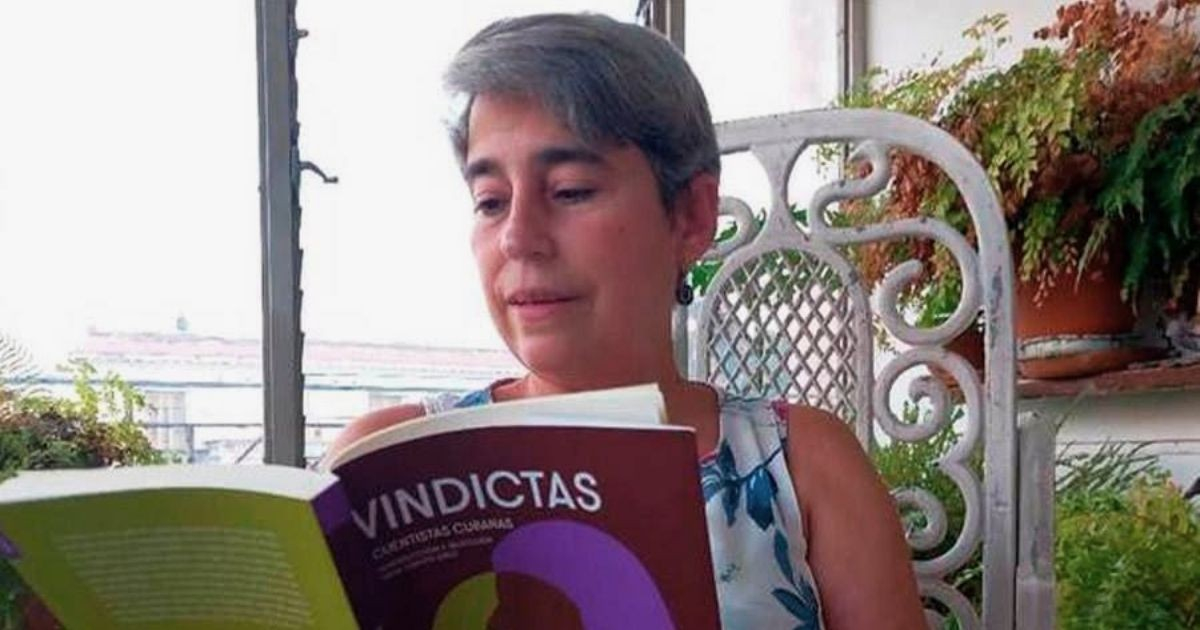
The National Autonomous University of Mexico (UNAM) and Cubaliteraria have recently released the groundbreaking anthology "Vindictas: Cuban Women Storytellers," available in both print and digital formats. This 240-page compilation features 34 narratives by Cuban female authors spanning from the 19th century to the present day. According to writer and anthologist Marilyn Bobes, it stands as the most comprehensive collection of Cuban women writers ever assembled.
Curated and introduced by researcher and essayist Zaida Capote Cruz, the anthology was unveiled at the 34th Havana International Book Fair, which took place from August 10 to 16, 2026. Originally scheduled for February 2026, the fair was postponed due to Cuba's ongoing energy crisis. It was held in El Vedado, diverging from its usual venue at the Fortress of San Carlos de la Cabaña, against a backdrop of blackouts and public protests. The event commemorated the centenary of dictator Fidel Castro, with numerous tributes to his legacy.
Born in Havana in 1967 and holding a Ph.D. in Philological Sciences from the University of Havana, Capote Cruz writes on the back cover, "This book brings to the fore voices from the past that—except for a few—remain unheard outside of rather limited circles. It is, therefore, an act of justice."
To compile this selection, Capote Cruz delved into old magazines, disintegrating books, and her own memories. In her introduction, she acknowledges, "It was a task as arduous as it was joyous, reminding me of poignant or joyful readings and leading me to discover new ones. The texts finally gathered here offer more than a glimpse into the vast and powerful stream of stories penned by Cuban women throughout the 20th century," as Bobes notes in her article for IPS.
"Vindictas" includes the works of both island-based and diaspora authors, broadening the perspective of contemporary Cuban storytelling beyond geographical boundaries. Among the historical figures featured are Aurelia Castillo—one of Cuba's literary forgotten—alongside Lydia Cabrera and Lourdes Casal. Meanwhile, contemporary voices such as Marilyn Bobes, Milene Fernández Pintado, Sonia Rivera Valdés, Rebeca Murga, Aida Bahr, Anna Lidia Vega, Laidi Fernández de Juan, Ena Lucía Portela, Karla Suárez, Ana Luz García Calzado, Rosa Ileana Boudet, and Lourdes de Armas are also highlighted.
This anthology surpasses its renowned predecessor, "Estatuas de sal," compiled by Mirta Yáñez and Marilyn Bobes and published in 1996 by Ediciones Unión. That collection, which included 43 female writers from the period between 1959-1995, was previously considered the most comprehensive of its kind. Bobes praises Capote Cruz's scholarly efforts, particularly her research into the 19th century, as significantly exceeding that prior benchmark.
The UNAM's Vindictas collection was launched in 2019 to critically reassess the Latin American literary canon and revive the works of sidelined female authors. Initially focusing on novels and memoirs, the project has since expanded to include short stories, poetry, and feminist thinkers from across Latin America, while also extending into other artistic and academic fields. Capote Cruz's volume was previously presented at the Guadalajara International Book Fair.
Marilyn Bobes regards it as "an essential book for understanding the evolution of the short story genre in Cuba as written by women, a realm traditionally dominated by men."
Exploring Vindictas: Cuban Women Storytellers
What is the significance of the Vindictas anthology?
The Vindictas anthology is significant because it offers the most comprehensive collection of Cuban women writers from the 19th century to the present, highlighting voices that have often been marginalized in the literary canon.
Who curated the Vindictas anthology?
Zaida Capote Cruz, a researcher and essayist, curated the Vindictas anthology, bringing her expertise and passion for Cuban literature to the project.
How does Vindictas compare to previous anthologies of Cuban women writers?
Vindictas surpasses previous collections like "Estatuas de sal" by including a broader historical range and more diverse voices, both from the island and the diaspora.