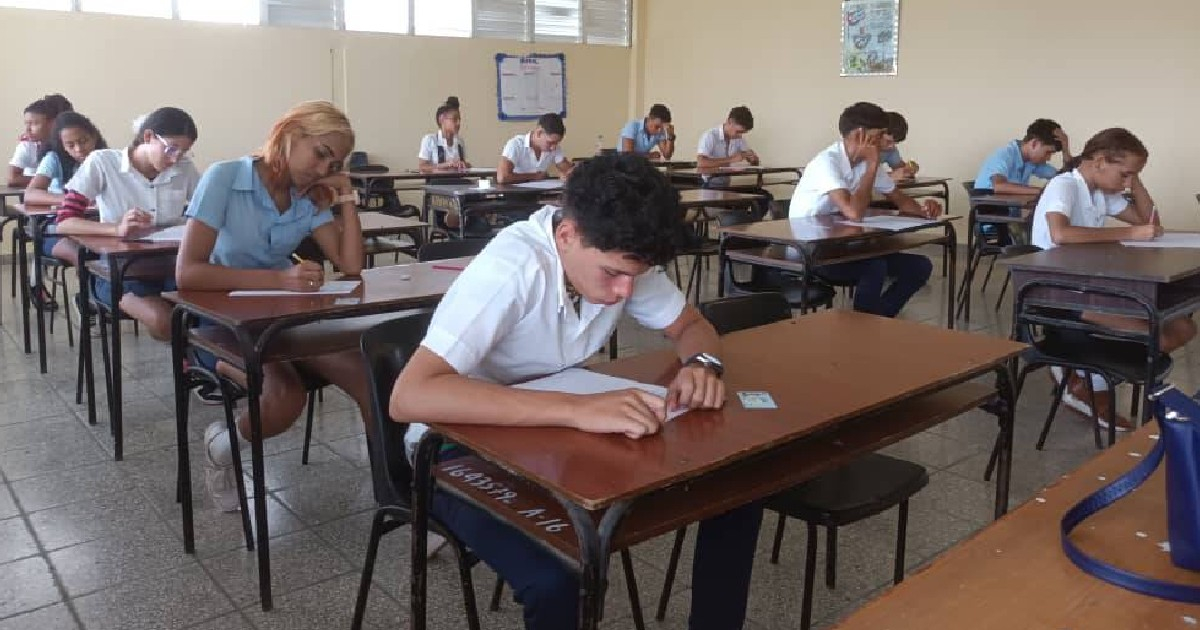
As the 2026-2027 school year approaches, Havana's Plaza de la Revolución district has introduced a novel initiative called "I Am the Teacher" aimed at tackling the shortage of educators. The program seeks to recruit about 50 individuals to fill vacant teaching positions without them having to leave their current jobs, according to reports from the state-run agency ACN.
This initiative is being promoted by various local organizations and government bodies, with a particular focus on those with a background in education. The list of prospective candidates was expected to be finalized at the beginning of this week, coinciding with the new academic year's start on September 1.
The name of the initiative pays homage to Manuel Ascunce Domenech, a young 16-year-old literacy volunteer from Sagua la Grande who was murdered on November 26, 1961, in the Escambray Mountains during the Literacy Campaign. The official account states that when asked by insurgents who the teacher was, the teenager boldly declared, "I am the teacher."
While this initiative might seem fresh, it's actually a revival of a similar effort launched in September 2022. At that time, facing a teacher shortage in Havana, authorities established the Special Detachment "I Am the Teacher," part of extraordinary measures to ensure educational coverage in the capital. This approach has historical roots in Cuba’s educational system, which has often relied on mobilized contingents, including students and teachers from other areas, to fill gaps.
The Broader Educational Crisis
Cuba is currently grappling with an unprecedented educational crisis. Nationwide, the teacher shortage for the 2026-2027 academic year is significant, with thousands of positions unfilled. In Camagüey, nearly 3,000 teachers are needed for over 95,000 students across 690 schools, while Holguín faces over 2,000 vacancies for 131,000 students in 1,319 institutions.
The root causes are deeply structural: a wave of emigration has depleted classrooms of qualified educators, and teacher salaries remain woefully inadequate. Despite the Ministry of Labor and Social Security's Resolution 18/2026, effective from July 1, stipulating monthly salary scales between 6,130 and 7,735 Cuban pesos based on qualification levels, these amounts currently translate to less than 12 dollars on the informal market.
Challenges Beyond Staffing
Education Minister Naima Ariatne Trujillo Barreto acknowledged the exceptional circumstances as the school year begins, admitting, "We are requesting collaboration that we've never had to ask for before, not even in recent challenging years."
The teacher shortage is compounded by a persistent energy crisis. Cuba has experienced multiple total collapses of the National Electric System in 2026, leading to an early closure of the previous school year, between mid and late June, due to fuel shortages.
In this context, the Communist Party labeled the start of the school year as "another act of heroism and steadfast determination not to yield," a statement that sparked widespread criticism. One online commenter remarked, "Truly, those attending classes after long hours without power and in extreme heat are the real heroes. Many without breakfast and nothing to take for a snack." Another was more blunt: "When there's no power: no go. When there's no water: no go. When there's nothing for breakfast: no go."
Key Questions About Cuba's Teacher Shortage
What is the "I Am the Teacher" initiative?
The "I Am the Teacher" initiative is a recruitment effort in Havana's Plaza de la Revolución district aimed at filling vacant teaching positions with individuals who maintain their regular jobs.
Why is there a teacher shortage in Cuba?
The teacher shortage in Cuba is primarily due to structural issues such as mass emigration of qualified educators and inadequate salaries, which are far below livable standards when converted to dollars.
How are authorities addressing the education crisis?
Authorities are implementing initiatives like "I Am the Teacher" and requesting unprecedented collaboration to manage the educational shortfall, amidst ongoing economic and energy challenges.