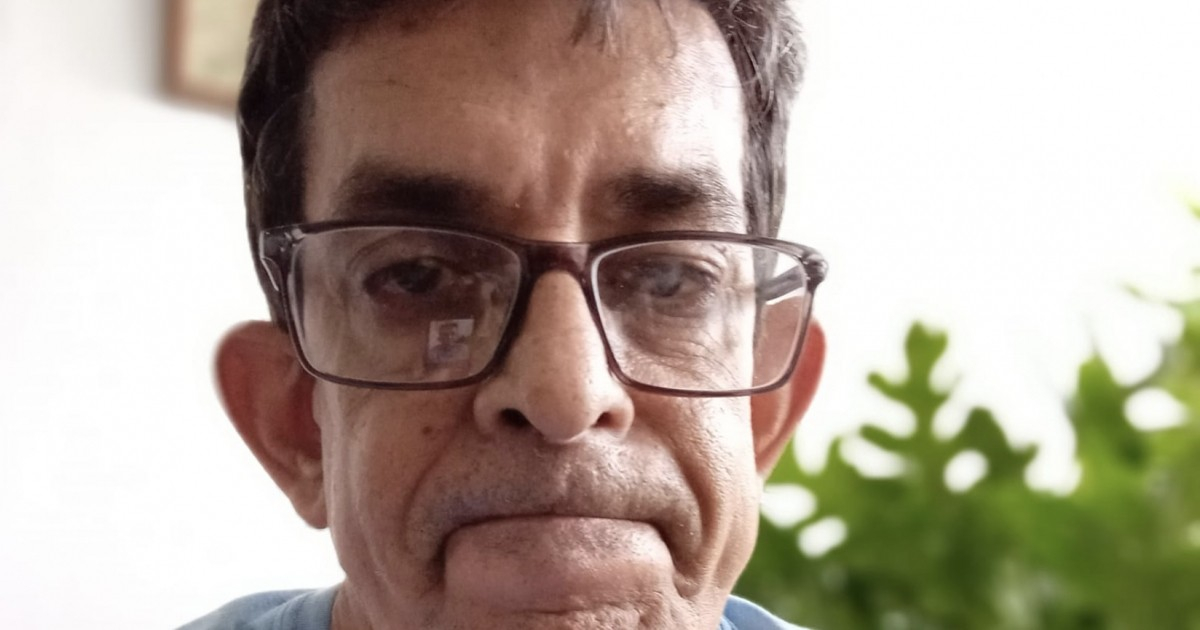
The well-known Cuban comedian, Ulises Toirac, recently shared an in-depth analysis on Facebook regarding the ongoing energy crisis in Cuba. His critique goes beyond the usual grievances about blackouts, highlighting the systematic psychological harm inflicted on the populace.
Toirac emphasizes that the core issue extends beyond the length of the outages—some circuits experiencing 40 to 50 hours of darkness while nearby neighborhoods enjoy power during the same period. He identifies two factors that fundamentally alter their impact: the lack of temporal stability and what he terms the "infinite loop" of unmet promises.
Addressing the first point, Toirac draws a stark comparison to internationally recognized torture methods: "One technique used to break prisoners' will is to undermine their daily periodic stability by denying them natural light to mark the time of day and disrupting schedules for meals, exercise, etc."
He argues that blackouts produce a similar effect, despite people being able to see the sun. The unpredictability of power coming and going without warning exacerbates the situation.
The second aspect, the infinite loop, is described as the cumulative effect of official lies that no longer inspire hope but resignation. "Repeated falsehoods, leading to worsening conditions, at least demonstrate a consistent attempt to deceive with promises known to be hollow," Toirac noted.
He further states, "The sporadic declarations of 'worse months ahead' are the only information taken seriously."
Ulises warns that the impact is particularly severe for the youngest and oldest generations. He claims that the elderly feel betrayed after dedicating their lives to a society that now leaves them with pensions that "don't cover even their most basic needs."
Regarding the youth, he asserts, "Children born and growing up in this madness will never have a normally functioning brain or will struggle greatly to adjust to a less burdensome reality."
The actor also condemns what he sees as a deliberate policy of vulnerability. He contends that the government banned the importation of solar panels until it could ensure the "energy invulnerability" of certain elites, only permitting mass entry when widespread blackouts threatened the properties of those privileged few. "The vulnerability is intentional and malicious," he concludes.
In the comments section of his post, Toirac added a sharply ironic remark directed at President Miguel Díaz-Canel: "Isn't it great to say 'Cuba hasn't collapsed'?"
This comment directly addresses Díaz-Canel's statements to the Brazilian newspaper Folha de S.Paulo, where the president denied that the nation was on the brink of collapse, attributing Cuban resilience to the "creativity" and "talent" of its people.
Days later, Díaz-Canel reiterated his denial of collapse at the beginning of the new school year.
In August, Cuba recorded record electric deficits of up to 2,411 MW and has experienced seven total collapses so far this year.
This is not Toirac's first time addressing the energy crisis with such force. In July, he depicted the situation with a viral image, stating, "It's no longer a light at the end of the tunnel... there is no tunnel."
Understanding the Cuban Energy Crisis
What is Ulises Toirac's main criticism of the Cuban energy crisis?
Ulises Toirac criticizes the Cuban energy crisis for its psychological impact on the population, highlighting the unpredictability of power outages and the constant cycle of unfulfilled government promises.
How does Toirac compare the blackouts to torture methods?
Toirac compares the unpredictability of blackouts to torture methods that undermine a person's daily stability, similar to depriving prisoners of natural light and disrupting their daily routines.
What are the long-term effects of the energy crisis on Cuba's youngest and oldest generations?
Toirac warns that the energy crisis leaves the elderly feeling betrayed with inadequate pensions, while children growing up under these conditions may struggle to adapt to a more stable reality in the future.