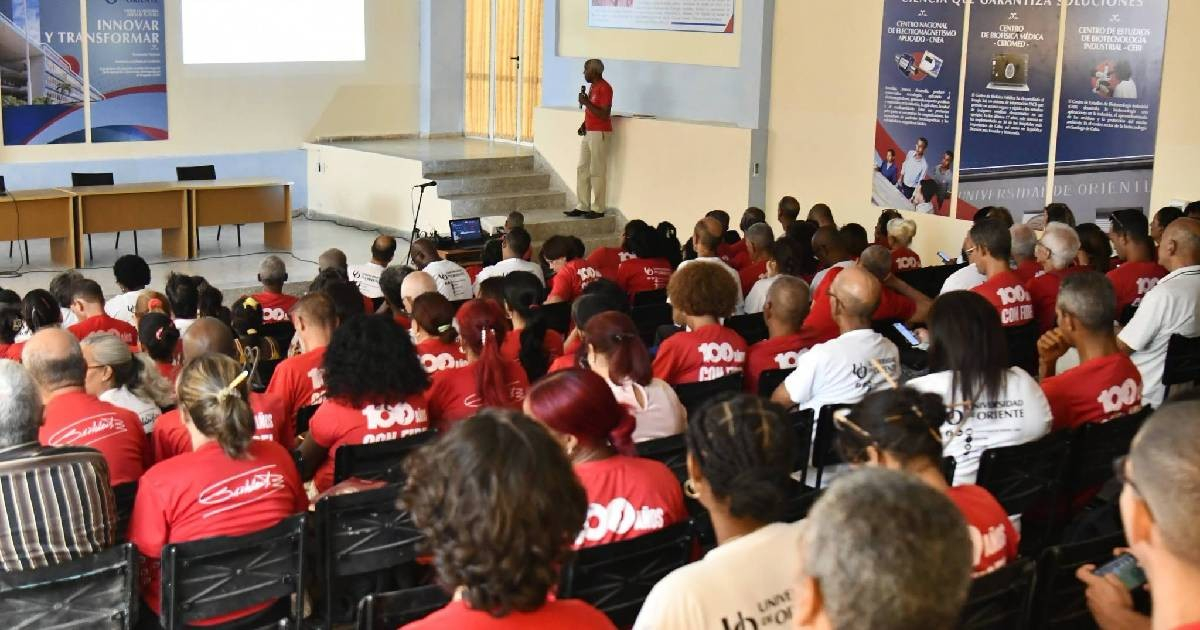
Amid a severe transportation crisis plaguing the island, the University of Oriente (UO) in Santiago de Cuba has announced a shift in its academic operations for the 2026-2027 school year. The first term will proceed in a decentralized manner, with students engaging in educational activities within their respective municipalities rather than traveling to the central campus.
The university detailed that Municipal University Centers (CUM), provincial university facilities, workplaces, and local councils will serve as venues for instruction, utilizing a blend of in-person and remote learning methods.
Both Daytime and Distance Learning Programs will commence on September 1. On that date, students from the first to fourth year of the Daytime Program are expected to report at 9:00 a.m. to their designated faculties, CUM, or central locations of other universities for initial guidance.
The Weekend Program is set to begin on Saturday, September 6, at 9:00 a.m. in faculties and CUM, with in-person meetings reduced to once a month for this new academic year.
This approach is not novel for the institution. Since mid-February 2026, UO had already transitioned to an emergency blended learning model, closing its student housing except for foreign students or those with specific needs.
During the second semester of the 2025-2026 academic year, this modality was in effect from March 2 until the academic year concluded on June 27.
University of Oriente is not alone in this predicament. The fuel crisis compelling the regime to restrict university attendance is impacting the entire Cuban higher education system.
Students have also expressed that paying for transportation to the university would leave them without enough money for food.
The Ministry of Higher Education confirmed that the 2026-2027 academic year will begin on September 1 across all universities in the country, following semi-presential and distance learning frameworks dictated by the availability of fuel and resources in each region.
The University of Havana also switched to a semi-presential format in February 2026 for similar reasons, illustrating the structural decline of Cuba's educational system after decades of accumulated crises.
In another unprecedented move, the regime has suspended university entrance exams for the 2026-2027 academic year, replacing them with an allocation system based on students' pre-university academic performance, highlighting the challenges in maintaining normal educational operations on the island.
Understanding the University of Oriente's Response to the Fuel Crisis
Why is the University of Oriente implementing a decentralized academic year?
The University of Oriente is adopting a decentralized academic year due to a severe transportation and fuel crisis on the island, which makes regular attendance at the central campus challenging for students.
What are the new learning modalities for the 2026-2027 academic year?
The new learning modalities include a mix of in-person and remote learning. Students will attend classes at Municipal University Centers, provincial facilities, workplaces, and local councils instead of the central campus.
How are other Cuban universities affected by the fuel crisis?
The fuel crisis affects the entire Cuban higher education system. Many universities, including the University of Havana, have shifted to semi-presential models to cope with the limited availability of resources.