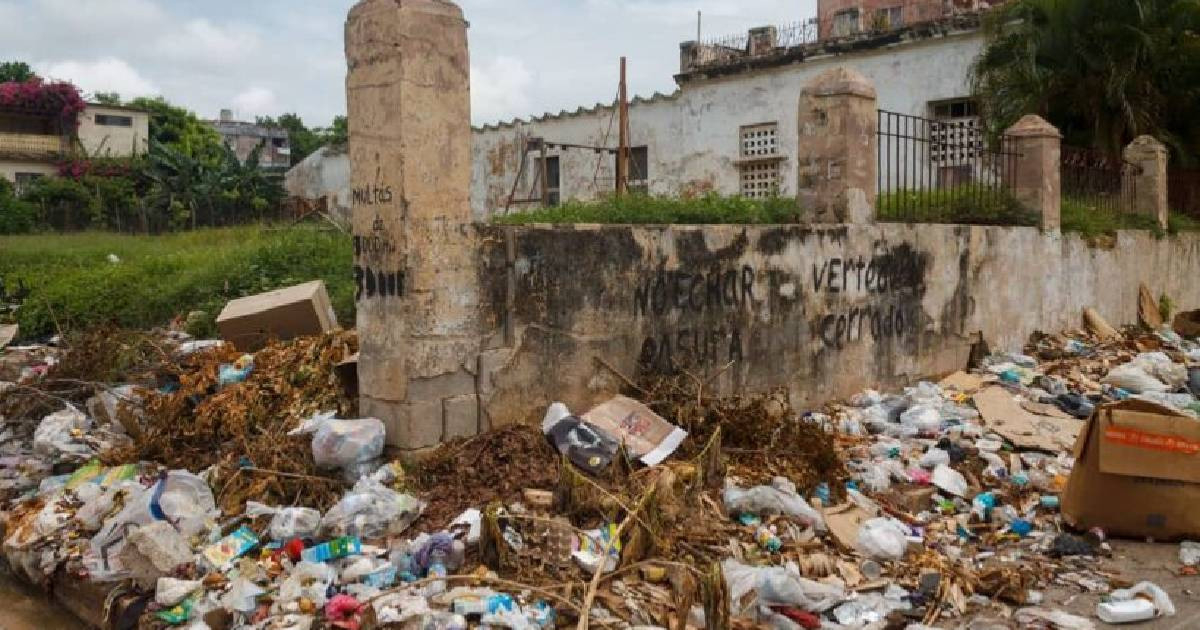
Heavy machinery brought in to clean up the trash depots on Callejón de Quintanales in the Naranjal Norte neighborhood of Matanzas has ended up demolishing them, leaving the area without any designated spots for waste disposal, as reported by the official newspaper Girón this Friday.
Years ago, the Communal Services Department constructed several concrete block trash containers on either side of the alley in an effort to streamline waste disposal in this section surrounding the neighborhood.
Destructive Cleanup Efforts
The issue arose when the lack of regular cleaning allowed waste to pile up to such an extent that heavy machinery became necessary. "The sheer volume of solid waste made it imperative to use mechanical shovels for removal. The outcome? The machines partially or completely destroyed the bins," the article stated.
Of all the original depots, only one remains standing, and the author cautioned that it might soon face the same fate.
Community Responses Fall Short
Following the destruction, local residents near each site cleared the areas, fenced them off, and installed prohibition signs. However, this backfired, leaving the entire area devoid of any collection points. "The area has been left without those essential spots for gathering trash. A return to chaotic behavior is apparent," the report noted.
Now, nylon bags and cardboard pile up on the ground despite repeated complaints from the local Party cell leader, educator Silvia García Álvarez, who, according to Girón, "has voiced her concerns at various forums" without any resolution.
The state-run media admitted that institutional responses have been inadequate. "I'm aware of state alternatives to address the poor communal hygiene issue, yet they are unstable and insufficient," it emphasized.
Wider Implications of Waste Mismanagement
This incident is not isolated. On Saturday, residents of the Biplanta neighborhood in the city of Cárdenas also reported heaps of waste obstructing entire streets, along with an increase in rodents and insects inside homes, and impromptu burnings, all without response from Communal Services, Public Health, or local government.
In May, Girón published a photo report vividly documenting the severe accumulation of garbage in the city's streets, warning that the crisis has escalated from an aesthetic issue to a serious health threat for its residents.
The health implications are being tracked. In April, authorities issued a provincial alert for hepatitis A with 18 active cases in Versalles and seven in La Marina. Two months later, seven new confirmed cases and 49 suspected cases were reported in just one week, centered in Versalles, while Matanzas accounted for 40% of the annual provincial total.
More than 300,000 residents of Matanzas struggle with access to a stable potable water supply, and rainfall causes waste to be swept into the San Juan and Yumurí rivers and the city's bay.
FAQs on Waste Management Issues in Matanzas
What caused the destruction of trash depots in Matanzas?
The destruction was caused by heavy machinery used to remove excessive waste that had accumulated due to a lack of systematic cleaning.
How are residents responding to the lack of waste collection points?
Residents have attempted to clear and fence off areas while placing prohibition signs, but these efforts have not resolved the absence of formal waste collection points.
What are the health risks associated with waste mismanagement in Matanzas?
The mismanagement of waste has led to health risks such as the spread of hepatitis A and increased infestation of pests, which are exacerbated by inadequate institutional responses.