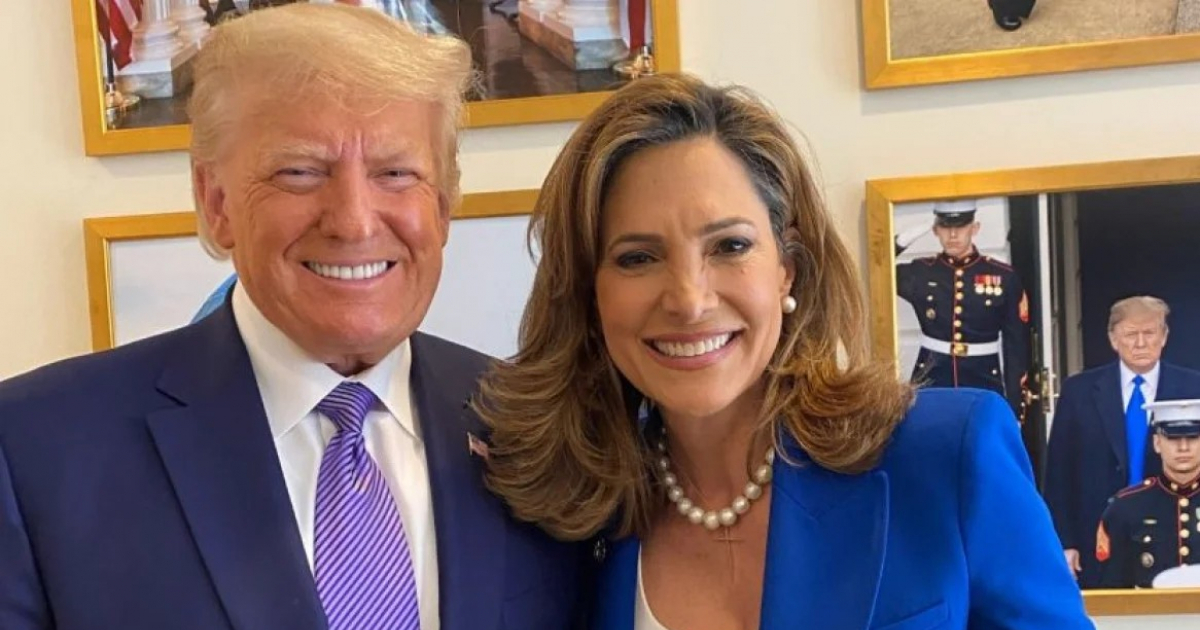
Republican Congresswoman María Elvira Salazar issued two conflicting statements on Saturday regarding the recent oil agreement between the United States and Venezuela. Initially, she criticized it harshly in a Spanish post on her personal account, but later offered conditional support in an English statement on her official congressional page.
In her first post on her personal account @MaElviraSalazar, Salazar was explicitly critical: "Any 'agreement' with the interim Venezuelan regime expires the day President Trump leaves the White House," she declared. She further accused the "interim dictator of Venezuela" of merely buying time and reminded followers of past U.S. investments that the regime had seized, warning it could happen again. This post was subsequently removed and replaced.
Her second statement, shared on her official account @RepMariaSalazar and written in English, presented a starkly different perspective. Salazar described the agreement as "a great deal for the United States and the Venezuelan people," highlighting its role in displacing China from Venezuelan oil markets, where Beijing had been purchasing oil at heavily discounted rates.
Despite the change in tone, Salazar maintained a degree of skepticism: "Delcy is the wrong person for this deal," she noted in her second post, insisting that the agreement's longevity depended on the occurrence of free elections in Venezuela.
The shift between the two statements was notable not only in tone but also in target audience. The initial statement, in Spanish from her personal account, was directed at the Venezuelan and Cuban communities, while the latter, in English from her official account, aimed at media and English-speaking colleagues.
The Trump Administration's Oil Agreement
The controversial agreement was announced by President Donald Trump on Friday, following reports from Reuters that negotiations were underway. Trump touted it as the "largest oil deal in world history." According to reports, the United States would secure a 55% majority stake in 17 strategic fields with over 65 billion barrels of proven reserves, holding rights for up to 100 years and projecting an investment exceeding $100 billion.
The deal was negotiated by Secretary of State Marco Rubio and Secretary of Defense Pete Hegseth, with Delcy Rodríguez, the acting president of Venezuela, representing the opposite side.
Salazar's change of heart is particularly striking given her history of staunch opposition to any energy agreements with the Chavista regime. In February 2025, she applauded the revocation of Venezuelan oil licenses, stating, "I've been advocating for the cancellation of oil licenses that benefit Maduro's regime. Today, the President delivers on his promise. No more oil dollars for the repressive apparatus of Chavismo."
In May of the same year, she directly warned Delcy Rodríguez against deceiving Trump "as she and Maduro deceived and destroyed Venezuela." By September 2025, she had made the participation of U.S. oil companies in Venezuela contingent upon the establishment of a democratic government.
The August 2026 agreement presents Salazar with a difficult dilemma: openly criticize a decision by Trump or stray from the stance she has long upheld for her Cuban American and Venezuelan constituents in Miami. Her initial post—and its subsequent replacement—perfectly encapsulate this tension.
Understanding the U.S.-Venezuela Oil Agreement
What was María Elvira Salazar's initial reaction to the oil deal?
Initially, Salazar criticized the oil agreement, suggesting it was only temporary and warned of past U.S. investments being seized by the Venezuelan regime.
How did Salazar's stance change in her second statement?
In her second statement, Salazar referred to the agreement as a beneficial deal for both the U.S. and Venezuelan people, while still expressing skepticism about its implementation.
Why is the oil agreement between the U.S. and Venezuela significant?
The agreement is notable for its potential to shift oil market dynamics, reducing China's influence in Venezuela and promising substantial economic benefits for the U.S.