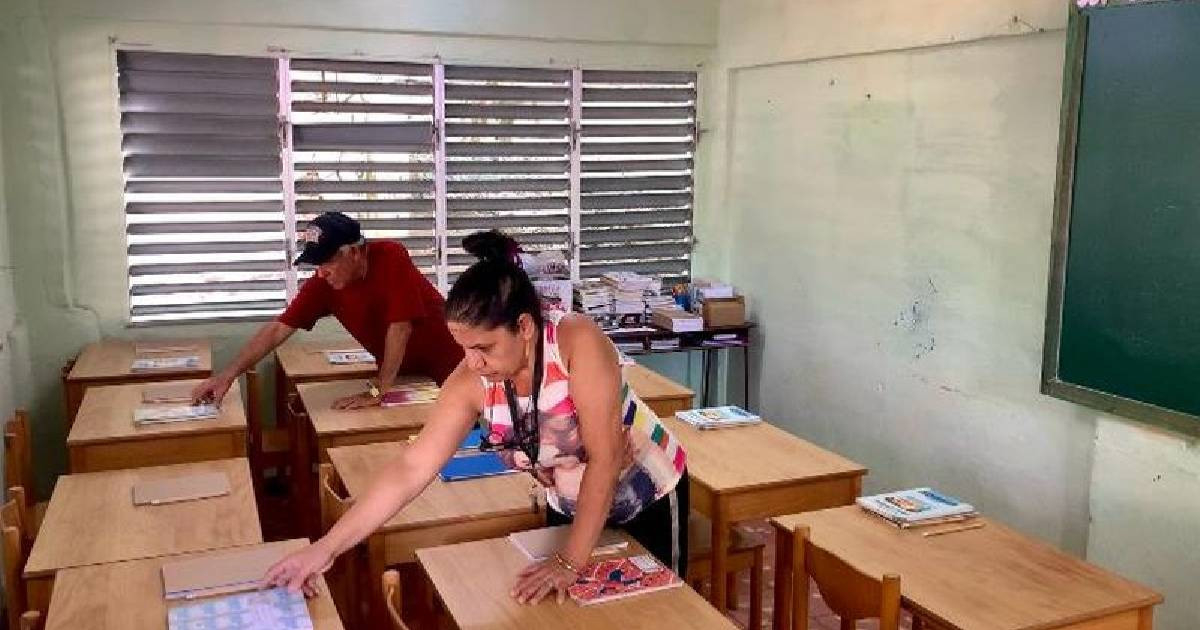
As the 2026-2027 school year is set to begin next Monday, Holguín is grappling with a severe shortage of over 2,000 teachers across the province. This alarming figure was confirmed by Luis Felipe Batista Rodríguez, the province's Director of Education, in a statement to the official newspaper ¡Ahora! on Saturday.
The deficit is primarily impacting teachers' workload and the teacher-student ratio, while also leaving numerous positions unfilled. In response, authorities plan to use emergency measures such as hiring industry and service sector specialists, as well as integrating university students through a part-time study program.
Strategies to Address Teacher Shortage
Holguín, home to the largest school network in the nation with 1,319 educational institutions and over 131,000 students, will establish 156 educational zones across all municipalities. These zones aim to efficiently allocate available resources through local councils.
“Each zone will have a coordinator, potentially a school principal, responsible for uniting educational influences to ensure students engage in tasks, activities, and projects in their centers on non-school days,” Batista explained.
Impact of Hurricane Melisa and Transportation Challenges
The situation is further complicated by the aftermath of Hurricane Melisa, which damaged 524 schools in the region. As of the school's opening, 157 schools are still awaiting repairs, and eight will temporarily operate out of family homes and teachers' residences.
Additionally, the province's 51 boarding schools will accommodate all of their 3,062 students, while prioritizing 42 transport routes for over 4,000 external students from hard-to-reach areas.
National Educational Crisis
This teacher crisis in Holguín is part of a broader national issue. For instance, Camagüey is facing a shortage of nearly 3,000 teachers for its 95,000 students. In this central province, 910 secondary students will be moved to primary schools due to the teacher deficit.
Compounding the problems is the scarcity of school uniforms. In Holguín, production is only 60% complete, focusing on key grades like preschool, fifth, and seventh. Yudira Tamayo Menéndez, Deputy General Director of Education, noted that "not everyone will be able to obtain uniforms in time," but reassured that this won't delay the school start.
Community Response and Government Appeal
The impending school year has sparked debate among Cuban parents. Some advocate for their children's right to education, while others are hesitant to send them to schools lacking qualified teachers, food, and reliable electricity.
Education Minister Naima Ariatne Trujillo Barreto recently visited Holguín to assess the situation and called for more flexible and decentralized decision-making. She emphasized the importance of expanding learning concepts through more integrative practices.
Reflecting on the challenging circumstances, Minister Trujillo candidly stated, "We are asking for cooperation that we have never had to request before, not even in these past difficult years."
Key Questions About Holguín's Education Crisis
How many teachers are missing in Holguín for the 2026-2027 school year?
Holguín is experiencing a shortage of over 2,000 teachers for the upcoming school year.
What measures are being taken to address the teacher shortage in Holguín?
Authorities are implementing emergency solutions such as hiring specialists from other sectors and involving university students in part-time teaching roles.
What impact did Hurricane Melisa have on Holguín's schools?
Hurricane Melisa damaged 524 schools in Holguín, with 157 still awaiting repairs, and eight schools operating temporarily in alternative locations.
How is the school uniform situation affecting students in Holguín?
Uniform production is only 60% complete, with a focus on prioritized grades, leaving many students unable to receive uniforms on time.