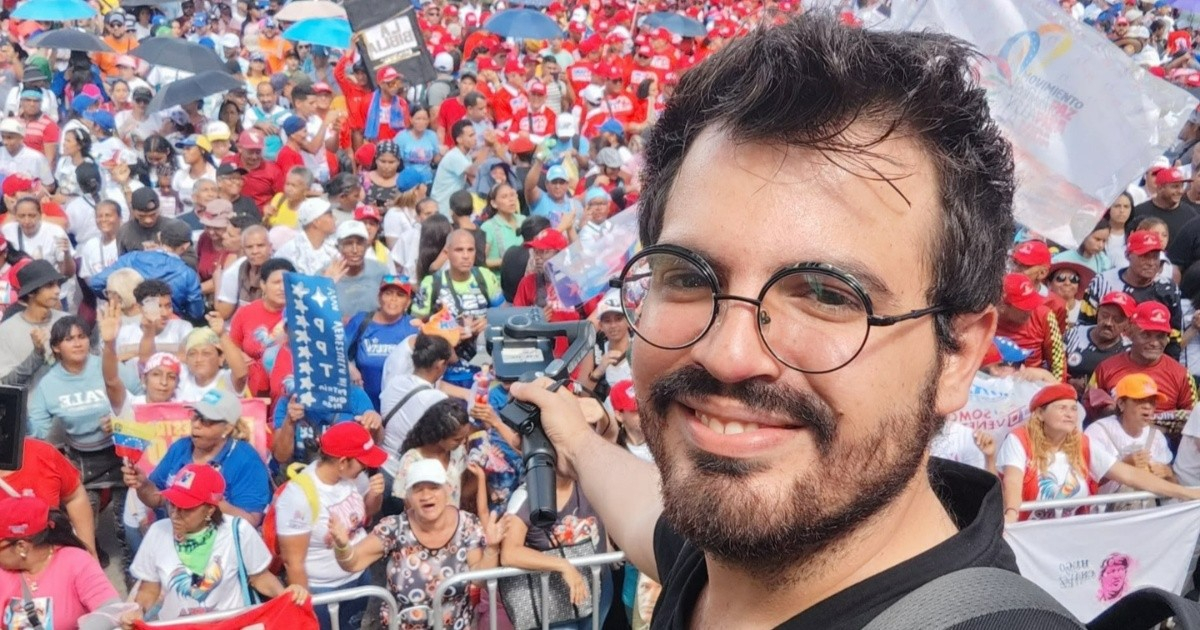
Pedro Jorge Velázquez, a well-known Cuban blogger who goes by the online moniker "El Necio," expressed his discontent on Facebook this Saturday regarding Venezuela's government, led by Delcy Rodríguez, for its decision to sign a substantial oil deal with the United States while refusing to supply fuel to Cuba.
Velázquez wrote in his post, "The current Venezuelan administration, ready to hand over a century of oil extraction to the U.S., is the same one that has refused to trade a single drop of oil with Cuba in 2026," responding to the historic oil agreement announced Friday by Donald Trump.
The deal, brokered with interim Venezuelan President Delcy Rodríguez and involving U.S. Secretary of State Marco Rubio and Secretary of Defense Pete Hegseth, grants the United States effective control over 80% of a private joint venture, accessing more than 65 billion barrels of Venezuela's proven reserves for the next 100 years.
This agreement involves 17 strategic fields, an investment exceeding $100 billion, and more than $209 billion in taxes for the Venezuelan state, according to figures released by Delcy Rodríguez and the Chavista regime.
Fuel Crisis and Political Tensions
For El Necio, the contradiction is unacceptable: "While for the U.S. it's a matter of world domination and resource control, for Cuba it's about survival and saving lives."
The post holds significant weight given the current energy crisis in Cuba. Venezuela halted oil shipments to the island between November 2025 and January 2026 due to pressure from Washington following Nicolás Maduro's capture. This resulted in an unprecedented crisis, with blackouts lasting up to 25 hours a day and reserves covering barely four days of consumption.
In May 2026, Cuba's Minister of Energy and Mines, Vicente de la O Levy, publicly acknowledged that the nation was out of fuel, with no reserves of fuel oil or diesel available.
Remembering Fallen Soldiers
The state-affiliated communicator also recalled the 32 Cuban soldiers who died on January 3, 2026, during the operation that led to Maduro's capture. Both governments declared these soldiers "heroes and martyrs of the homeland," honoring them with a monument unveiled in Caracas in June 2026.
"The Cuban government should take this into serious consideration, especially after the 32 Cuban heroes who died defending Venezuela against invaders," Velázquez stated.
Shifts in Official Discourse
This criticism is noteworthy coming from a journalist historically aligned with the government. In August 2026, El Necio himself admitted that his journalism had been "complacent" and vowed to distance himself from any official guidance, indicating a gradual departure from the official narrative, with this post being a new expression of such a shift.
Trump had stipulated since January 2026 that any agreement with Venezuela required Caracas to sever ties with Cuba, China, Russia, and Iran. He even declared that "there will be no more oil or money for Cuba" as part of this pressure.
Key Insights on Venezuela-Cuba Oil Relations
Why did Venezuela stop sending oil to Cuba?
Venezuela ceased oil shipments to Cuba due to pressure from the United States following the capture of Nicolás Maduro, leading to an energy crisis on the island.
What were the terms of the oil agreement between Venezuela and the U.S.?
The agreement grants the U.S. control over 80% of a joint venture with access to more than 65 billion barrels of Venezuelan oil reserves for 100 years, involving a $100 billion investment.
What are the implications for Cuba's energy crisis?
Cuba faces severe energy shortages, with blackouts and limited fuel reserves, exacerbated by Venezuela's decision to withhold oil shipments.