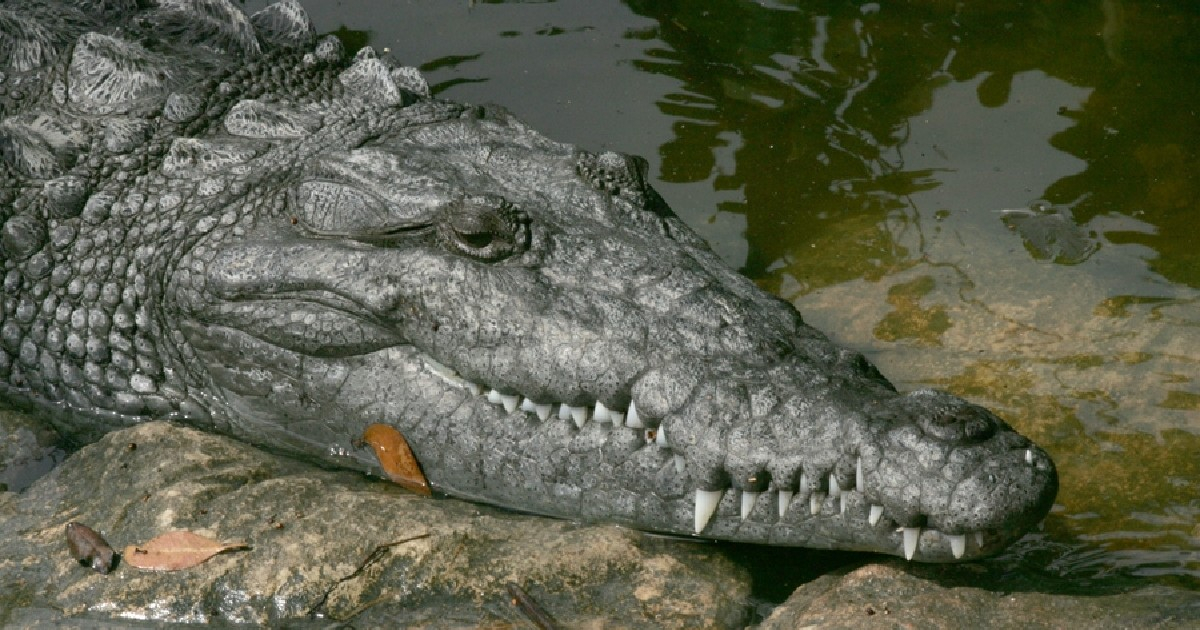
For two days now, Florida wildlife authorities have been on the hunt for an American crocodile responsible for the death of a nine-year-old Dutch Shepherd named Kygo. The attack occurred Thursday morning in a residential canal in South Miami, yet the elusive reptile remains at large.
According to reports from Local 10, officials from the Florida Fish and Wildlife Conservation Commission (FWC) have scoured waterways near Miller Drive and Southwest 63rd Court, the site of the attack, but have found no trace of the crocodile.
Devastating Attack Shocks Neighborhood
The tragic incident unfolded around 9:30 a.m. in the 6200 block of Southwest 64th Court, an area known for its direct canal access. Enrique Pomares, the dog's owner, recounted how he let Kygo out into the backyard as per their morning routine when the reptile suddenly emerged and dragged the dog into the water. Kygo weighed approximately 70 pounds.
Pomares described the heart-wrenching scene: "The dog was trying to escape. I pulled him several times, and it was just horrible to watch this unfold."
In a desperate bid to save his pet, Pomares threw a kayak at the crocodile, hoping to distract it. Sadly, the creature returned with Kygo's lifeless body in its jaws, displaying it like a trophy. "It was horrific. I’ve never seen anything like it," he lamented.
Community Concerns and Wildlife Regulations
The incident has heightened fears among local residents. Jacqueline Correa, a neighbor, reported seeing two crocodiles in the area and had repeatedly contacted authorities with no substantial action taken. "It’s distressing. We’ve had people call about this, and nothing is happening to remove the crocodiles," she expressed. Correa even captured video footage in June, showing what she described as the largest crocodile swimming through the affected waterways.
The FWC clarified that the relocation of such animals is not immediate; as a species protected under state and federal law, officials must first monitor the crocodile’s behavior to determine if it meets the criteria for relocation. Killing an American crocodile is a third-degree felony in Florida, punishable by up to five years in prison.
Kygo’s remains were discovered hours later on an embankment a few houses away by Dexter Lovett, another local who had long warned about the reptile's presence. "I’ve been telling people to stay away from the canal. The crocodile is large and it eats. I’ve seen it multiple times," he said.
Precautions and Ongoing Efforts
Enrique Pomares estimated that the crocodile responsible for his dog’s death measures between 13 and 15 feet, though this is a personal estimate rather than an official measurement. The family had rescued Kygo and cherished him for about six years. "It took a family member from us," Pomares expressed.
Authorities are urging residents to keep children and pets away from canals, ponds, and shorelines, particularly at night, and to refrain from approaching, feeding, or attempting to capture the animal. The FWC has set up a toll-free line at 866-FWC-GATOR (866-392-4286) for reporting crocodile sightings in residential areas.
This incident adds to a series of reptile encounters in Florida during the summer of 2026. Earlier in August, near Marion County’s Silver River, a nearly three-meter-long alligator attacked a woman, resulting in the loss of her right arm.
Frequently Asked Questions About Crocodile Incidents in Florida
What should residents do if they spot a crocodile?
Residents should immediately report sightings to the FWC using the toll-free number 866-FWC-GATOR (866-392-4286) and avoid approaching or feeding the animal.
Why can't the crocodile be relocated immediately?
As a protected species, American crocodiles require monitoring to ensure they meet criteria for relocation. Immediate removal is not permitted under state and federal laws.
What are the legal consequences of harming an American crocodile in Florida?
Harming an American crocodile is a third-degree felony in Florida, potentially resulting in up to five years in prison.