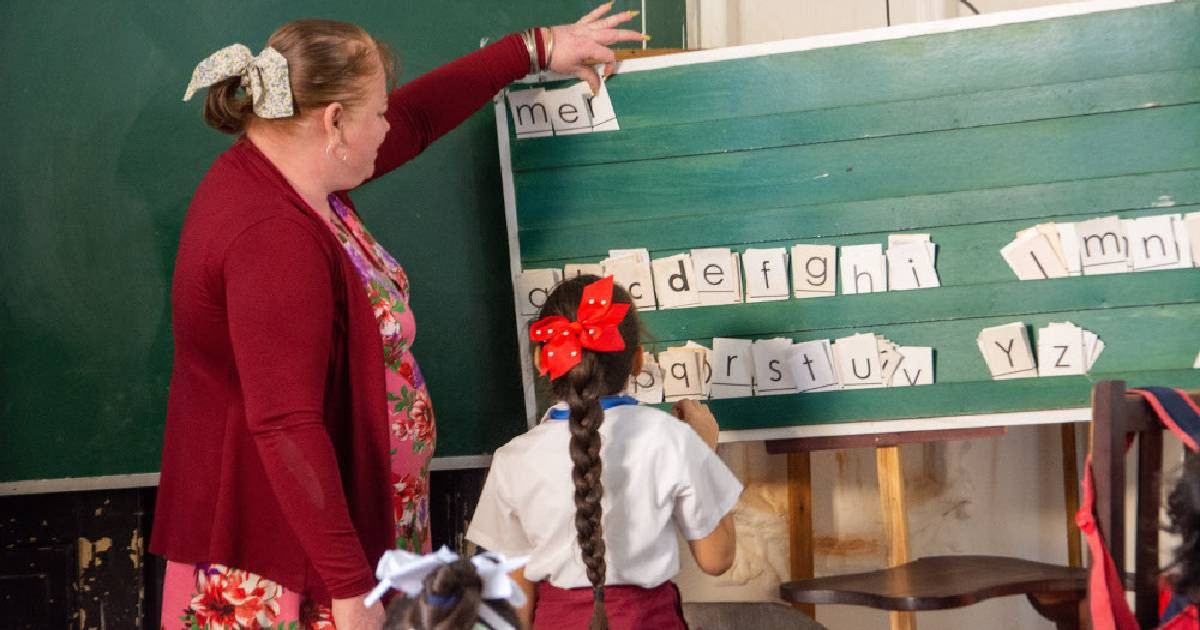
The 2026-2027 school year is set to commence in Camagüey with a significant shortfall of nearly 3,000 teachers, a situation impacting over 95,000 students across 690 schools. This pressing issue was highlighted during the latest meeting of the Provincial Education Directorate.
The teacher shortage is particularly acute in Basic Secondary, Pre-university, and technical-vocational education. To address this gap, authorities plan to hire external educators and reinstate retirees, strategies that have been employed in previous years, according to a report on Wednesday from the official newspaper Adelante.
Repercussions and Adjustments in Class Organization
The severity of the shortage necessitates adjustments in class organization. In Basic Secondary, 910 students will be moved to local primary schools, with 467 receiving instruction from primary teachers, supplemented by six Basic Secondary teachers and eight municipal officials.
Technical-vocational education is also affected by the lack of teachers. Approximately 400 students will be taught by primary and secondary educators, while 479 students in pedagogical education will be distributed among 47 municipal locations.
Impact on Higher Education Institutions
The institute known as the Vocational Pre-university Institute of Exact Sciences Máximo Gómez Báez will relocate 299 boarding students to pre-university schools in their municipalities. Of these, nine will receive instruction in primary or secondary schools, with authorities considering additional options, as detailed in the report.
Naima Ariatne Trujillo Barreto, the Minister of Education, participated in the work session, emphasizing the importance of managing the school year locally to maximize in-person attendance. She also suggested leveraging projects by young people, universities, businesses, and educational zones to support teaching processes.
Infrastructure and Broader Challenges
On the infrastructure front, 52 educational centers remain uncertified due to issues with cisterns or water storage facilities. Among these, one is in Nuevitas, 51 in Camagüey, and 12 institutions in Guáimaro await resolution.
Camagüey's teacher deficit reflects a national crisis. The minister herself acknowledged the gravity of the situation, noting that authorities are now asking for assistance they have not required in the past, even during previous challenging years.
The decline in Camagüey is ongoing. The 2025-2026 school year began with over 2,000 vacancies and a staffing coverage of just 75.5%.
The Wider Educational Crisis
In December, a basic secondary school in Vertientes resorted to publicly advertising for teachers in Mathematics, Spanish, and History. By July, teachers in the same area reported going without pay for two months.
The shortage of personnel is compounded by other structural issues. Fifty-two schools in the province lack certification due to problems with water storage, and 12 institutions in Guáimaro are still pending. School snacks will be available in only 59 schools, and if continuity isn't ensured, class schedules will be reduced to a single daily session, according to the official Communist Party outlet in the Agramontine territory.
Cuba's educational crisis is further exacerbated by the fact that only 12% of primary school uniforms have been produced, hindered by power outages in workshops, fuel shortages for transporting materials, and import restrictions on supplies.
The previous school year had to conclude prematurely, between mid and late June, due to an energy crisis and fuel shortages.
Cuban mothers are divided as the school year begins. While some insist on their children's right to education despite the conditions, others refuse to send them to classrooms lacking qualified teachers, food, and following nights of prolonged blackouts.
Cuban Education Challenges: FAQs
What is the extent of the teacher shortage in Camagüey?
Camagüey faces a shortfall of nearly 3,000 teachers, impacting the education of over 95,000 students across 690 schools.
How are authorities addressing the teacher shortage?
Authorities plan to hire external educators and reinstate retired teachers to fill the gaps, a strategy used in previous years.
What impact does the teacher shortage have on students?
The shortage has resulted in students being moved between schools and receiving instruction from teachers outside their regular specialization areas.
What are the broader educational challenges in Cuba?
Cuba's educational system faces challenges such as infrastructure issues, production delays of school uniforms, and energy crises that affect school operations.