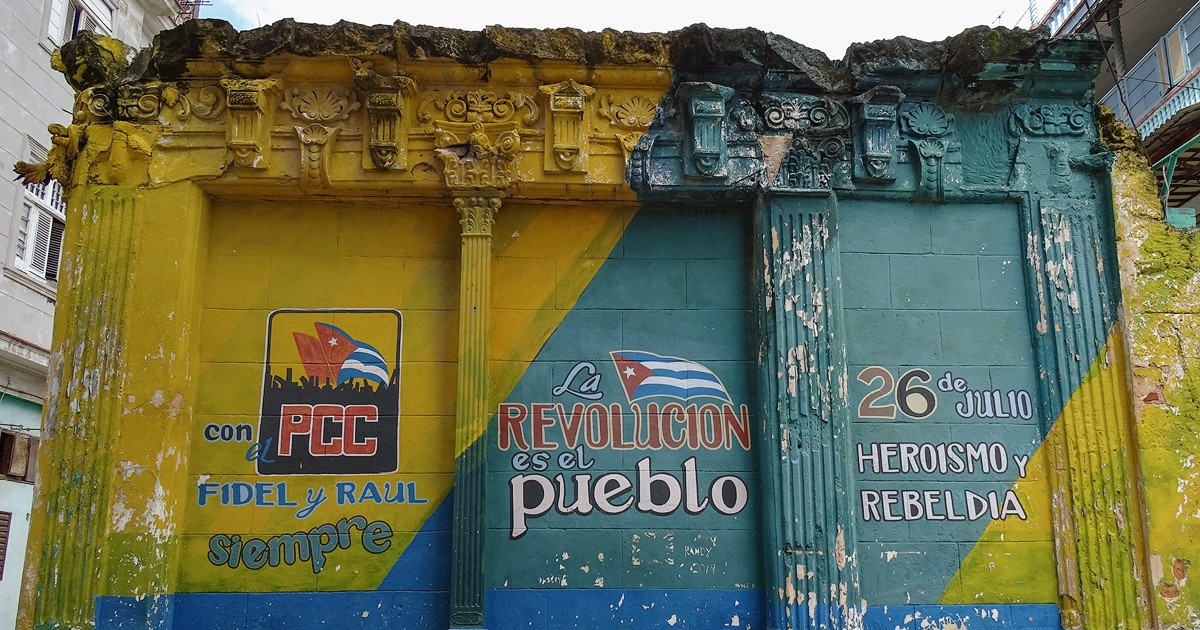
A recent initiative by the Havana government aimed at organizing neighborhoods to be "safe," "participative," and "productive" has sparked a wave of ridicule and criticism from Cubans. The populace is demanding more fundamental necessities such as water, electricity, food, transportation, and security.
This Wednesday, Havana authorities unveiled the populist campaign "My Neighborhood for the Homeland," which is divided into three segments: Safe Neighborhood, Participative Neighborhood, and Productive Neighborhood.
According to the official narrative, Safe Neighborhood is intended to involve residents in "preparation for the defense of the Homeland" along with ensuring the security and protection of their communities. Meanwhile, the Participative Neighborhood encourages citizens to engage in actions that transform their local areas, whereas Productive Neighborhood focuses on developing local productions and services to meet residents' needs.
Public Reaction to Government's Campaign
However, the announcement was met with a starkly different response than anticipated. Many comments on the official publication turned it into a platform for airing grievances about the capital's day-to-day issues. Water and electricity were among the most frequently mentioned complaints.
One online user summed up the stark contrast simply: "A safe, participative, and productive neighborhood starts with having water and electricity. Start with what you are supposed to provide."
Criticism and Sarcasm Dominate Responses
Another user sarcastically questioned, "And what about a Lit-Up Neighborhood? If you ensure that, people might actually be able to participate in the others." This comment struck a chord in a city where power outages continue to disrupt daily life. "Safe, participative, and productive neighborhood, very nice, how interesting. But of course, without water," quipped another.
One individual humorously renamed the proposal as "Neighborhoods of Blackouts," while another from Guanabacoa straightforwardly demanded, "My neighborhood, safe, participative, and productive, needs water in the center of Guanabacoa. Do you think that's possible?"
Disillusionment with Unrealistic Goals
Many questioned the gap between the program's objectives and the harsh realities faced by many communities. A lengthy response pondered how one could speak of a safe and productive neighborhood amid issues like food shortages, water supply problems, lack of electricity, transport challenges, diseases, high cost of living, and garbage accumulation. "Participate in what?" and "Produce what at the neighborhood level?" the commenter asked, accusing authorities of "idealizing the reality."
There were also concerns about shifting security responsibilities onto residents. One user pointed out that combating crime, drugs, and other illegalities is the job of institutions designed for such purposes, adding that the population is aging, exhausted, and has lost trust. "The neighborhoods need the National Revolutionary Police to work and clean them of so much insecurity," said another.
Consignas and Real Needs
One of the most scathing critiques targeted the use of slogans and campaigns amid shortages: "Slogans don't feed us, don't give us the vital water for life, don't light the endless nights of our children and elderly, don't provide efficient medical services or medications."
The campaign's rollout was also met with outright sarcasm. One person merely asked, "And this meme?" Another commented, "Dreams cost nothing," while someone else joked that the future of neighborhoods would be divided between "hunter-gatherer-fishermen" and "farmers and ceramists."
Citizens also highlighted specific cases needing attention. Residents of La Lisa requested the restoration of water supply; those in Centro Habana demanded a fairer distribution of blackouts; and a user from Alamar said they had been asking Havana Water for an explanation regarding service issues in multiple buildings for three years without resolution.
The "My Neighborhood for the Homeland" initiative is not entirely new. The program began taking shape in March as a revamped community organization strategy, also organized around the Safe, Participative, and Productive fronts. It was officially presented in May to officials and representatives of the People’s Power, with plans to expand it to over 12,000 constituencies across the country to boost community involvement in surveillance, defense, and production tasks.
This campaign emerges at a time when traditional neighborhood mobilization organizations have long shown signs of decline. In 2025, the Committees for the Defense of the Revolution themselves acknowledged a shortage of cadres and challenges in attracting new members, particularly among the youth.
Frequently Asked Questions About Havana's Neighborhood Campaign
What are the components of the "My Neighborhood for the Homeland" campaign?
The campaign is structured into three segments: Safe Neighborhood, Participative Neighborhood, and Productive Neighborhood, each aimed at enhancing community security, participation, and local production, respectively.
What has been the public reaction to this initiative?
The public reaction has been largely critical and sarcastic, with many Cubans highlighting the disconnect between the campaign's objectives and the basic necessities lacking in their daily lives, like water and electricity.
Why are citizens skeptical about the campaign's goals?
Citizens are skeptical because the goals of the campaign seem unrealistic when juxtaposed with the severe shortages and infrastructural issues they face in their neighborhoods.