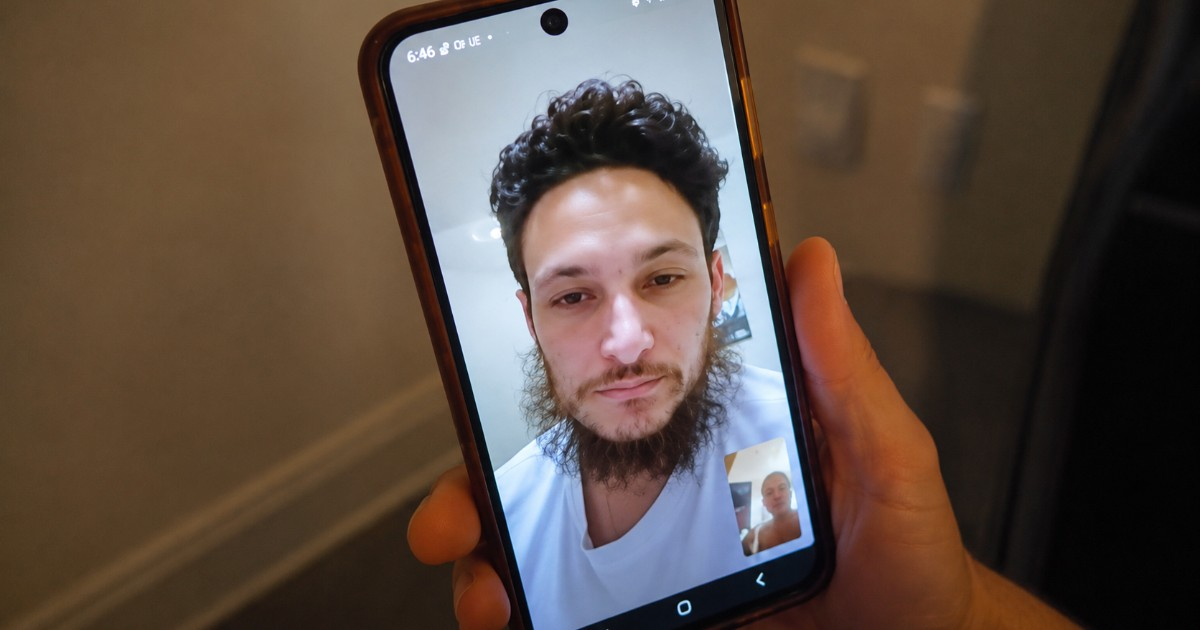
Carlos Rodríguez, a 35-year-old Cuban who had been residing in Miami, voiced his dismay at being deported to Africa, alleging that U.S. authorities trafficked his life by sending him unexpectedly to Equatorial Guinea.
Rodríguez is currently held in a hotel that has been converted into a detention center in Malabo. In an interview with EFE, he shared his ordeal:
"Do you want to know the truth? What crossed my mind was that I was being trafficked, that my life was being traded. That's how I felt—overwhelmed with fear and dread because this is the other side of the world, where everything is foreign and armed guards were waiting. I still fear for my life here."
Unexpected Journey to Africa
Rodríguez was on the first deportation flight sent by the U.S. to Liberia, an African country agreeing to accept up to 1,200 individuals from other nations under a bilateral agreement. Upon arrival in Monrovia, Rodríguez and four other migrants resisted leaving the plane, prompting a swift and forceful response from U.S. officers.
"They violently dragged us off the plane, pressing boots onto the chains on our hands and feet. It seems the Liberian government was displeased with this and ordered us back," Rodríguez recounted.
The Liberian authorities refused to accept the group and returned them to the aircraft. Once aboard, they were told they would be heading back to the United States. However, three hours later, the situation took a different turn.
Stranded in Equatorial Guinea
"We found ourselves disembarking in the dead of night at a dark part of the airport in Equatorial Guinea, greeted by an operation of 50 guards ready to remove us from the airplane," Rodríguez described.
He concluded his testimony with a plea for help: "I've been torn away from my family—my wife and young daughter, both U.S. citizens. This is a grave injustice, a massive violation of human rights in the United States. If you can, please help me because Africa operates differently from the rest of the world."
The Plight of Other Stranded Cubans
Rodríguez arrived in the United States in 2013 and was apprehended by immigration officials in April 2025 in Tennessee. Over a span of more than 16 months, he was moved through various detention centers, including the notorious "Alligator Alcatraz" in Florida.
Despite a 2019 deportation order, his wife, Igrayne Ribot, a U.S. citizen, argues that a habeas corpus petition filed in a federal court in November 2025—which remains unresolved after ten months—should have prevented his expulsion.
Rodríguez is detained alongside fellow Cubans Darwin Hernández, Emilio Destrade, and Leonardo Sánchez, as well as Brazilian Pietro Graza de Lima. Sánchez's situation is particularly dire; the 49-year-old suffers from a severe ventral hernia and relies on a colostomy bag, yet he lacks access to necessary medical care.
The hotel-turned-detention center operates under a $7.5 million contract between Washington and the government of Equatorial Guinea and is owned by the family of President Teodoro Obiang Nguema Mbasogo. Reports indicate that food is sometimes withheld and guards have threatened or physically attacked the migrants.
Since July 2025, numerous Cubans have been deported to Eswatini and the Central African Republic, countries with which they have no ties. The Cuban regime has historically refused to accept certain deportees, prompting Washington to seek alternative destinations in Africa.
Frequently Asked Questions about Cuban Deportations to Africa
Why was Carlos Rodríguez deported to Africa instead of Cuba?
The U.S. government has been seeking alternative destinations for deportees because the Cuban regime often refuses to accept certain individuals. As a result, some deportees have been sent to African countries under bilateral agreements.
What challenges are deportees facing in Equatorial Guinea?
Deportees in Equatorial Guinea face harsh conditions, including inadequate medical care, threats, and physical abuse by guards. Additionally, they experience separation from their families and significant uncertainty about their future.
What legal avenues are available for deportees seeking to return to the U.S.?
Deportees might pursue legal action such as filing a habeas corpus petition in federal court to challenge their deportation. However, these processes can be lengthy and uncertain, as seen in Carlos Rodríguez's unresolved case.