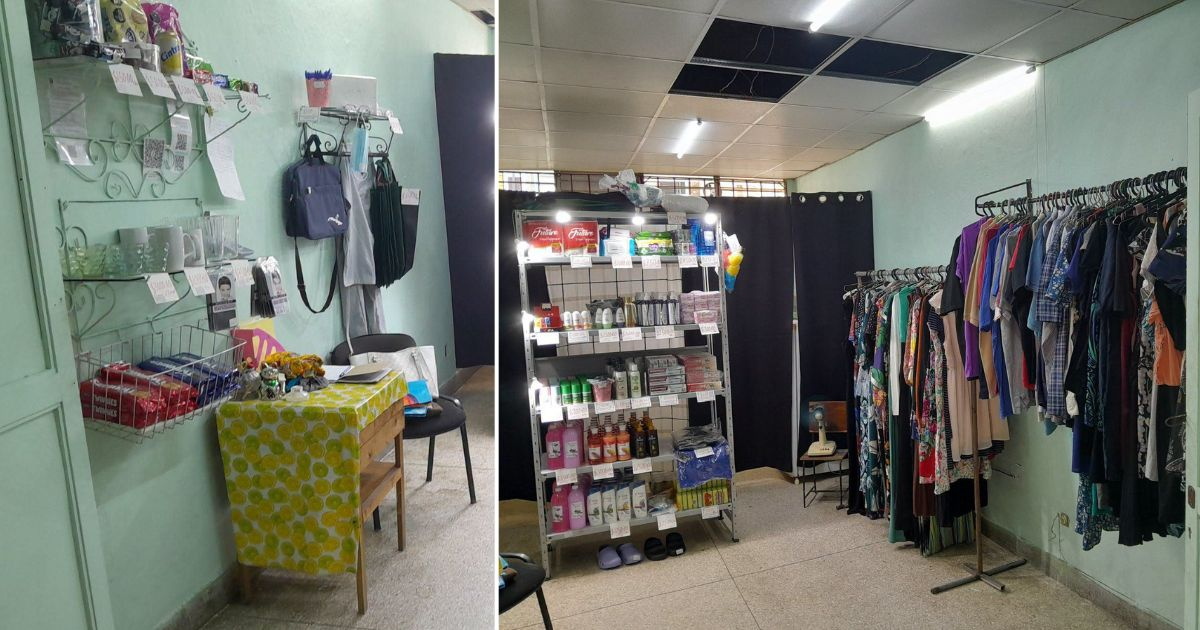
The Saturnino Lora Torres Clinical Surgical Teaching Provincial Hospital in Santiago de Cuba has unveiled a new store within its premises. This shop, aimed at providing hygiene essentials and other necessities, is designed to cater to the needs of patients, their families, and hospital staff.
The hospital announced the opening of "Garaje Lesli" on its Facebook page, noting that the shop is located within the Specialty Polyclinic area. This new venue offers an array of products including soap, antiseptic gels, toilet paper, wet wipes, toothbrushes, toothpaste, mouthwash, shampoo, conditioner, body lotions, deodorants, and diapers, among other essential items.
"We understand that staying in a hospital or enduring long work hours can be exhausting. Therefore, we have developed this space with your comfort and well-being in mind," the institution stated. This initiative provides an alternative for patients and staff to avoid leaving the hospital in search of these products.
Operating from 8:00 a.m. to 6:00 p.m., the store facilitates bank transfers via QR codes, a feature that has been particularly well-received by social media users. Photographs shared by the hospital also reveal the pricing of some merchandise.
Price tags on hygiene products range from approximately 900 to 3,800 CUP, with some items costing as much as 4,500 to 5,000 CUP. While the announcement primarily highlights personal care and hygiene products, photos show a wider selection, including clothing, footwear, backpacks, sweets, and beverages.
In the candy section, prices of 50 and 150 CUP can be seen, along with a 500 CUP label next to other items. Although the announcement lacks details about the store's management, it appears to be a privately leased space within the province.
Feedback from those who commented on the announcement was surprisingly positive. "Excellent initiative. Everything is within reach. Success," one person wrote, while another noted, "Good service and it's great that they accept transfers."
Some suggested that this idea should be replicated in other healthcare facilities. "Good idea, they should implement this in all hospitals for the convenience of patients, companions, and workers," one user expressed. Another summed it up, "Excellent idea for both workers and patients and their families."
There was also immediate curiosity about pricing. Some users specifically inquired about the cost of deodorants and pens, while another remarked that the initiative could be beneficial but warned, "Let's see how the prices are."
Not all responses were favorable. One user highlighted the unfinished state of the store, pointing out parts of the ceiling not yet completed and questioned whether the Hygiene and Epidemiology authorities had approved the opening.
Another comment harshly criticized both the appearance of the store and its prices: "What a lack of respect, opportunistic profiteers, it doesn't even look like a store and the prices are outrageous."
Some focused on the priorities of a healthcare center. One person noted that beyond consumer goods, "medications and medical supplies should be prioritized," in light of the frequent shortages affecting Cuban hospitals.
The store's opening coincides with significant challenges in accessing even basic products, a struggle that extends to healthcare workers in Santiago de Cuba. Just this Thursday, employees at the nearby Conrado Benítez Oncology Hospital reported paying $24 for a small gas cylinder, despite receiving wages in Cuban pesos.
According to accounts from that situation, some workers had to seek assistance from family members abroad to gather the necessary currency, while others missed out due to a lack of dollars. The Saturnino Lora Hospital itself has faced more directly health-related issues throughout 2026, such as a hemodialysis crisis in July due to a shortage of essential treatment concentrate.
Insights into Hospital Store Opening in Santiago
What types of products are available at the new hospital store?
The store offers a variety of hygiene and personal care products, including soap, antiseptic gels, toilet paper, wet wipes, toothbrushes, toothpaste, mouthwash, shampoo, conditioner, body lotions, deodorants, and diapers. Additionally, it provides clothing, footwear, backpacks, sweets, and beverages.
How do customers pay for their purchases at the hospital store?
Customers can pay for their purchases using bank transfers via QR codes, a feature that has been well received by the public.
What has been the public reaction to the new store?
Most comments on the store's opening have been positive, praising the convenience it offers. However, there are concerns about pricing and the physical state of the store, as well as a call for prioritizing medical supplies over consumer goods.