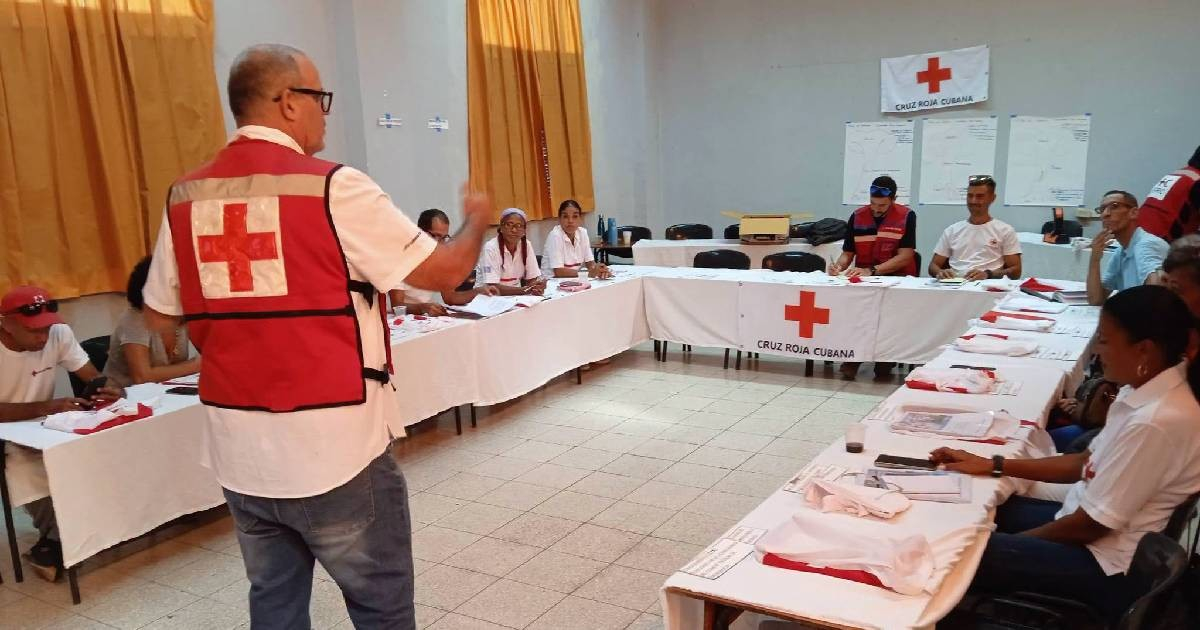
In Santiago de Cuba, a regional workshop focused on natural disaster preparedness commenced on Thursday. Hosted by the International Federation of Red Cross and Red Crescent Societies (IFRC) along with the Cuban Red Cross, this event is set in a province facing the nation's highest seismic risk.
The workshop, titled the Participatory Awareness on Safe Shelter (PASS) Regional Workshop, aims to train experts and community members in utilizing tools to identify vulnerabilities, mitigate housing risks, and advocate for constructing more resilient buildings in the face of emergencies.
Aris Arias Batalla, Operations and Relief Officer of the Red Cross in Santiago de Cuba, stated that "the goal is to equip participants with participatory tools that help identify vulnerabilities, reduce housing risks, and encourage safer construction practices."
Sessions cover built environment analysis, community diagnostics, safe habitat planning, and preventive risk management, with communities themselves leading the preparation and response actions, according to the official.
Geographical Risks and Historical Context
The selection of Santiago de Cuba is based on its geographical reality: the province lies on one of Cuba's most seismic zones, near the Oriente Fault—also known as the Bartlett-Cayman Fault—at the boundary between the Caribbean and North American plates.
The eastern region of Cuba accounts for about 70% of the nation's seismic activity, with Santiago de Cuba experiencing between 10 to 15 noticeable earthquakes annually.
The events of 2026 highlight the urgency for this workshop: a magnitude 6.0 earthquake rattled eastern Cuba in March, producing over 160 aftershocks within 24 hours, following a magnitude 5.6 event in February that was felt in Santiago de Cuba, Guantánamo, and Granma.
The most recent tremor occurred on August 21, just six days before the workshop: the National Center for Seismological Research (CENAIS) reported a magnitude 3.6 earthquake 31 kilometers southeast of the city, causing no damage or casualties.
Housing Vulnerability and the PASS Methodology
CENAIS, headquartered in Santiago de Cuba, is responsible for monitoring seismic activity and assessing seismic hazards throughout Cuba.
Housing vulnerability exacerbates the situation. In November 2024, moderate earthquakes damaged 234 homes in Santiago de Cuba alone and more than 2,000 across the eastern region, highlighting the accumulated structural deterioration over decades.
The PASS methodology, developed by the IFRC with support from the British Red Cross and launched in 2011, employs eight participatory activities ranging from community mapping to planning changes and monitoring solutions.
This initiative is also part of the response to climate change. According to the organizers, the workshop aims to "enhance the capacities of Red Cross personnel to support populations in areas prone to natural hazards through awareness processes that promote climate change-adapted solutions."
The Oriente Fault, as per the 2022 Directive 1 of the National Defense Council, can produce earthquakes up to magnitude 8 with effects exceeding VIII on the European macroseismic intensity scale, underscoring the critical need for community preparedness in eastern Cuba.
Understanding the Seismic Risks in Cuba
Why is Santiago de Cuba particularly vulnerable to earthquakes?
Santiago de Cuba is located near the Oriente Fault, which is one of the most seismically active regions in Cuba, making it susceptible to frequent and potentially severe earthquakes.
What is the PASS methodology?
The PASS methodology involves eight participatory activities aimed at identifying vulnerabilities, mitigating risks, and fostering safer construction practices to prepare for emergencies.
How does the workshop address climate change?
The workshop aims to strengthen the capacities of Red Cross personnel to support communities in adapting to climate change-related challenges, promoting solutions that are resilient to the impacts of climate change.