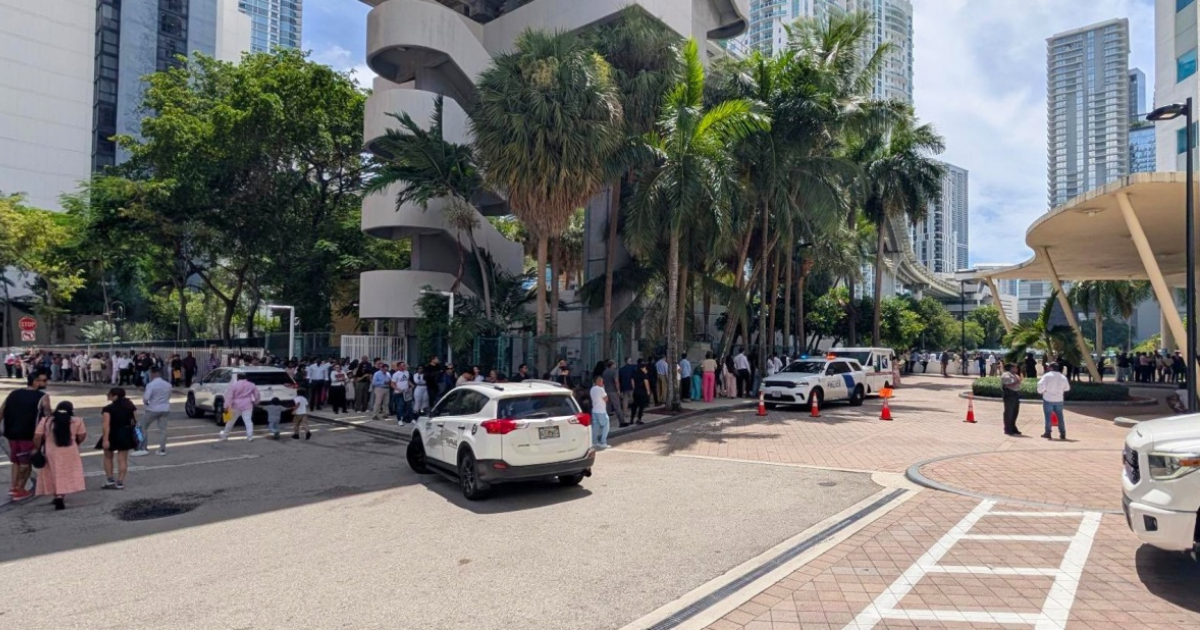
In an overwhelming display of frustration and disarray, hundreds of individuals lined up around the block at the Miami Immigration Court last Monday, enduring the scorching Florida sun. Both activists and attorneys labeled the scene as chaotic, with social media capturing the overwhelming situation.
"Thirteen judges and hundreds of cases being heard today. Absolute chaos with lines circling the block all day, people waiting for hours under the relentless Florida sun. This is the chaos of our immigration system under Trump," described Thomas Kennedy, an activist from the Florida Immigrant Coalition, in a post on X.
Kennedy shared three photos depicting a line stretching several blocks around the Immigration Court, and similar images and videos were shared by JC Frias on Instagram.
Understanding the Overcrowding at the Court
The chaos at the Miami court is the result of multiple factors converging at once. The court currently has a staggering 137,373 pending cases—the highest among all immigration courts nationwide—contributing to a national total exceeding 3.19 million active cases.
Moreover, the approach of "mega hearings," where a single judge handles up to 100 cases in one session, exacerbates the situation. "That's 100 hearings, 100 people per hearing, per judge," explained attorney Isadora Velázquez in an interview with N+ Univision, shared on Facebook.
Adding to the turmoil, there has been a significant advancement in hearing dates. Cases initially scheduled for 2028-2030 have been rescheduled to September-November 2026, following the addition of 77 new judges announced by the EOIR last May.
The notice period for court appearances has dramatically decreased, from a median of 158 days in April to just 42 days by June.
Impact of Eliminating Video Hearings
A significant change contributing to the court's overload is the shift to strictly in-person hearings starting September 8, eliminating the video call option that had been available since the pandemic.
"Up until now, judges allowed individuals to appear via video, with few exceptions. Well, that's over," stated attorney Liudmila Marcelo in a recent interview with CiberCuba, clarifying the details of this change.
Marcelo recounted her own experience with the overcrowding: on Wednesday, August 19, she arrived at 7:30 AM for an 8:30 hearing to find the multi-story parking already full, with the line extending to a nearby hotel. A judge confirmed that the courtroom was packed, with barely any room left.
Legal Advice for Those with Upcoming Hearings
Attorneys unanimously advise those with pending hearings to ensure they show up, regardless of the circumstances, as the line will not serve as a valid excuse before a judge.
They caution that failing to arrive on time will result in a deportation order issued in absentia, and claiming to have been stuck in line will not justify the delay.
Marcelo suggests arriving at the court by 6:00 AM if you have a morning hearing: "If your court is at 8 or 8:30 AM, don't plan to arrive at 7:30. You should aim to be there by 6 or 6:30 AM."
The Consequences for the Cuban Community
The impact on the Cuban community is particularly severe. In June, over 1,600 deportation orders were issued against Cuban nationals, with 68% involving individuals who failed to appear for their hearings, as reported by the TRAC system.
Marcelo warned that the accelerated court scheduling might be part of a deliberate strategy to deport as many people with Form I-220A as possible before legislative changes potentially work in their favor.
Offering a small respite, since June 23, detentions within immigration courts have been banned nationwide. This follows a federal judge's order in California that overturned the court arrest policy implemented by the Trump administration in 2025.
Key Questions About Miami Immigration Court Overload
Why is the Miami Immigration Court experiencing such overcrowding?
The Miami Immigration Court is overwhelmed due to a combination of a high number of pending cases, the introduction of "mega hearings," and the advancement of hearing dates. The court has the most pending cases in the nation, and recent changes have further complicated the situation.
What changes have been made regarding video hearings?
Starting September 8, all hearings will be conducted in person, eliminating the option for video call appearances that was available during the pandemic.
What should individuals with pending hearings do to avoid deportation?
It is crucial for individuals to arrive on time for their hearings, as failing to do so will result in a deportation order. Attorneys recommend arriving at the court as early as 6:00 AM for morning sessions to avoid delays.