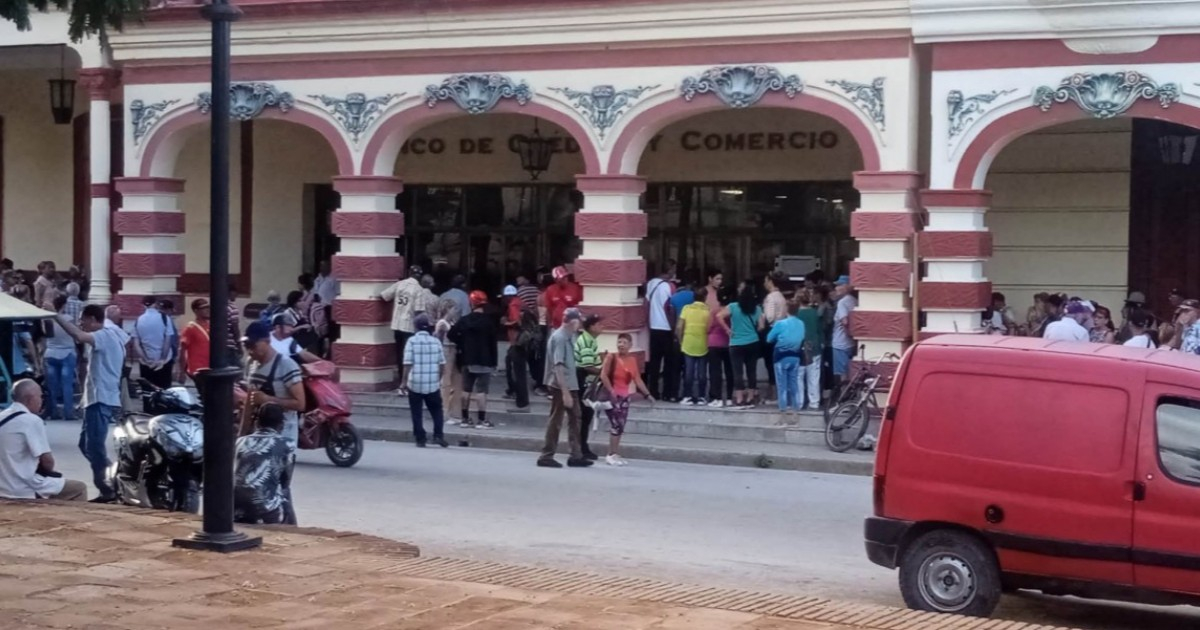
A photograph shared on Facebook by the page Holguín Memories starkly encapsulates the monthly ordeal faced by over 1.7 million retired Cubans. The image depicts a lengthy queue of senior citizens at San José Park in Holguín, an eastern province, standing under the blazing sun as they wait to collect their pensions.
"A picture that speaks volumes," commented the author, expressing regret that these retirees, after years of hard work, are subjected to such hardships. The sentiment echoed by many Cubans is clear: "Something needs to change."
Increasing Complaints from Cuban Pensioners
In recent months, grievances have surged regarding the challenges retirees in Holguín face each month to receive their pension checks. On August 18, writer Manuel García Verdecia recounted how those expecting to collect their pensions at the local post office were unable to do so due to a lack of funds, while outside BANDEC and the Banco Popular de Ahorro, there was, in his words, "a sea of desperate people." His unanswered question to the government remains: "Is there any official concerned about this recurring cycle of anxiety and confusion?"
Institutional Failures and Widespread Crisis
In July, a branch of Banco Popular de Ahorro in Holguín closed at 3:00 p.m., leaving numerous elderly individuals unpaid, despite having electricity, cash, and a working connection. This was not a technical glitch but institutional negligence.
The crisis affecting pension payments spans the entire island. In June, Granma's authorities confessed their inability to meet the over 400 million pesos needed to pay their 111,000-plus retirees that month. Similarly, in Guantánamo, the provincial government acknowledged that banks lacked sufficient cash. In Santiago de Cuba, some bank branches serve only about 50 retirees per day, forcing many to queue from the previous afternoon.
Insufficient Institutional Responses
The official response to this dire situation has been largely superficial. In July, the Central Bank expanded the "Caja Extra" scheme, allowing small businesses and private enterprises to disburse pensions using their cash and receive state reimbursement within 72 hours. Economists criticized this approach, arguing it shifts a constitutional duty of the state to private entities. Although around 20 small enterprises in Holguín participated in a phase that serviced around 5,000 pensioners, lines and complaints persisted.
Corruption and Promises Unkept
The crisis has also paved the way for corruption. In San Luis, Pinar del Río, over three million pesos earmarked for pensions were stolen, leaving more than 1,110 retirees unpaid at the start of June. In Ciego de Ávila, a post office employee received a four-year prison sentence for embezzling funds while falsely claiming there was no cash available for retirees.
In February, Finance and Prices Minister Vladimir Regueiro Ale assured that pension payments were "budget guaranteed." Yet, the image from San José Park contradicts this pledge more compellingly than any official statistics.
The state-run newspaper Venceremos admitted in early July that the situation had escalated from a banking issue to a societal problem. Meanwhile, Cuban grandparents continue to wait in line.
Challenges and Solutions for Cuban Pensioners
What are the main issues faced by Cuban retirees in receiving their pensions?
Cuban retirees encounter long wait times and logistical failures, such as lack of cash at collection points and institutional negligence, leading to significant delays in receiving their pensions.
How have the authorities responded to the pension crisis in Cuba?
The response has been largely inadequate, with measures like the "Caja Extra" scheme criticized for offloading state responsibilities onto the private sector, failing to address the root of the crisis.
What impact has the pension crisis had on Cuban society?
The crisis has exacerbated social issues, leaving many elderly citizens in financial distress and fostering corruption within the pension distribution system.