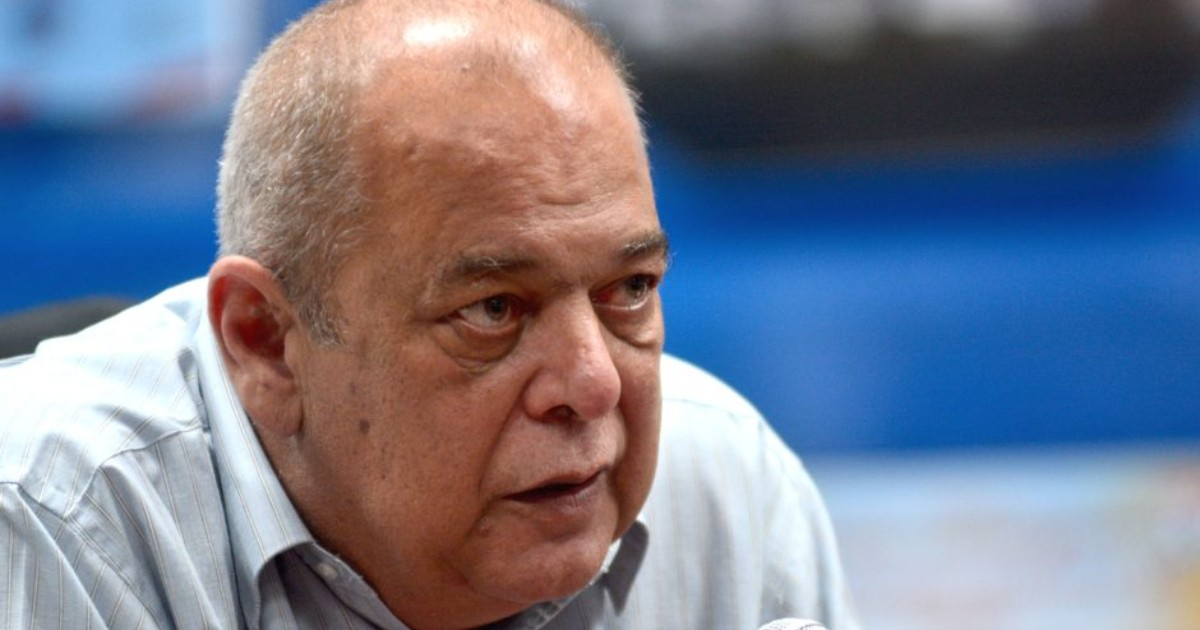
A Cuban woman has called on Energy and Mines Minister, Vicente de la O Levy, to publicly clarify which electrical circuits in Havana are prioritized and why some areas experience continuous service while others endure blackouts exceeding 30 hours.
Elizabeth González Aznar, a resident of the La Lisa municipality, directed her request on Wednesday to both de la O Levy and the director of the Havana Electric Company, urging fellow Cubans to support her if they agree.
"Just as the distribution and addresses for different blocks and recently for blackout circuits were published, I would like to see which circuits are exempt from outages and why they are prioritized," she wrote.
González demanded "clarity and transparency" regarding the criteria used to determine these priorities after experiencing significant disparities in service distribution in her area.
Concerns Over Unexplained Circuit Prioritization
Feeling bewildered by being without electricity for over 30 hours with only two hours of service, while nearby circuits remain unaffected, González expressed her frustration over the lack of explanation for such decisions.
She acknowledged that certain circuits should remain protected when supplying essential facilities like hospitals but questioned cases where residents can't identify any such services.
The absence of information, she explained, fuels speculation among neighbors about potential favoritism or corruption.
"This leads to rumors among the people about the reasons—whether it's money or the names and surnames of those living there," she pointed out.
Demand for Public Disclosure and Accountability
González has addressed her concerns to the Municipal Committee of the Communist Party in La Lisa, the Municipal Assembly, and the local Electric Base Business Unit, but said she received the same response: "superior decision."
"Is this information secret? Why can't the people know which circuits are prioritized and their addresses?" she questioned.
Publishing this information, according to González, would allow citizens to identify and report possible irregularities: "A circuit that remains on due to corruption or favoritism is electricity taken from someone else, and that's not fair, at least not to me."
She also dismissed the notion that the residence of officials should favor a circuit: "I refuse to understand why a minister living in an area makes it a prioritized circuit. Why?" she asked.
Persistent Rumors and Lack of Evidence
The complaint also highlights a rumor circulating among San Agustín residents in La Lisa about a circuit allegedly remaining active due to residents with personal security ties.
The author admitted she doesn't even know the circuit number and provided no evidence to confirm this claim.
"What makes that person more important than a doctor on call saving lives, or a factory worker on a shift?" she questioned.
González also sought explanations for the disparities between circuits subjected to blackouts.
According to her account, while some receive just two hours of electricity, others enjoy up to eight hours of service. When she inquired through the 18888 line, she was simply told these circuits are "prioritized," without further explanation.
She called for a clear mechanism to report potential irregularities, as the phone numbers provided, including 18888, state their purpose is solely to offer information.
Wider Implications and Public Discontent
The Cuban resident warned that using justifications to declare a circuit outage-free for the benefit of certain individuals would be "shameful": "Where is the socialism the president claims we haven't abandoned?" she asked.
In her concluding remarks, González urged the disclosure of the complete list of prioritized circuits along with the reasons for their status.
She recalled seeing a figure of 92 circuits before and called on authorities to clarify and update the actual number.
This demand arises amidst numerous complaints about significant differences in blackout distribution within Havana.
In June, for example, a Playa resident reported 40 consecutive hours without power while the block across from her home experienced less than 16 hours without service.
Other Havanans claimed that some circuits were almost never disconnected.
Suspicions intensified when the Electric Company ceased managing blackouts by blocks in July, opting to handle them individually by circuits.
During this transition, a neighbor reported that half of his block remained with service while his circuit received just two hours of electricity.
The suspicion of irregularities has been particularly strong in La Lisa.
In early August, San Agustín residents accused workers of deliberately diverting electricity to others.
Allegations of inequality even predate the current circuit-based system.
In May, Havanans reported that certain areas remained powered while others faced blackouts exceeding 12 hours, attributing this difference to the presence of officials or influential individuals—claims that have yet to be independently verified.
Discontent in La Lisa has reached the streets multiple times. In early July, residents gathered outside the Communist Party's municipal headquarters after more than 50 consecutive hours without electricity, demanding water, food, and power.
The crisis is even more severe outside the capital. In late July, de la O Levy acknowledged before the National Assembly that some Cuban communities have been without electricity for up to 105 days due to issues with special transformers and old voltage networks.
Understanding Power Circuit Prioritization in Havana
Why are some circuits in Havana prioritized?
Certain circuits might be prioritized due to their role in supplying essential facilities like hospitals. However, the lack of transparency has led to speculation about favoritism or corruption.
What has been the response from authorities regarding uneven electricity distribution?
Authorities have given responses indicating "superior decisions" without providing detailed explanations, which has fueled public frustration and demands for clarity.
How have residents reacted to power distribution disparities?
Residents have expressed discontent through complaints, gatherings, and calls for transparency, questioning the fairness of current power distribution practices.