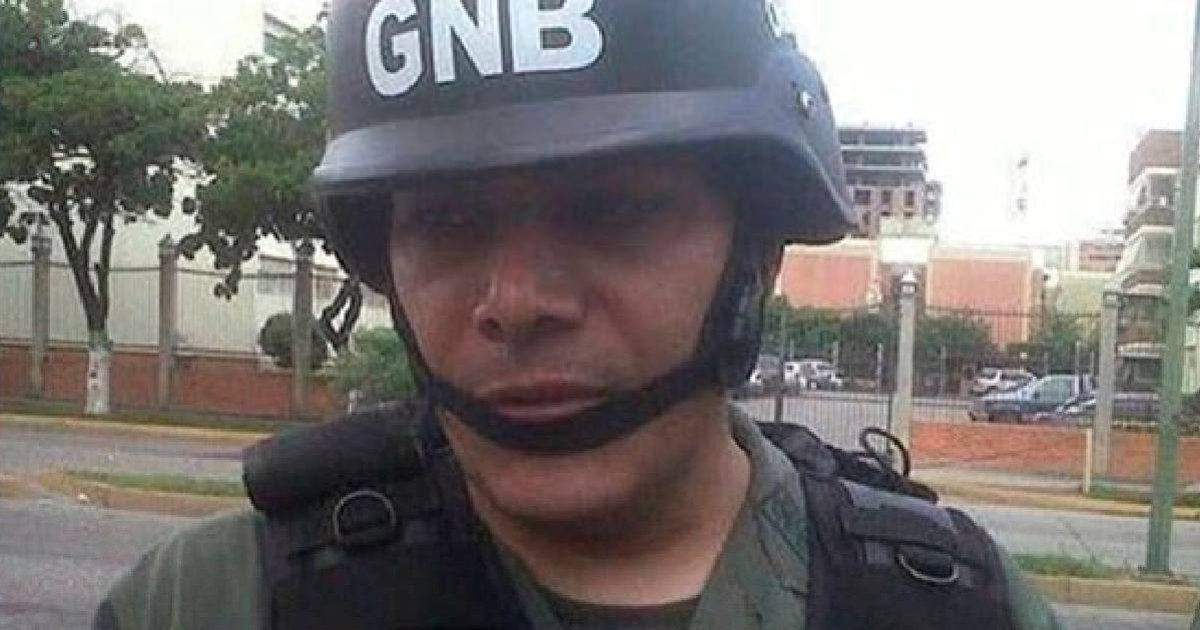
The United States Immigration and Customs Enforcement (ICE) has deported Rafael José Quero Silva, a former colonel of the Bolivarian National Guard, back to Venezuela. He is accused of being involved in the detention and torture of anti-government protesters under Nicolás Maduro's regime. This information was confirmed in an official statement released Wednesday from Miami.
The deportation took place on August 18th, following an immigration judge's order from the Department of Justice. This decision concluded a lengthy process that began over a year ago when Quero Silva was apprehended.
ICE initially detained Quero Silva on February 27, 2025, in Miramar, Florida, where he lived undocumented after entering the U.S. via Miami International Airport in June 2016 without complying with entry conditions.
Before fleeing to the United States, Quero Silva commanded the 47th Detachment of the Bolivarian National Guard in Barquisimeto, Lara state. ICE reports indicate that in 2013, he directly oversaw the torture of at least 74 peaceful protesters who were in custody.
Allegations of Inhumane Treatment
Documented methods of torture include electric shocks, beatings with batons and frozen water bottles, threats of sexual assault, and other physical and psychological abuses against detained opposition members.
In November 2025, an immigration judge concluded Quero Silva's involvement in human rights violations and ordered his deportation.
Shortly after, five victims filed a federal civil lawsuit in Florida against the former colonel under the Torture Victim Protection Act. The New York Times highlighted this as the first instance in over a decade of a Venezuelan military official being tried in the United States for abuses related to the Chávez regime.
Joint Investigation and Ongoing Concerns
The case was a collaborative investigation by ICE Miami, HSI Miami, and the FBI, in coordination with the ICE Human Rights Violators and War Crimes Center.
“ICE agents continue to deport human rights violators to their home countries," stated Matthew Elliston, director of the ERO Miami Field Office. "We are dedicated to public safety and national security, ensuring that the U.S. does not become a haven for those involved in persecution, torture, or severe human rights abuses."
Jose R. Figueroa, special agent in charge of HSI Miami, emphasized, "This case reflects our unwavering commitment to protecting the integrity of the immigration system and ensuring that those involved in persecution or torture cannot escape justice."
However, the deportation has raised concerns among human rights organizations. The NGO FUNPAZ warned that Quero Silva's return to Venezuela —where the Chavista regime remains in power under interim President Delcy Rodríguez following Maduro's capture in January 2026— poses risks of retaliation against victims and witnesses and potentially paves the way for impunity.
FUNPAZ clarified that the federal civil lawsuit in Florida is still active and that the deportation does not formally close this legal proceeding.
Since 2003, ICE has arrested over 520 individuals for human rights-related violations and has physically deported 1,178 known or suspected violators from U.S. soil.
Key Questions on Human Rights Violations and Deportation
What were the charges against Rafael José Quero Silva?
Rafael José Quero Silva was charged with participating in the detention and torture of at least 74 anti-government protesters during the rule of Nicolás Maduro in Venezuela.
Why was Quero Silva deported from the United States?
Quero Silva was deported following a judge's order after being found complicit in human rights violations, and for living undocumented in the U.S. since 2016.
What are the potential risks associated with his return to Venezuela?
Human rights organizations warn that his return could lead to retaliation against victims and witnesses and might contribute to impunity for past abuses.