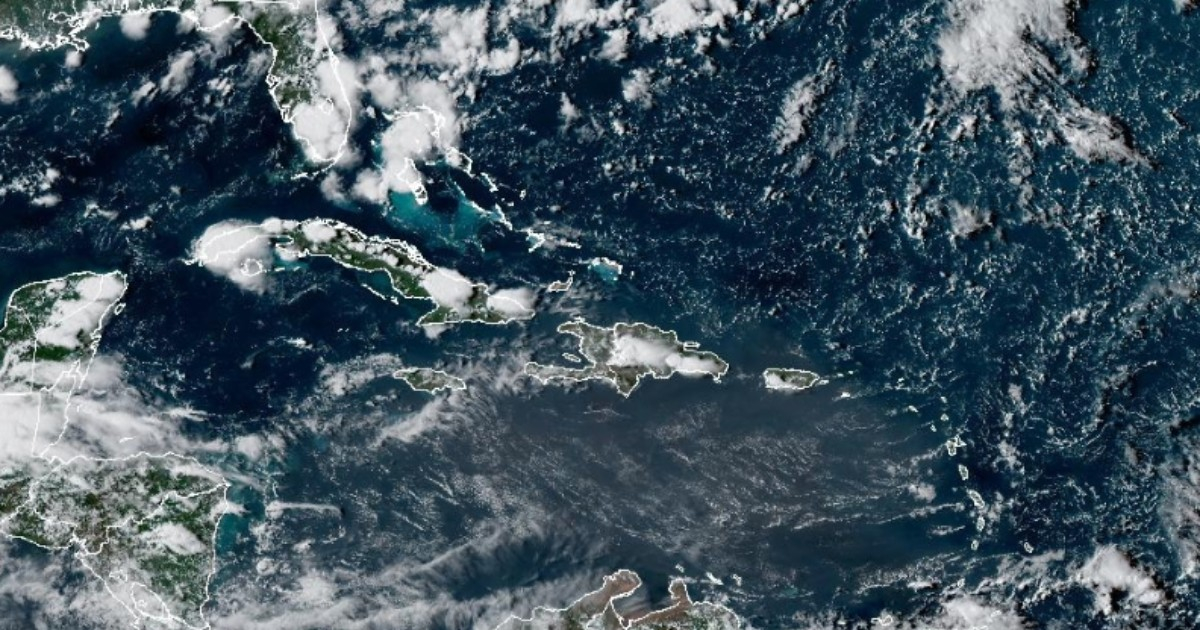
The 2026 hurricane season in the Atlantic is unfolding at a slower pace than usual. By the end of August, only three tropical storms have formed, and none has escalated to hurricane strength. Typically, by this time, climate patterns suggest there would have been five storms and at least two hurricanes.
On Wednesday, Cuban meteorologist Elier Pila Fariñas provided insight into this atypical season in an article for Cubadebate. Despite expectations that the season was on the verge of ramping up, it remains largely tranquil.
The Sole Storm of August
This month has only seen Cristóbal, a brief system that lasted merely 24 hours. Initially, Pila described its formation as a "yawn" suggesting the season was stirring, but Cristóbal ended up being the lone storm on August's list.
So far, the season's overall activity is noteworthy for its scarcity. By August 26, only three tropical storms have emerged, averaging one per month. Among them, Bertha was the only one to last over 24 hours, while Arthur was active for just 12 hours.
Comparing to Historical Patterns
The contrast with historical data is striking. "By this time, we should have seen five tropical storms and at least two reaching hurricane status," Pila explained.
Nevertheless, the Atlantic isn't entirely dormant. Meteorologists are monitoring a low-pressure area linked to a tropical wave that might develop into the fourth cyclone of the season. While some models predict its development due to the Atlantic's "excessive heat," opposing factors exist.
"The surrounding dry air isn't conducive, and although upper-level winds aren't entirely unfavorable, they don't support robust organization and development," Pila stated.
The Role of El Niño
El Niño has played a significant role in suppressing activity this season. In July, Colorado State University reduced its hurricane forecast for 2026 for the third time, in response to El Niño's strengthening. Their forecast dropped from 13 named storms in April to 11 in June and nine by July.
The latest prediction included four hurricanes, with one potentially reaching category 3 or higher, compared to the climatological average of 14.4 storms, 7.2 hurricanes, and 3.2 major hurricanes. El Niño tends to increase wind shear over the tropical Atlantic, a factor that hinders the organization and intensification of storm systems.
In fact, the National Hurricane Center (NHC) recently downgraded the development chances for system AL96, reducing its formation probability from 70% to 60% both over the next 48 hours and the coming week.
Potential Paths and Risks
Should the system become a tropical storm, it would be named Dolly, marking the fourth named system of the season. As of now, the NHC has not projected any specific path toward Cuba, the Caribbean, or Florida.
Pila anticipates that the disturbance will continue moving west, and after about 72 hours, it may shift to a west-northwest trajectory. If this pattern holds, it would likely veer away from the Caribbean Sea, though Pila cautions that "there's still a lot of ocean ahead."
While this season has been unusually calm, the risk remains. Cuba is entering the most dangerous time of year climatically, with the peak of Atlantic activity historically occurring around September 10. For now, August appears to be wrapping up with significantly lower activity than usual.
Pila even joked that if the forecast trends continue, the typical end-of-month cyclone summary could have been prepared in advance.
Understanding the 2026 Atlantic Hurricane Season
Why has the 2026 hurricane season been so calm?
The 2026 hurricane season has been unusually calm due to the influence of El Niño, which increases wind shear over the tropical Atlantic, making it difficult for storm systems to organize and intensify.
What is the significance of El Niño in hurricane formation?
El Niño affects hurricane formation by increasing wind shear in the tropical Atlantic, which disrupts the organization of storms and reduces the likelihood of them strengthening into hurricanes.
What is the current status of tropical system AL96?
The current status of system AL96 is a 60% chance of development over the next 48 hours and week. Its potential to become a tropical storm has been downgraded from "high" to "medium" by the National Hurricane Center.